NIH diagnostics accelerator enables first-ever FDA authorization for a point-of-care test for active syphilis
Tuesday, November 24, 2026
NIH diagnostics accelerator enables first-ever FDA authorization for a point-of-care test for active syphilis
Four-pathogen test identifies the cause of skin lesions from a single swab in approximately 15 minutes.
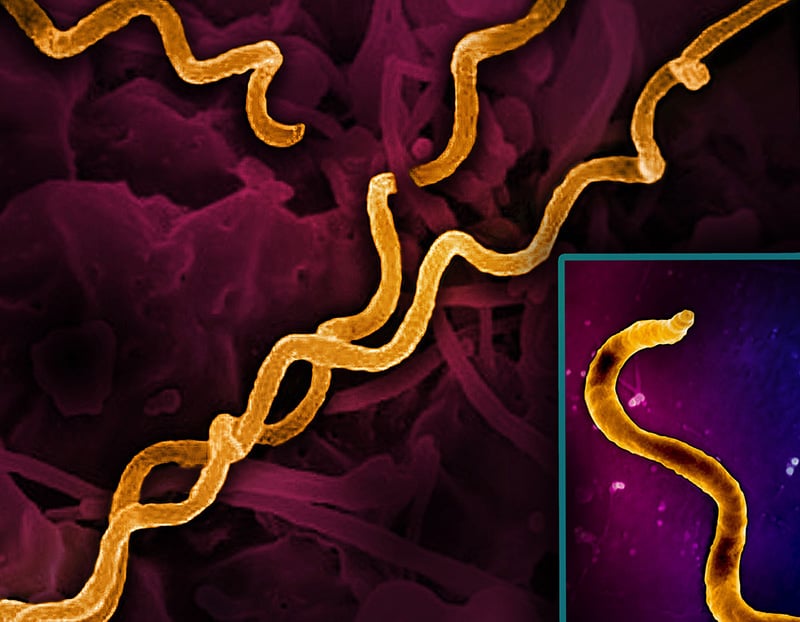
The National Institutes of Health’s (NIH) diagnostic test assessment program has enabled the first point-of-care direct detection test that differentiates lesions caused by sexually transmitted infections, which has received U.S. Food and Drug Administration (FDA) authorization. The test, developed by Roche and marketed as the cobas® liat Lesion Panel, received FDA emergency use authorization (EUA) on November 20. This molecular test simultaneously detects and differentiates four pathogens — Treponema pallidum, the bacterium that causes syphilis; herpes simplex virus types 1 and 2; and monkeypox virus — from a single lesion swab sample, with results in about 15 minutes. These pathogens can cause visually similar lesions but require different treatments.
The test was evaluated by NIH’s Rapid Acceleration of Diagnostics (RADx®) Tech Independent Test Assessment Program (ITAP), which supports validation and clinical evaluation of diagnostic tests to help speed FDA review. A 2024 cost-sharing agreement between NIH and Roche covered clinical data collection for the project.
“The authorization can provide information to clinicians and patients that may help inform care and have the potential to improve outcomes,” said John H. Powers III, M.D., director of NIH’s National Institute of Allergy and Infectious Diseases (NIAID). “Appropriate care is first based on making the correct diagnosis to provide timely and valuable interventions to patients and aligns with NIAID’s research focus on improving diagnosis to promote effective treatments.”
Syphilis is a sexually transmitted infection caused by the bacterium T. pallidum. Syphilis cases in the United States have increased substantially since 2000 to approximately 190,000 reported cases in 2024, according to the Centers for Disease Control and Prevention. If left untreated, syphilis can progress to serious complications affecting the brain, nervous system and other organs. Infection during pregnancy can result in congenital abnormalities, stillbirth, or neonatal death.
“This authorization illustrates how collaboration can help address diagnostic challenges,” said Michelle Tarver, M.D, Ph.D, Director of FDA’s Center for Devices and Radiological Health. “By bringing distinct expertise to address a shared challenge, government, industry, and independent laboratories worked together to generate the clinical evidence needed to support FDA’s review. This point-of-care test brings care closer to the people who need it most.”
Current syphilis diagnosis relies primarily on blood-based serological tests that detect antibodies to the infection. Results can reflect past infections that were successfully treated and may be less sensitive during early infection. Similarly, diagnosis of herpes simplex virus types 1 and 2 relies on a laboratory test, called a Western blot test, that is not returned in the time frame of a typical patient appointment. The newly authorized test panel instead uses molecular technology to detect the pathogen directly in lesion specimens, helping identify active infection when lesions are present and timely treatment is particularly important.
Diagnosing the cause of a lesion can be challenging because syphilis, herpes, and monkeypox can cause similar clinical symptoms and have a similar appearance. By detecting all four pathogens from a single specimen, the new panel can help clinicians identify the likely cause of a lesion and initiate appropriate, pathogen-specific treatment during the same visit.
“Point-of-care testing leads to faster treatment in the same visit, thus reducing transmission and worsening illness,” said Bruce Tromberg, Ph.D., director of NIH’s National Institute of Biomedical Imaging and Bioengineering (NIBIB). “Numerous technological challenges have been overcome through this public-private collaboration that has developed a sophisticated yet easy to use tool that stands to benefit so many.”
The newly developed test performed comparably to accepted diagnostic methods for each of three targets. But no FDA-cleared or -authorized molecular diagnostic test was available to serve as a comparator for detecting T. pallidum in lesion specimens. Collaboration among NIH, FDA, Roche and two independent laboratories, established a regulatory approach for the clinical evidence to support FDA’s review of the panel. NIH invested approximately $3.7 million in this project.
The cobas® liat Lesion Panel is intended for use in health clinics, primary care offices, emergency departments, urgent care clinics and public health facilities. The test is expected to become available in the United States in the coming months.
The EUA authorizes use of the panel under the conditions specified by FDA in an actual or potential emergency. The Federal Food, Drug, and Cosmetic Act allows FDA to authorize certain unapproved medical products, or unapproved uses of approved products, when there is a public health emergency, or a significant potential for a public health emergency, when applicable statutory criteria are met. EUA is not equivalent to FDA clearance or approval
About the National Institutes of Health (NIH): NIH, the nation's medical research agency, includes 27 Institutes and Centers and is a component of the U.S. Department of Health and Human Services. NIH is the primary federal agency conducting and supporting basic, clinical, and translational medical research, and is investigating the causes, treatments, and cures for both common and rare diseases. For more information about NIH and its programs, visit www.nih.gov.
NIH…Turning Discovery Into Health®