NIH research team lays groundwork for new treatment of Niemann-Pick Type C in infants
Tuesday, November 17, 2026
NIH research team lays groundwork for new treatment of Niemann-Pick Type C in infants
Work spanning two decades culminates in an approved drug for rare and deadly neurological disease.
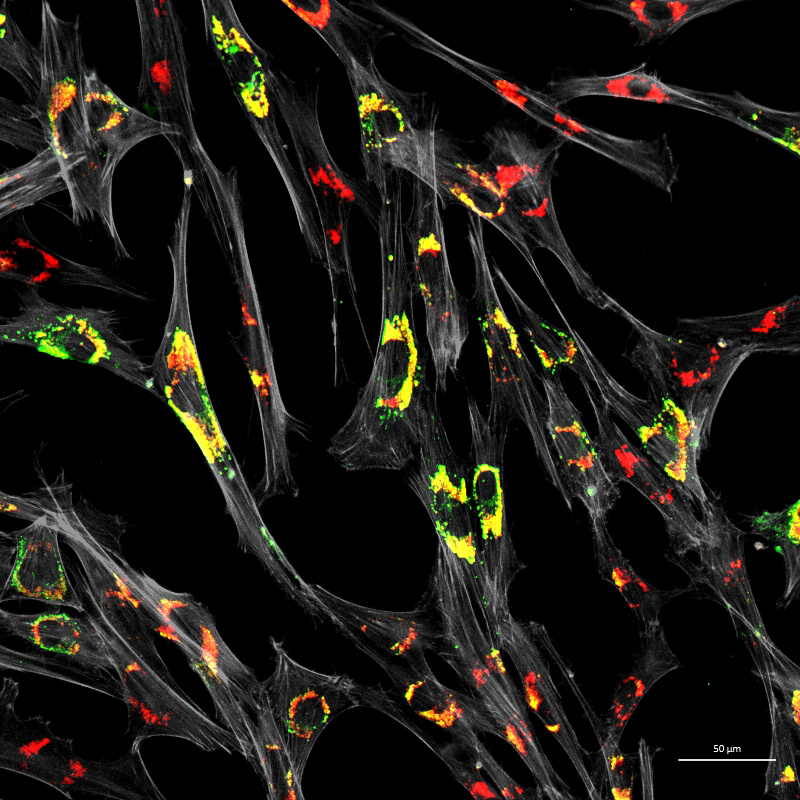
Researchers at the National Institutes of Health (NIH) and their collaborators at Beren Therapeutics, Thousand Oaks, California, have developed a treatment for infants with Niemann-Pick Type C (NPC) disease, which is a rare and rapidly fatal pediatric neurodegenerative disorder. The drug, known as cyclodextrin (name brand Adrabetadex), extended the survival of participants with NPC in a large, international clinical trial, and represents foundational scientific research efforts that began 20 years ago. The drug was approved by the U.S. Food and Drug Administration (FDA) on Nov. 17, 2026.
“Behind every new treatment are years of foundational science that few people see. For a disease as complex and devastating as Niemann-Pick Type C, there was no shortcut, said NIH Director Jay Bhattacharya, M.D., Ph.D. “It took sustained basic research, careful study of patients over time, and strong partnerships to turn discovery into an approved therapy. NIH is committed to the fundamental science that makes breakthroughs like this possible.”
Cyclodextrin directly addresses the issues caused by NPC, namely that a mutation in the NPC1 gene leads to a deficiency of a protein that facilitates regular transport of lipids and cholesterol through cells, leading to abnormal buildup of these substances within cells. Without regular movement of lipids and cholesterol within cells, people with the disease experience progressive neurological decline and premature death.
“I am proud of the role that NIH played in creating the first FDA-approved treatment for infants with NPC, providing new hope to families impacted by this disease,” said John Gaitanis, M.D., director of NIH’s Eunice Kennedy Shriver National Institute of Child Health and Human Development (NICHD). “NICHD is committed to continuing rare disease research that helps families find the answers and treatments they need.”
Though severity of NPC ranges widely and is sometimes not diagnosed until later in life, half of cases are identified before the age of 10. Cases that are identified earliest (before 2 years of age) have the worst outcomes. Children with NPC may initially exhibit delays in reaching normal developmental milestones skills before experiencing cognitive decline similar to dementia in older adults.
Cyclodextrin’s journey began as a natural history trial in 2006, monitoring participants with NPC as part of NIH’s Bench-to-Bedside program. From there, Dr. Porter obtained an Investigational New Drug approval from FDA to initiate an early-phase clinical trial at the NIH Clinical Center.
“This approval is what we have worked for since 2006 and the type of breakthrough that we hoped was possible when NIH researchers first described the location of this genetic mutation on chromosome 18 in 1997,” said Forbes D. Porter, M.D., Ph.D., head of the Section on Molecular Dysmorphology in the Division of Intramural Research at NICHD. “Giving families more time together, in the face of this terrible disease, exemplifies the incredible work carried out at NIH. It keeps us motivated to continue the scientific journey that will hopefully, one day, lead to a cure.”
In 2016, a cooperative research and development agreement (CRADA) with multiple companies over several years, was established to support multisite, multinational late-phase clinical trials of the drug. While the late-phase trial had positive biomarker data, it did not meet clinical outcome measures that would allow for an FDA approval. Subsequent evaluation of survival data in collaboration with Beren Therapeutics and Dr. Elizabeth Berry-Kravis at Rush University Medical Center, Chicago, showed increased survival of individuals with infantile onset disease, which then led to the FDA approval. Data from NIH’s natural history and therapeutic studies were critical for this analysis.
About the Eunice Kennedy Shriver National Institute of Child Health and Human Development (NICHD): NICHD leads research and training to understand human development, improve reproductive health, enhance the lives of children and adolescents, and optimize abilities for all. For more information, visit https://www.nichd.nih.gov.
About the National Institutes of Health (NIH): NIH, the nation's medical research agency, includes 27 Institutes and Centers and is a component of the U.S. Department of Health and Human Services. NIH is the primary federal agency conducting and supporting basic, clinical, and translational medical research, and is investigating the causes, treatments, and cures for both common and rare diseases. For more information about NIH and its programs, visit www.nih.gov.
NIH…Turning Discovery Into Health®