Childhood, Adolescent and Young Adult Cancer Data Innovation Challenge
Childhood, Adolescent and Young Adult Cancer Data Innovation Challenge
Harnessing Data and Technology. Accelerating Discovery. Improving Outcomes.
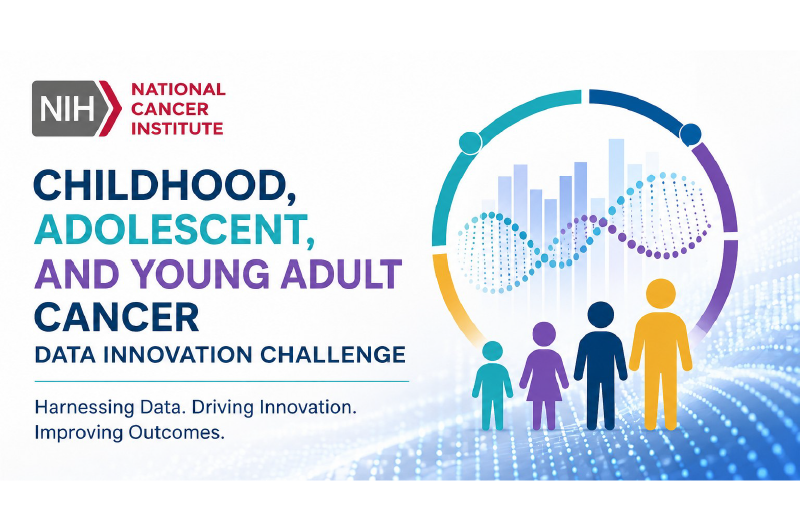
The Childhood, Adolescent and Young Adult (AYA) Cancer Data Innovation Challenge seeks innovative solutions and approaches that will enrich resources (data, methods, or tools) within the CCDI Data Ecosystem, build a federated learning health system, and enable exploration, visualization, interoperability, integration and analyses to benefit the outcome of childhood and AYA cancer patients.
Milestone 1 Open until 11/13/26 11:59 PM ET
Total cash prizes: $17,000,000
Background
Childhood, Adolescent and Young Adult (AYA) cancer is a rare disease with over 10,000 children (ages 0 to 14 years) and over 85,000 AYA (ages 15 to 39) new cases annually in the United States. Cancers in these age groups are biologically distinct from adult tumors and occur during key developmental stages. The Childhood Cancer Data Initiative (CCDI), a NCI flagship program, was launched in response to the February 2019 State of the Union Address, which called for accelerating therapies for children and adolescent and young adults (AYA) with cancer. CCDI supports efforts to improve outcomes for childhood cancer patients by addressing unique challenges, such as limited patient numbers and difficulty in accessing comprehensive, high-quality data. CCDI represents an ambitious effort in data collection, sharing, access, and analysis. It is a federal investment of $50 million per year from fiscal year (FY)2019 - FY2025, and $100 million per year for FY2026. These funds allow NCI to bring the nation’s childhood cancer research, advocacy, and care communities together in this endeavor. As a part of this initiative, CCDI has developed the CCDI Data Ecosystem, which integrates diverse data types (e.g., demographic, clinical, genomic, transcriptomic, imaging data). These data come from a wide range of sources, including basic and preclinical research, clinical trials, epidemiology studies, and cancer surveillance. It continues to grow as new data and other resources are added regularly, and are made available through a suite of interoperable, cloud-based resources: the CCDI Hub Explore, Childhood Cancer Clinical Data Commons (C3DC) and the National Childhood Cancer Registry (NCCR) Data Platform, which support data access, analysis, and visualization; the CCDI Participant Index, which enables mapping of participant-level data across studies and resources within the ecosystem; CCDI Data Federation Resource facilitates federated discovery and connects CCDI with other ecosystems such as Kids First Data Resource Center, the Pediatric Cancer Data Commons, and St. Jude Cloud; and the Childhood Cancer Data Catalog, which summarizes available tools and datasets. On September 30, 2025, the President’s Executive Order “Unlocking Cures for Pediatric Cancer with Artificial Intelligence,” called for accelerating childhood cancer research and treatment through artificial intelligence (AI)-enabled analysis, interoperable data infrastructure, and advanced computational approaches. Through collaboration with all NCI-supported childhood cancer initiatives and reusable AI-ready tools, CCDI connects, harmonizes, and makes diverse data types accessible to support discovery and innovation across the cancer research community.
Description
Subject of the Challenge
Childhood, Adolescent and Young Adult (AYA) Cancer Data Innovation Challenge seeks innovative solutions and approaches that will enrich resources (data, methods, or tools) within the CCDI Data Ecosystem, build a federated learning health system, and enable exploration, visualization, interoperability, integration and analyses to benefit the outcome of childhood and AYA cancer patients.
The Challenge will comprise two distinct phases, with each not exceeding 36-months. This announcement will primarily focus on Phase I of a multi-phase Challenge, where NCI invites the broad community to submit creative solutions to populate the CCDI Data Ecosystem with additional data or analytic resources that would be leveraged to understand the risk of developing childhood cancer, improve cancer screening and detection in children and AYA populations, optimize therapies, and improve quality of life during treatment and survivorship.
Selected innovators will join a collaborative network in partnership with the CCDI. By leveraging CCDI resources—either independently or in combination with their own—innovators will contribute to a growing ecosystem designed to enable learning from every child.
Phase I of the Challenge comprises two tracks offering a total cash prize pool of up to $17 million with as many as 30 winners across both tracks. Eligible participant(s) for this Challenge are individual(s) or groups of individuals who will compete on behalf of their affiliated institution(s) (not in their own independent capacity). Therefore, they must register to participate in the Entities category (see How to Enter).
Participating Entities are eligible to enter into both tracks, one submission maximum per track. Winning Entities may each receive up to $566,665 in cumulative cash prizes. In the case where a winning entity comprises members from more than one institution or entity, a Lead Point of Contact (POC) from a Lead Entity will be responsible for agreeing to the terms and conditions of the Challenge. The Lead Entity (and not the Lead POC) will receive the total prize purse and is encouraged to further distribute the total cash prize to other participating entities.
The Phase II of this Challenge is planned for subsequent years and anticipated to focus on cross-platform testing, validation, and implementation of data-focused technologies and methods, expansion of knowledgebase and evidence-based clinical applications, as well as public dissemination of tools, methodologies, approaches and outcomes.
Phase I: Enriching and/or Leveraging CCDI Resources to Advance Biological Insights
Phase I will consider innovative submissions for adding new “shovel-ready” and diverse data types/datasets and/or analytical tools to the CCDI Data Ecosystem (Track 1), and/or new solutions for effectively utilizing CCDI resources alone or in combination with other resources for improved understanding of disease mechanisms (Track 2). These solutions may address the unmet needs in basic research, pre-clinical studies, clinical trials, real-world evidence, population studies, or biospecimen repositories relevant to the broader childhood and AYA cancer community.
For the purposes of this Challenge, shovel-ready data refers to pre-existing, standardized datasets that have been fully cleaned, annotated, and prepared by the original data generators for immediate analysis or AI/ML applications. Shovel-ready tools refer to tools, technologies, systems, or solutions that are ready for immediate deployment or implementation with minimal additional development required. Locally shovel-ready data or tools will require further transformation and adaptation such as data reformatting before they can be fully integrated into the CCDI Data Ecosystem. In addition, each winning entity is expected to communicate and collaborate with other members across this network facilitated by NCI/CCDI.
CCDI priority areas may include, but are not limited to, the following examples:
- Submit “shovel-ready” data and tools for ultra-rare childhood and AYA cancers, and build an AI-ready CCDI Data Ecosystem according to CCDI requirements for integration with other datasets/data types.
- Demonstrate the feasibility of federating institutional data systems with the CCDI Data Ecosystem to improve cross-platform data findability, accessibility, and usability, while ensuring appropriate data governance.
- Apply advanced computational tools, including artificial intelligence (AI) and machine learning (ML), to integrate diverse data, reveal patterns, and generate hypotheses about disease biology and treatment response, e.g., AI-ready analysis to advance diagnostic accuracy and classification systems, biomarker discovery, and identification of novel immunotherapy targets.
- Develop, evaluate and automate AI-enabled approaches to extract standardized data from Electronic Health Records (EHR) systems for integration with multi-omics, imaging, and clinical trial data.
- Utilize AI and multimodal data to optimize participant selection for clinical trials, improve trial design, and enhance access, recruitment, administration, and interpretation of results.
- Develop and evaluate privacy-preserving approaches (e.g., federated learning or differential privacy frameworks that enable training and validation of AI models without exchanging underlying training or test data across institutions).
- Leverage the NCCR Data Platform to integrate and analyze childhood and AYA cancer registry data with other datasets to enhance the understanding of late effects, secondary cancers, and long-term outcomes, and assess the prevalence of rare versus common cancers.
The Challenge seeks solutions that will prepare and deliver new, proprietary, shovel-ready data and tools to the CCDI Data Ecosystem following CCDI Submission Guide. Submitted data must include descriptive metadata, data models and standards, as well as accompanying data dictionaries and relevant documentation as specified by CCDI. Submitted tools or workflows should include preliminary data whenever possible to demonstrate their utility and scalability potential, and any documentations for source codes, tools, and workflows.
Milestone 1: Participating Entities who submit proposals featuring shovel-ready data and/or tools to be adapted, delivered, and integrated with the CCDI Data Ecosystem will compete for cash prizes of $100,000 per winning entity. In the submissions, Entities must include rationale, significance, novelty and other criteria (see Submission Requirements) with written agreements to comply with CCDI data management and sharing (DMS) expectations and to attend up to two in-person or virtual CCDI Symposia and Workshops. These activities will allow member participation in cross-network activities guided by NCI/CCDI and may include discussions on standardization of common data elements, data harmonization, priority areas and clinical questions, and other related topics.
Milestone 2: Winning Entities of Milestone 1 must submit a detailed project plan within six months from the announcement date of Milestone 1 winners (See Timelines) to compete for cash prizes of $150,000 per winning entity. The project plan must describe in detail the technical approaches with timelines and anticipated deliverables for aligning shovel-ready data with CCDI data models and standards (i.e., CCDI Submission Guide); and/or adapting tools for integration with the CCDI Data Ecosystem in accordance with CCDI expectations and GitHub requirements. Whenever applicable, all required legal agreements that would permit data transfer, data sharing and/or data use between submitters and their institutions, and other relevant entities (e.g., hospitals with EHR data, state cancer registries, and/or Institutional Certifications for genomic data) to NCI/NIH must be fully executed prior to Milestone 2 submission deadline.
Eligibility to compete for and win Milestone 2 prize is limited to Milestone 1 prize winners.
Milestone 3: Winning Entities must complete submission of data, tools and other relevant resources to the CCDI Data Ecosystem and GitHub within 36 months from the announcement date of Milestone 1 winners (See Timelines). Successful completion of this milestone will result in a cash prize of $316,665 per winning entity. Milestone 3 winners must show clear evidence of preparing, adapting, and delivering new resources or technology to the CCDI Data Ecosystem. At least one example should be provided to demonstrate how a new technology, a unique dataset, or a user-friendly computational tool, can be effectively used and reused by the broad research community.
Eligibility to compete for and win Milestone 3 prizes is limited to Milestone 2 prize winners.
The Challenge seeks innovative solutions to describe how resources within the CCDI Data Ecosystem and/or other relevant resources will be fully leveraged to advance biological insights or improve understanding of disease mechanisms. Innovators may develop new tools or technologies—such as AI/ML approaches—to federate data systems, enhance interoperability, and integrate and analyze diverse childhood and AYA cancer datasets for development of better diagnostics, biomarker discovery, or prediction of treatment response, etc.
Innovators must leverage CCDI resources alone or in combination with other relevant datasets, including datasets in-process of being generated and/or existing proprietary data. Whenever applicable, newly generated datasets are expected to be completed within 12 months of the announcement date of Milestone 1 winners (see Timelines) to demonstrate that the proposed technology or analysis approaches using this data in combination with CCDI resources is feasible for advancement to Phase II, which will focus on cross-platform validation and implementation. Both newly generated and existing proprietary data incorporated into the development or analysis must be submitted (primary and derived datasets) to the CCDI Data Ecosystem by Milestone 3 submission deadline.
Similar to Track 1, each winning entity is expected to communicate and collaborate with other members across the network facilitated by NCI/CCDI.
Milestone 1: Participating Entities who submit proposals for leveraging CCDI resources to accelerate discovery will compete for cash prizes of $100,000 per winning entity. In the submissions, Entities must include rationale, significance, novelty and other criteria (see Submission Requirements) with written agreements to comply with CCDI DMS expectations and to attend up to two in-person or virtual CCDI Symposia and Workshops facilitated by NCI/CCDI. These activities may include discussions on AI-enabled data discoverability and multi-modal data integration, priority areas and clinical questions, and other related topics.
Milestone 2: Within six months from the announcement date of Milestone 1 winners, Entities must submit a detailed project plan describing innovative approaches and methods for performing data analyses using CCDI resources alone or in combination with other datasets to address childhood and AYA cancer research questions, or technical plans for developing and adapting analytical tools for integration with the CCDI Data Ecosystem in accordance with the CCDI Submission Guide and GitHub requirements; and any preliminary analysis results whenever possible. Whenever applicable, all required legal agreements—including data transfer, data sharing or data use agreements permitting data exchange and delivery between resource submitters and their institutions, other relevant entities (e.g., hospital EHRs, state cancer registries, or Institutional Certifications for genomic data) and NCI/NIH must be fully executed before Milestone 2 submission deadline (see Timelines).
If applicable, the project plan must describe a detailed process and adequate timelines to ensure the completion of new datasets in-process of being generated within 12 months from the announcement date of Milestone 1 winners.
Winning Entities who successfully complete this milestone will receive $150,000 per entity. Eligibility to compete for and win Milestone 2 prize is limited to Milestone 1 prize winners.
Milestone 3: Within 36 months from the announcement date of Milestone 1 winners, Entities must complete all project activities as planned, such as data integration, data analysis, data quality assessment, AI/ML model development and integration with the CCDI Data Ecosystem, and other related efforts aligned with the CCDI priority areas. Winning Entities of Milestone 3 must submit strong evidence of scientific outcomes as laid out in the winning proposals and project plans by leveraging CCDI resources. Winning Entities must also demonstrate positive impact of their scientific outputs on improving cancer diagnoses, treatment outcome and survivorship (e.g., data use metrics, analysis results, peer-reviewed publications, initiation of new clinical studies, or patents filed). Examples may include standardized EHR extraction for integration with genomic and imaging data, AI/ML methods to optimize participant selection and enrollment for clinical trials, or identification of novel immunotherapy targets. Successful completion of this Milestone will result in cash prizes of $316,665 per winning entity.
If applicable, both newly generated and existing proprietary data incorporated into data analysis must be submitted (primary and derived datasets) to the CCDI Data Ecosystem by Milestone 3 submission deadline.
Eligibility to compete for and win Milestone 3 prize is limited to Milestone 2 prize winners.
Statutory Authority to Conduct the Challenge
The National Cancer Institute (NCI) is conducting this Challenge under the America Creating Opportunities to Meaningfully Promote Excellence in Technology, Education, and Science (COMPETES) Reauthorization Act of 2010, as amended [15 U.S.C. § 3719].
NCI’s mission is to lead, conduct, and support cancer research nationwide to advance scientific knowledge and help people live longer, healthier lives. NCI’s flagship program, the Childhood Cancer Data Initiative (CCDI) seeks to improve the understanding of the molecular mechanisms underlying childhood and AYA cancers and related adverse outcomes, with the ultimate goal of informing prevention and early diagnosis.
NCI’s Office of Data Sharing (ODS) supports this mission by coordinating with CCDI Leadership and NCI Divisions, Offices, and Centers (DOCs) to promote the sharing and use of childhood and AYA cancer data for enhanced biological insights. Furthermore, the ODS works to strengthen CCDI data infrastructure resources, ensure interoperability with other systems, generate multi-omic clinical sequencing and research data, and promote the use of CCDI data resources for novel biological insights.
This Challenge directly advances both NCI’s mission and CCDI’s foundational goals by inviting innovative solutions, and well-developed project plans that will support the objectives of enhancing biological insights through a learning health system. By encouraging broad dissemination of cancer research data and findings, the Challenge aims to accelerate the translation of scientific discoveries into knowledge that can improve cancer prevention, diagnosis, and treatment for all childhood and AYA cancer patients.
Timelines
| Milestones | Submission Period Open | Submission Deadline | Judging Period | Announcement of Winners |
|---|---|---|---|---|
| 1 |
August 13, 2026 |
November 13, 2026 |
November 13 – December 14, 2026 |
December 15, 2026 |
| 2 | December 15, 2026 | June 15, 2027 | June 16 – July 16, 2027 | July 19, 2027 |
| 3 | December 15, 2026 | December 14, 2029 |
December 17, 2029 – January 31, 2030 |
February 4, 2030 |
Prizes
Amount of the Prize: Up to $17,000,000
Prize Description
Up to $566,665 per winning entities for up to 30 proposals across both tracks and topic areas. Both tracks in Phase I are milestone-driven cash prizes.
Milestone 1: $100,000
Milestone 2: $150,000
Milestone 3: $316,665
- Phase II is anticipated to focus on cross-platform testing and implementation of the technology/platform and/or growth of biological insights and knowledge gained from innovative use of CCDI resources from Phase I for public dissemination.
- Only Phase I Winning Entities in either or both tracks who have successfully achieved Milestones 1 through 3 will be eligible to participate in Phase II once it is announced.
- Additional details including timelines, milestone prizes, submission requirements and judging criteria for Phase II are anticipated to be announced at a later date (TBD), subject to the availability of appropriations.
Challenge Entities may be publicized by the NCI and/or invited to contribute to future events or dissemination efforts by the NCI.
Award Approving Official: The Award Approving Official will be Dr. Anthony Letai, Director of the National Cancer Institute (NCI).
Payment of the Prize: Prizes awarded under this Challenge will be paid to the Winning Entities by electronic funds transfer and may be subject to federal income taxes. HHS/NIH will comply with the Internal Revenue Service withholding and reporting requirements, where applicable.
Entities participating in this Challenge are required to request and obtain a free Unique Entity ID (UEI), if they have not already done so, via SAM.gov as this will expedite prize payment.
Additional information can be found at https://sam.gov/content/entity-registration.
The NIH/NCI reserves the right, in its sole discretion, to (a) cancel, suspend, or modify the Challenge, or any part of it, for any reason, and/or (b) not award any prizes if no submissions are deemed worthy.
Rules
Eligibility Rules
To be eligible to win a cash prize in Phase I of this Challenge, Participating Entities —
- Shall have registered to participate in the Challenge under the rules promulgated by the National Institutes of Health (NIH) as published in this announcement
- Shall have complied with all the requirements set forth in this announcement
- Shall be an entity incorporated in and maintain a primary place of business in the United States
- Shall not be a federal entity or federal employee acting within the scope of their employment
- Shall not be an employee of the Department of Health and Human Services (HHS, or any other component of HHS) acting in their personal capacity
- Who is employed by a federal agency or entity other than HHS (or any component of HHS), should consult with an agency ethics official to determine whether the federal ethics rules will limit or prohibit the acceptance of a prize under this Challenge
- Shall not be a judge of the Challenge, or any other party involved with the design, production, execution, or distribution of the Challenge or the immediate family of such a party (i.e., spouse, parent, step-parent, child, or step-child)
- Shall be 18 years of age or older at the time of submission.
Participation Rules
- Participating Entities may not use federal funds from a grant award, cooperative agreement, or other transaction (OT) award to develop their Challenge submissions or to fund efforts in support of their Challenge submissions unless use of such funds is consistent with the purpose, terms, and conditions of the grant award, cooperative agreement, or other transaction (OT) award. Participants intending to use federal grant, cooperative agreement, or OT award funds must register for and participate in the Challenge on behalf of the awardee institution, organization, or entity. If Participating Entities use federal grant, cooperative agreement, or OT award funds and win the Challenge, the prize must be treated as program income for purposes of the original grant, cooperative agreement, or OT award in accordance with applicable Uniform Administrative Requirements, Cost Principles, and Audit Requirements for Federal Awards (2 CFR § 200).
- Federal contractors may not use federal funds from a contract to develop their Challenge submissions or to fund efforts in support of their Challenge submissions.
- By participating in this Challenge, Entities agree to assume any and all risks and waive claims against the federal government and its related entities, except in the case of willful misconduct, for any injury, death, damage, or loss of property, revenue, or profits, whether direct, indirect, or consequential, arising from participation in this Challenge, whether the injury, death, damage, or loss arises through negligence or otherwise.
- Based on the subject matter of the Challenge, the type of work that it will possibly require, as well as an analysis of the likelihood of any claims for death, bodily injury, property damage, or loss potentially resulting from Challenge participation, no Entities participating in the Challenge are required to obtain liability insurance, or demonstrate financial responsibility, or agree to indemnify the federal government against third party claims for damages arising from or related to Challenge activities in order to participate in this Challenge.
- Participating Entities shall not be deemed ineligible because the Entities used federal facilities or consulted with federal employees during the Challenge if the facilities and employees are made available to all Entities participating in the Challenge on an equitable basis.
- By participating in this Challenge, Entities warrant that they are sole authors or owners of, or have the right to use, any copyrightable works that the submission comprises, that the works are wholly original with the Entities (or is an improved version of an existing work that the Participants have sufficient rights to use and improve), and that the submission does not infringe any copyright or any other rights of any third party of which the Entities are aware.
- By participating in this Challenge, Entities grant to the NIH an irrevocable, paid-up, royalty free nonexclusive worldwide license to reproduce, publish, post, link to, share, and display publicly the submission on the web or elsewhere, and a nonexclusive, nontransferable, irrevocable, paid-up license to practice, or have practiced for or on its behalf, the solution throughout the world. Each Participant will retain all other intellectual property rights in their submissions, as applicable. To participate in the Challenge, each Participant must warrant that there are no legal obstacles to providing the above-referenced nonexclusive licenses of the Participant’s rights to the federal government. To receive an award, Participants will not be required to transfer their intellectual property rights to NIH, but Participants must grant to the federal government the nonexclusive licenses recited herein.
- Participating Entities agree to follow all applicable federal, state, and local laws, regulations, and policies.
- Entities participating in this Challenge must comply with all terms and conditions of these rules, and participation in this Challenge constitutes each such entity’s full and unconditional agreement to abide by these rules. Winning is contingent upon fulfilling all requirements herein.
- As a condition for winning a cash prize in this Challenge, Entities that have been selected as a winner must complete and submit all requested entity verification and payment documents to NIH within 14 business days of formal notification. Failure to return all required verification documents by the date specified in the notification may be a basis for disqualification of a cash prize winning submission.
Judging
The judging criteria listed in the table apply to both Track 1 & Track 2 unless otherwise indicated.
|
Milestones |
Criteria |
|---|---|
|
1 |
Significance (10 pts): In the submissions, Entities clearly articulated the significance of proposed solutions to achieving the Challenge and CCDI overarching goals. Significance and impact could be deliverables that would benefit the childhood and AYA cancer community and improve the short and long-term outcome of children and AYA with cancer, especially in diseases with a significant unmet clinical need; developed tools would improve analysis of high-value data in ultra-rare tumors; AI innovation to enhance multi-modal data integration; development of cancer models for novel drug screening, or other CCDI priority areas. |
|
1 |
Novelty (10 pts): Entities highlighted the novelties of datasets, datatypes, tools, methodologies, analysis results and findings. Novelties may include information on the sizes of the datasets (e.g., TB of long-read whole genome sequencing data for 1000 patients) or an ultra-rare disease dataset to be added, etc. Entities also included a list of datasets with formats, associated metadata, and data standards; a list of tools, models, other relevant documentation and approaches for submission to the CCDI Data Ecosystem (Track 1); and/or those leveraged for innovative analysis (Track 2) that demonstrate the novelties of resources and/or methods. |
|
1 |
Qualifications (10 pts): Entities described the qualifications of individual(s) or groups of individuals (multidisciplinary preferred) competing on behalf their entities and their relevant institutional environment and support. |
|
1 |
Overall Approaches (10 pts): Entities provided a brief and clear description of sound approaches and strategies to accomplish the goals. An example of sound approaches is the adoption and use of standards-based technologies, e.g., Minimal Common Oncology Data Elements or Child Health Functional Profile Data Elements that will help with interoperability and use across various systems and purposes. |
|
1 |
Agreements (10 pts): Entities provided written agreements to comply with DMS expectations; and to attend up to two in-person meetings and/or workshops for cross-network activities facilitated by NCI/CCDI. |
|
2 |
Project Plans (50 pts): Entities provided a detailed project plan within 6 months from the announcement date of Milestone 1 winners. Project plans may include but are not limited to a list of new datasets and tools to be delivered to CCDI/NCI, information on data reformatting, tool packaging and submission to CCDI (Track 1); or novel data analysis approaches and progress with analysis results and new biological insights (Track 2); descriptions of data quality evaluation (e.g., completeness); methods or approaches (e.g., technical competency); well-defined timelines and deliverables within the allowable project timeframe; risk mitigation strategies and communication plans with CCDI. Appropriate legal agreements (e.g., data transfer agreements) and certifications (e.g., Institutional Certifications for genomic data) permitting transfer, share, use and reuse of a variety of data sources, or federation of data ecosystems within and across network entities and the CCDI Data Ecosystem have been provided to NCI by Milestone 2 submission deadline. No additional points will be given to this item. Only Yes/No/Not Applicable (NA) will be documented. Track 2 Only: Entities described a process and an adequate timeline to ensure timely completion of data generation within 12 months from the announcement date of Milestone 1 winners, and/or proprietary data to-be-used in conjunction with CCDI data for analysis. No additional points will be given to this item. Only Yes/No/NA will be documented. |
|
3 |
Project Completion and Accomplishments (50 pts): Entities demonstrated overall project achievements and highlighted valuable new resources added to the CCDI Data Ecosystem using standards-based technologies (Track 1), and/or additional novel insights gained from data analyses and their impact on knowledge and clinical care (Track 2) within 36 months from the announcement date of Milestone 1 winners. Track 2 Only: Entities provided evidence to demonstrate that newly generated data have been completed within 12 months from the announcement date of Milestone 1 winners; and new and/or proprietary data (primary and derived data) used for data analysis in combination with CCDI resources have been submitted to the CCDI Data Ecosystem by Milestone 3 submission deadline. No additional points will be given to this item. Only Yes/No/NA will be documented. |
For each track:
- Total Scores for Milestone 1: 50 points (best)
- Total Scores for Milestone 2: 50 points (best)
- Total Scores for Milestone 3: 50 points (best)
Review Process
Judging will be divided into two stages:
Stage 1: Pre-screening and Initial Review. All submissions will be pre-screened for eligibility and compliance with the rules of the Challenge, including the submission guidelines. Only fully complete submissions confirmed to meet all eligibility requirements will move forward for review and judging. Eligible submissions will be reviewed individually by federal staff with NCI programmatic and diverse scientific expertise based on the judging criteria described. Each eligible submission will be reviewed by a minimum of two reviewers.
Stage 2: Judging and Final Selections. High-scoring submissions will be presented to a judging panel of federal staff with NCI programmatic and scientific expertise. The judges will submit their selection of winning entities to the Award Approving Official for a final decision on prize payments. Winning entities are subject to final approval by the Award Approving Official, Dr. Anthony Letai, Director of the National Cancer Institute.
How to Enter
Registration and Submission Process: Email your submissions in PDF formats to [email protected] no later than each milestone submission deadline listed in the Timelines for Track 1 and/or 2.
To participate, innovators will be required to register as an Entity or Entities (i.e., as individuals or a group of individuals competing together on behalf of one or more legally established organizations, institutions, or corporations). Individuals or groups of individuals competing on behalf of him/herself or themselves are not eligible to participate. Innovators will need to provide the names, affiliations, and contact information of all individuals or groups of individuals competing in this Challenge as part of an Entity or on behalf of Entities.
All entities will also be required to acknowledge whether federal funding will be used in the development of the Challenge submission (see Participation Rule (1)). All entities must certify they have read, understand, and agree to abide by the official eligibility rules, participation rules, and requirements for the Challenge as stated in this announcement.
Participating Entities (if more than one) are required to identify a Lead Point of Contact (POC) from the Lead Entity who will register and submit on behalf of all Entities and provide the names, affiliations, and contact information of all individuals competing in this Challenge as part of an Entity or on behalf of an Entity. All Participants will be required to acknowledge whether federal funding will be used in the development of the Challenge submission (see Participation Rule 1). All Participants must certify they have read, understand, and agree to abide by the official eligibility rules, participation rules, and requirements for the Challenge as stated in this announcement. The Lead POC is responsible for all communications with the Challenge sponsors. In the event of winning a cash prize, the prize will be paid directly to the Lead Entity, and not to the Lead POC. To be eligible to receive a cash prize, Entities must be incorporated in and maintain a primary place of business in the United States. As stated in the Participation Rules, Participants intending to use federal grant, cooperative agreement, or other transaction (OT) funds must register for and participate in the Challenge as an Entity on behalf of the awardee institution or organization – in this situation, the POC must be an Authorized Organizational Representative (AOR) for that entity. In the event that a dispute regarding the identity of the Point of Contact who actually submitted the entry cannot be resolved to NIH’s satisfaction, the affected submission will be deemed ineligible.
General Submission Requirements
All submissions must follow the format and instructions described below.
- All uploaded files must be in PDF format with page size set to 8.5” x 11” and at least 1-inch margins, unless otherwise specified.
- Use a font no smaller than 11-point and line spacing no less than 1.0.
- Be written in English.
- Not use the HHS logo or official seal or the logo of NIH in the entries and must not claim federal government endorsement.
- Submissions exceeding the stated character or page limits may not be reviewed in full; reviewers are not obligated to read past the limit.
- Only fully complete submissions that are within scope of the Challenge and confirmed to meet all eligibility requirements will move forward for review and judging.
- Submissions will not be reviewed without a completed and signed Participating Entity Registration and Consent Form.
- Submitters may be notified of the status of their submission but may not receive additional details about its progression through eligibility, review, judging, and selection.
All submissions must include common items and milestone-specific components to which the submission is being entered (see below). Participating Entities may submit one entry per track.
The same entity may submit one entry to Track 1 and one entry to Track 2, but each entry must stand on its own and be evaluated independently.
Common Items Required:
- Participant Registration and Consent Form
When submitting as a single Entity, the Entity must designate a POC who will serve as the primary POC for all correspondence, and the Entity will receive any cash prize awarded. If more than one Entity is participating, a Lead POC from a Lead Institution will be designated as the primary POC for all correspondence, and the Lead Entity will receive any cash prize awarded and is expected to distribute the total cash prize to other participating entities.
A completed and signed form identifying all Participating Entities and their contact information whenever available should be submitted with certifications that each Entity agrees to the rules and terms of the Challenge and confirms their eligibility to receive a monetary prize.
Entity POC must submit a completed registration form and all submission materials via email to [email protected] by 11:59 PM Eastern Time on each Milestone submission deadline, with subject line: Submission for Data Innovation Challenge Milestone X—Title—Last, First Name (Entity POC). - Submission Cover Page (1 page):
- Submission Title
- Entity Name
- Logo (optional)
- Entity location (City, State)
- Executive Summary (1 page): Provide a concise summary of your proposed solutions, emphasizing its significance, innovation, and feasibility.
Do not include any proprietary or confidential information in the Title and Executive Summary sections as it may be publicly shared if the entity is selected to win a prize. - Supporting Documents (5-page max): A separate PDF titled "Supporting Documents" containing references and letters of support for the submissions or entries from your facilities, collaborators, and/or your organizations or companies.
Specific Submission Requirements Applicable for Tracks 1 and Track 2
Milestone 1 submissions should include the following (6-pages max excluding references and agreements):
- Scientific question(s) that your proposed solutions will address and a clear rationale for your proposed solutions (e.g., filling in gaps and unmet needs). Your solutions may involve adding novel datasets, development of new tools or technologies—such as AI-driven multi-modal data integration approaches—to federation of data systems, enhancement of interoperability, or integration and analyses of diverse CCDI datasets for biomarker discovery and improved prediction of treatment outcomes. Describe how your additional resources and/or proposed analyses by leveraging CCDI resources will benefit childhood and AYA cancer research, including relevance to ultra-rare tumors, impact on accelerated drug development, or other CCDI priority research areas.
- Highlights of the novelties of your proposed solutions including new resources, AI/ML methods, or other creative use of the CCDI resources.
- Details on the expertise of individuals or groups of individuals competing on behalf of the Entities, emphasizing interdisciplinary expertise. Indicate if entity members are members of the academic, industry, government, non-government organizations, advocacy communities, or a combination.
- A clear description of overall approaches used to achieve the project goals.
- Required agreements to attend up to two in-person or virtual CCDI Annual Symposia and/or Workshops, and to comply with CCDI data management and sharing expectations.
Milestone 2 submissions should include the following (6-page max excluding references):
- Detailed descriptions of relevant infrastructure, data sources, and tools to add to CCDI resources and/or address your scientific questions, including but are not limited to datatypes, datasets, processing levels, formats, common data elements, data models, applicable tools, and related documentation to be submitted to and integrated with the CCDI Data Ecosystem. Example data types may include multi-omics data, single-cell sequencing, spatial omics, proteomics, metabolomics, panel or biomarker data, patient treatment and demographic data, imaging, preclinical models, longitudinal outcomes, survivorship data, and other relevant patient information (tables are highly encouraged).
- Descriptions of innovative technical plans and feasible approaches for developing and adapting your new analytical tools and workflows for integration or federation with the CCDI Data Ecosystem; or novel approaches of performing data analyses using CCDI resources to address cancer-focused research questions. Provide preliminary data to demonstrate tool utility and potential scalability potential or initial findings are highly encouraged.
- Detailed project plans including but are not limited to timelines for executing data transfer agreements between relevant parties whenever applicable, for packaging and transfer of shovel-ready data and/or tool to the CCDI Data Ecosystem, or establishing sustainable processes to support ongoing data submission to the CCDI Data Ecosystem; approaches for tracking measurable milestones for data quality review, packaging, and transfer activities, and risk mitigation strategies, etc.
Milestone 3 submissions should include the following (8-page max excluding references):
- Highlights of significant milestones and accomplishments that have expanded the CCDI Data Ecosystem such as novel datasets added to the Ecosystem with specific examples that demonstrate that datasets have been successfully delivered to the Ecosystem, or tools to enhance data interoperability that have been integrated into the Ecosystem, or development of standardized data extraction methods, or analysis pipelines within the specified timelines.
- Strong evidence of new scientific outputs accomplished that have a positive impact on childhood and AYA cancer research by leveraging CCDI resources. Example scientific outputs may include AI models developed to optimize participant selection and enrollment for clinical trials, or tools for identifying novel immunotherapy targets, or analysis results that have been published in peer reviewed journals, initiation of new clinical studies, or patents filed on a novel technology/tool.
Additional Information
Use of Generative AI
The use of generative AI is permissible. However, participants must disclose in their narrative any use of generative AI tools in the preparation of the submission, including the specific tool used and the role it played (for example, ideation, drafting, editing, translation). The use of generative AI directly with NIH research data must comply with all applicable policies, including Data Use Certification Agreements and Data Use Limitations.
Protecting Human Genomic Data When Developing Generative Artificial Intelligence Tools and Applications
On May 22, 2025, NIH issued a Guide notice (NOT-OD-25-081) clarifying how to protect human genomic data obtained from NIH controlled-access repositories when using and developing generative artificial intelligence (AI) models consistent with the Genomic Data Sharing (GDS) Policy. The Guide notice, “Protecting Human Genomic Data when Developing Generative Artificial Intelligence Tools and Applications,” includes 1) a reminder that the GDS Policy does not allow users to share controlled-access data or their data derivatives with unauthorized users, including public generative AI tools, and 2) prohibits sharing of generative AI models and their parameters trained on human genomic data obtained from NIH controlled-access repositories.
NIH intends to release future guidance outlining the responsible use and sharing of generative AI models based on controlled-access data.
NIH Genomic Data Sharing Policy
NIH expects the broad and responsible sharing of human as well as non-human genomic data resulting from NIH-funded research because the timely sharing of research results can accelerate discoveries that improve our ability to diagnose, treat, and prevent disease.
NIH Data Management and Sharing Policy
NIH has a longstanding commitment to making the results of NIH-funded funded research available. Responsible data management and sharing has many benefits, including accelerating the pace of biomedical research, enabling validation of research results, and providing accessibility to high-value datasets.
Childhood Cancer Data Initiative
NCI’s Childhood Cancer Data Initiative (CCDI) builds a community centered around childhood cancer care and research data. Through better data sharing, we can advance our understanding of cancer biology and improve childhood cancer diagnosis, treatment, quality of life, and survivorship. The Childhood Cancer Data Initiative (CCDI) Hub is an entry point for researchers, data scientists, and citizen scientists looking to use and connect with CCDI-supported data, tools, and applications. Its mission is to support innovative research through increased accessibility of childhood cancer research datasets and resources.
Frequently Asked Questions
The Data Innovation Challenge is a National Cancer Institute (NCI) initiative designed to support innovative submissions from a broad community that enrich the CCDI Data Ecosystem and accelerate biological insights in childhood and AYA cancers.
Eligible applicants include U.S.-based individuals or groups of individuals who compete only on behalf of their institutions or organizations (i.e., entities). Individuals or groups of individuals acting on their own are not eligible. Entities shall be those incorporated in and maintain a primary place of business in the United States.
Yes. Applicants may submit one proposal to Track 1 and one proposal to Track 2 (max). Each proposal will be reviewed independently.
Up to 30 awards across both tracks may be selected for cash prizes in Phase I.
Winning Entities may receive up to $566,665 in cumulative milestones during Phase I.
Shovel-ready data refers to pre-existing, standardized datasets that have already been cleaned, annotated, and prepared for immediate analysis or AI/ML applications by the original data generators. Legal agreements approved by responsible institutional entities allowing data sharing or transfer to the CCDI Data Ecosystem that can often cause timeline delays must be included with the submission. Shovel-ready tools are technologies, systems, pipelines, or solutions that are ready for immediate deployment or implementation with minimal additional development required.
CCDI Data Ecosystem hosts many data types. Examples include but are not limited to: genomic, transcriptomic, spatial omics, proteomic, metabolomic, imaging, clinical, demographic, real world data, longitudinal outcomes, survivorship, and preclinical model data. Innovators who submit data or tools must comply with NIH/HHS data sharing policies and applicable regulations and laws.
Yes. Applicants are expected to comply with all applicable policies and regulations regarding data privacy and de-identification prior to submission.
Track 2 encourages innovative submissions that use CCDI resources alone or in combination with propriety data or tools to advance biological understanding and improve patient outcome, including but are not limited to AI/ML applications, biomarker discovery, interoperability solutions, federated learning approaches, and integrative analyses of childhood and AYA cancer datasets.
Yes. However, applicants using relevant proprietary data must also use CCDI datasets in combination and must agree to submit both primary and derived datasets to the CCDI Data Ecosystem by Milestone 3 submission deadline. If proprietary data is genomic data, innovators must obtain and submit an Institutional Certification to NIH subject to the NIH Genomic Data Sharing Policy before data can be delivered to the CCDI Data Ecosystem.
Submissions require both common items and track-specific elements. The page limits for Cover Page, Executive Summary, and Supporting Documentations should not exceed 7 pages. The page limits for track-specific submission vary by each Milestone (refer to Submission Requirements for details). Overall, track-relevant part of the submission should not exceed 20 pages max.
All proposal materials must be submitted in PDF format unless otherwise specified.
Required components for submissions depend on each Milestone. In general, submissions should include a project summary, rationale, novelty, approaches, qualifications of innovators competing on behalf of their entities, project plan, timeline, a list of data/tool descriptions, and institutional/legal confirmations, deliverables and their impact, and other track-specific requirements.
Preliminary data are strongly encouraged whenever available (e.g., preliminary results using shovel-ready tools to demonstrate feasibility, utility, and scalability).
Yes. Applicants may use generative AI tools but must disclose their use, including the tool used and how it contributed to proposal preparation.
Both tracks use milestone-driven cash prizes tied to project progress, including proposal selection, project planning, and completion of data/tool submission, or integration or analyses.
Phase I winners are expected to be announced on the dates corresponding to each Milestone (see Timelines).
Yes. All awardees must participate in a collaborative network facilitated by NCI/CCDI.
Yes. Awardees must agree to attend up to two in-person or virtual workshops during the project period.
Eligible submissions will go through pre-screening and an initial review by federal staff with NCI programmatic and scientific expertise including translational and clinical research, clinical care especially in childhood and AYA cancers, population science, cancer surveillance and survivorship, data science, based on the judging criteria listed, and may also be evaluated by a judging panel during final selection.
Proposals must be submitted by 11:59 PM ET by each Milestone submission deadline (see Timelines tables).
Entity POC must submit a completed registration form and all submission materials in PDF format via email to [email protected] by 11:59 PM Eastern Time on each Milestone submission deadline, with subject line: Submission for Data Innovation Challenge Milestone X—Title—Last, First Name (Entity POC).
This page last reviewed on