COMpetency in Menopause & Integrated Therapy (COMMIT) Challenge
COMpetency in Menopause & Integrated Therapy (COMMIT) Challenge
Recognizing exemplary approaches to menopause education for health care professionals.
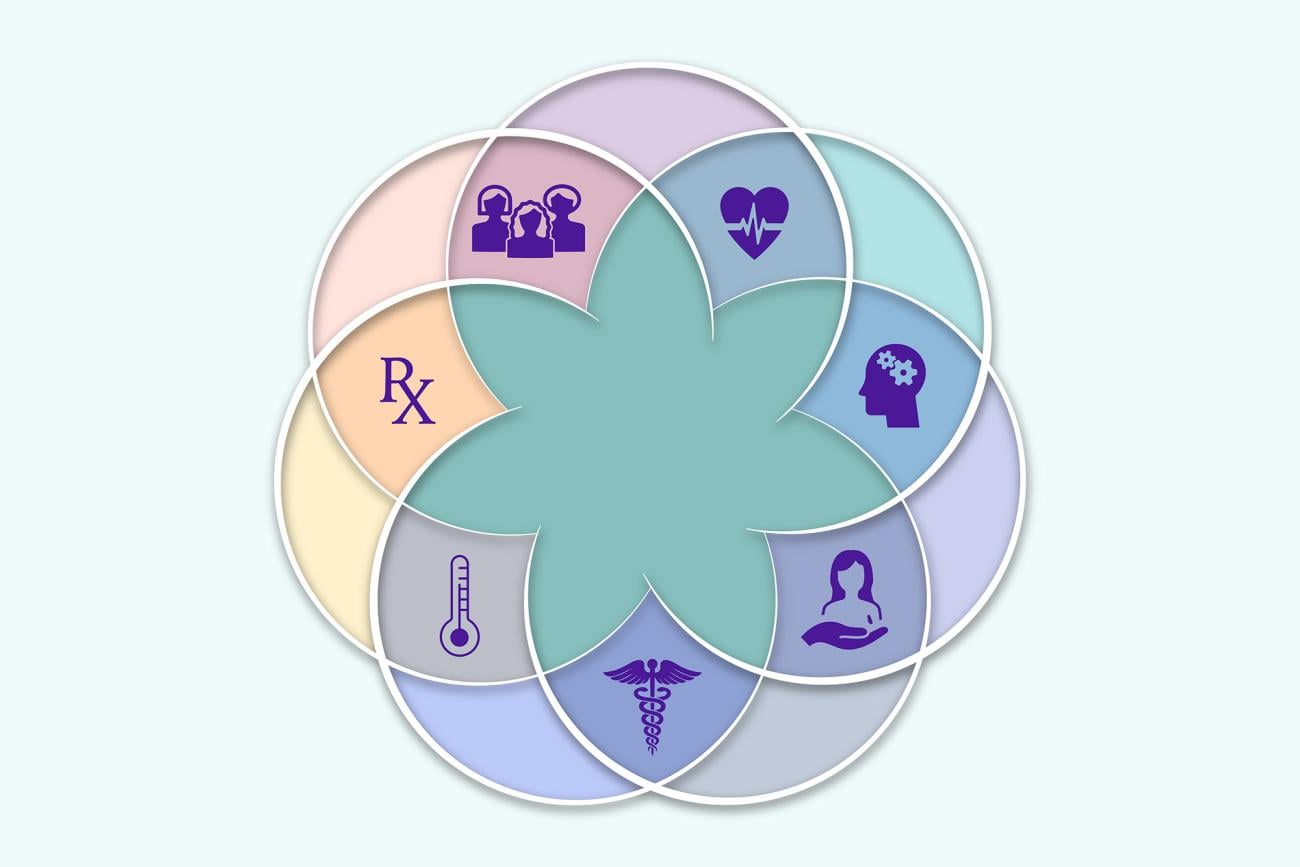
This challenge seeks to identify, amplify, and reward curricula that comprehensively address the menopausal transition, including menopause hormone therapy, within U.S. health education programs.
Total cash prizes: $2,500,000
Overview
The National Institutes of Health (NIH) Office of Research on Women’s Health (ORWH) announces the COMpetency in Menopause & Integrated Therapy (COMMIT) Challenge. The mission of ORWH is to support and integrate research on women’s health and sex influences across the NIH scientific enterprise to advance discovery and improve health across the life course. In partnership with National Institute of Aging, National Heart Lung and Blood Institute, National Institute of Nursing Research, National Institute of Arthritis and Musculoskeletal and Skin Diseases and NIH Office of the Director, ORWH seeks to identify, amplify, and reward curricula that comprehensively address the menopausal transition, including menopause hormone therapy, within U.S. health education programs. The total prize purse from NIH for this Challenge is $2,500,000.
Subject of the Challenge: Menopause and the menopausal transition are routine life stages with the potential for clinically significant effects on health, functioning, and quality of life. Vasomotor symptoms (hot flashes/night sweats) are common and can be frequent and severe, affecting large proportions of peri- and postmenopausal women in U.S. population-based data.1 Other common symptoms include sleep disturbances, mood changes, headaches, abnormal uterine bleeding, and heart palpitations. With or without these symptoms, the menopausal transition involves many changes in a woman’s physiology and often her health status; therefore, menopause constitutes a pivotal moment for delaying, preventing, or ameliorating chronic disease. Menopause care intersects with cardiovascular risk, bone health, metabolic health, mental health, sexual health, cancer survivorship, and preventive care—domains that span multiple specialties and care settings.
Despite the scope and frequency of menopause-related concerns in clinical practice, training remains variable and often insufficient. National needs assessments in U.S. obstetrics and gynecology training programs show that many programs lack a formal menopause curriculum and that both trainees and program leadership report substantial unmet needs for standardized menopause education and resources.2 Cross-specialty data similarly identify gaps in menopause management knowledge and training exposure among trainees in family medicine, internal medicine, and obstetrics and gynecology.3 At the same time, curricula that are structured and competency-oriented have demonstrated improvements in trainee knowledge and preparedness, including multispecialty menopause training models.4
Menopause hormone therapy (MHT) is a frequent focus of patient questions and clinical decision-making, and the evidence base and clinical guidance have evolved, emphasizing individualized risk–benefit assessment, shared decision-making, and periodic reevaluation. However, without consistent interdisciplinary education, patients may receive inconsistent counseling depending on where they enter the system (primary care, OB/GYN, cardiology, oncology, psychiatry, pharmacy, physical therapy, etc.), contributing to confusion, under-treatment, inappropriate treatment, and differential access to evidence-based care.
Menopause care is inherently interdisciplinary, and workforce readiness depends on multiple specialties. Nurses, pharmacists, behavioral health clinicians, physical/occupational therapists, and other allied health professionals routinely encounter menopause-related symptoms, medication questions, sexual and genitourinary concerns, sleep and mood issues, and comorbidity management. Yet menopause content is rarely embedded as a shared set of competencies across training pathways. Establishing competency-aligned, profession-specific (and team-based) learning objectives is therefore essential to improving quality, consistency, and continuity of menopause care across the U.S. health system.
References
1 Crowe HM, Rich-Edwards JW, Rexrode KM, Jo7e H. Association of migraine and vasomotor symptom severity and duration among naturally menopausal women in Nurses' Health Study II. Menopause. Published online July 22, 2025. doi:10.1097/GME.0000000000002615
2 Allen JT, Laks S, Zahler-Miller C, et al. Needs assessment of menopause education in United States obstetrics and gynecology residency training programs. Menopause. 2023;30(10):1002-1005. doi:10.1097/GME.0000000000002234
3 Kling JM, MacLaughlin KL, Schnatz PF, et al. Menopause Management Knowledge in Postgraduate Family Medicine, Internal Medicine, and Obstetrics and Gynecology Residents: A Cross-Sectional Survey. Mayo Clin Proc. 2019;94(2):242-253. doi:10.1016/j.mayocp.2018.08.033
4 Vesco KK, Brooks NB, Francisco MC, et al. Resident training to optimize patient-focused menopause management: a multispecialty menopause curriculum to enhance knowledge and preparedness. Menopause. 2024;31(2):93-100. doi:10.1097/GME.0000000000002291
Challenge Descriptions and Tracks
To address these gaps, the COMpetency in Menopause & Integrated Therapy (COMMIT) Challenge will incentivize institutions and professional programs to scale and disseminate interdisciplinary
menopause health education explicitly mapped to accreditation competencies. The Challenge will recognize programs that have already implemented evidence-based, scalable curricula and can demonstrate measurable competency gains, while promoting national dissemination of best practices. By advancing both foundational content and role-specific competencies, COMMIT aims to strengthen team-based care, reduce variation in counseling and management (including menopause hormone therapy), and improve outcomes across the menopausal transition.
The goal of this Challenge is to identify and amplify curricula that comprehensively address the menopausal transition, including menopause hormone therapy, within U.S. health education programs. NIH and ORWH will disseminate selected curricula to medical and health professional training programs and relevant accreditation bodies. Eligible submissions may include courses, workshops, seminar or webinar series, coaching and mentoring models, immersive training experiences, and supervised clinical training programs.
This Challenge is intended to recognize and advance existing, evidence-based, scalable curricula. It will not award prizes for the development of new programs.
The Challenge has two tracks.
Track 1: Core curriculum
This track supports evidence-based menopause curriculum applicable across all health professions. The objective is to establish foundational competencies for providers in all fields who encounter patients in midlife and beyond. Curricula must be competency-based, aligned where possible with accreditation standards, and of sufficient depth and duration to ensure measurable proficiency. Interprofessional models and demonstrated implementation with learner assessment are strongly encouraged. The emphasis is on scalable modules that can be adopted nationally.
Core content should include:
- Physiology of the menopausal transition
- Common symptoms
- Cardiometabolic and bone health
- Cancer survivorship considerations or treatment induced menopause
- Principles of menopause hormone therapy and non-hormonal management
- Risk assessment and contraindications
- Communication and shared decision-making
Track 2: Specialty-specific competencies
This track supports advanced or role-specific curricula tailored to particular disciplines. While Track 1 establishes foundational knowledge, Track 2 defines the additional competencies required within specific scopes of practice. Submissions should articulate clear specialty-aligned competencies and corresponding assessment strategies. Competitive entries will demonstrate alignment with relevant professional standards and show how specialty content builds on the core curriculum to support coordinated, team-based care.
Examples of specialty specific competencies include:
- Complex hormone therapy management in obstetrics and gynecology
- Gastrointestinal health
- Longitudinal risk management in primary care
- Mental health, alcohol use and substance use
- Menopause considerations in cardiology, endocrinology, oncology, and psychiatry
- Metabolic health and weight management
- Musculoskeletal health and physical fitness; exercise
- Nutrition
- Pharmacologic management
- Symptom management and care coordination in nursing and allied health fields
- Pelvic floor dysfunction
- Ocular health and vision
- Dental, craniofacial, and oral health
To be highly competitive in this Challenge, solutions must:
- Provide an Overview of the Menopause Curriculum. This overview should describe the curriculum goals, educational content being conveyed, the education or training approaches and modalities being used, and the participants being reached.
- Describe the Menopause Focus of the Curriculum. Submissions should describe how the menopause education or training opportunity advances comprehensive, evidence-based midlife women’s health care. This description should address the knowledge and clinical skills conveyed to participants to enable them to recognize, assess, and manage the physiological, psychosocial, and long-term health implications of menopause. Participants should explain how the educational content supports accurate diagnosis, individualized treatment planning, risk–benefit counseling, and interprofessional coordination of care, with relevance across clinical settings and patient populations. The content may be aligned with established clinical guidelines, professional society recommendations, or other evidence-informed frameworks that improve quality, safety, and continuity of care for individuals experiencing menopause.
- Provide an Overview of the Curricular Placement and Competency Alignment. This overview should describe where and how the proposed content is integrated within the broader educational framework (e.g., required or elective components, pre-clinical or clinical phases) and identify the specific competencies and learning objectives addressed. Participants should clearly map the content to relevant accreditation or professional standards and explain how the placement supports progressive competency development.
- Demonstrate the Potential for Scalability. Submissions should document effective implementation of the opportunity, including, for example, years since launch and number and characteristics of participants to date. When information is available, they may include evidence of outcomes or impacts to date. In addition, they should include evidence that the opportunity has the potential to be disseminated effectively to reach broader audiences. This might include evidence of resources to effectively disseminate the opportunity, past steps toward dissemination, or evidence of interest or need in the scientific community. Prize monies may be used to support any in-progress or planned dissemination efforts.
Eligibility to enter this prize competition is limited to fully accredited, U.S.-based, non-profit, public or private academic institutions offering medical, nursing, and allied health professional degrees, including, but not limited to, the below:
- Allopathic Medicine (M.D., Undergraduate Medical Education)
Liaison Committee on Medical Education (LCME) - Dentistry (D.D.S. or D.M.D.)
Commission on Dental Accreditation (CODA) - Dietetics / Nutrition (Dietetics or Nutrition Degrees)
Accreditation Council for Education in Nutrition and Dietetics (ACEND) - Graduate Medical Education (Residency Programs)
Accreditation Council for Graduate Medical Education (ACGME) - Nursing (Undergraduate or Graduate Nursing Degrees)
Commission on Collegiate Nursing Education (CCNE); Accreditation Commission for Education in Nursing (ACEN) - Occupational Therapy (O.T.D., M.O.T., or equivalent)
Accreditation Council for Occupational Therapy Education (ACOTE) - Osteopathic Medicine (D.O., Undergraduate Medical Education)
Commission on Osteopathic College Accreditation (COCA) - Pharmacy (Pharm.D.)
Accreditation Council for Pharmacy Education (ACPE) - Physical Therapy (D.P.T. or equivalent)
Commission on Accreditation in Physical Therapy Education (CAPTE)
Partners
- Office of Research on Women’s Health
- National Institute of Aging
- National Heart Lung and Blood Institute
- National Institute of Nursing Research
- National Institute of Arthritis and Musculoskeletal and Skin Diseases
- NIH Office of the Director
Timeline
• Challenge Submission Opens: October 19, 2026, 11:00 AM ET
• Challenge Submission Closes: January 29, 2027, 8:00 PM ET
• Judging: February 2027- March 2027
• Winners Announced: March 2027
Statutory Authority to Conduct the Challenge
The Office of Research on Women’s Health (ORWH) within the NIH Office of the Director is conducting this Challenge under the America Creating Opportunities to Meaningfully Promote Excellence in Technology, Education, and Science (COMPETES) Reauthorization Act of 2010, as amended [15 U.S.C. § 3719]. ORWH’s mission is to lead, develop, and support a range of research programs, initiatives, and policies to improve the health of all women at all stages of the life course and advance the careers of women’s health researchers. This Challenge is consistent with and promotes that mission by identifying and rewarding exemplary curricula for integrating menopause training into medical education from across the nation.
Prizes
Amount of the Prize: The total prize purse for this Challenge is $2,500,000. Prizes will be awarded following the successful completion of the Challenge in the following amounts: 7 prizes up to $200,000 each for Track 1 and 11 prizes up to $100,000 for Track; however, this is contingent upon receiving a sufficient number of meritorious submissions within each Track. NIH/ORWH reserves the right to issue additional or fewer prizes within each Track.
In addition to cash awards, prize-winning curricula will be publicly amplified and disseminated by NIH for use by accredited medical schools and other health professional training programs.
Award Approving Official
The Award Approving Official will be the NIH Deputy Director for Program Coordination, Planning, and Strategic Initiatives, or as otherwise delegated.
Payment of the Prize
Prizes awarded under this Challenge will be paid by electronic funds transfer and may be subject to federal income taxes. The Department of Health and Human Services (HHS)/NIH will comply with the Internal Revenue Service withholding and reporting requirements, where applicable. Entities participating in this Challenge are required to request and obtain a free Unique Entity ID (UEI), if they have not already done so, via SAM.gov as this will expedite prize payment. Additional information can be found at https://sam.gov/content/entity-registration.
NIH reserves the right, in its sole discretion, to (a) cancel, suspend, or modify the Challenge, or any part of it, for any reason, and/or (b) not award any prizes if no submissions are deemed worthy.
Rules
Eligibility Rules
To be eligible to win a prize under this Challenge, a Participant institution:
- Shall have registered to participate in the Challenge under the rules promulgated by the National Institutes of Health (NIH) as published in this announcement;
- Shall have complied with all the requirements set forth in this announcement;
- Shall be a fully accredited, U.S.-based, non-profit, public or private academic institution offering one or more medical, nursing, and/or allied health professional degrees that meets the appropriate Profession/Program Type, Degree or Training Granted, and Recognized Accrediting Body criteria, including, but not limited, the below:
- Allopathic Medicine (M.D., Undergraduate Medical Education)
Liaison Committee on Medical Education (LCME) - Dentistry (D.D.S. or D.M.D.)
Commission on Dental Accreditation (CODA) - Dietetics / Nutrition (Dietetics or Nutrition Degrees)
Accreditation Council for Education in Nutrition and Dietetics (ACEND) - Graduate Medical Education (Residency Programs)
Accreditation Council for Graduate Medical Education (ACGME) - Nursing (Undergraduate or Graduate Nursing Degrees)
Commission on Collegiate Nursing Education (CCNE); Accreditation Commission for Education in Nursing (ACEN) - Occupational Therapy (O.T.D., M.O.T., or equivalent)
Accreditation Council for Occupational Therapy Education (ACOTE) - Osteopathic Medicine (D.O., Undergraduate Medical Education)
Commission on Osteopathic College Accreditation (COCA) - Pharmacy (Pharm.D.)
Accreditation Council for Pharmacy Education (ACPE) - Physical Therapy (D.P.T. or equivalent)
Commission on Accreditation in Physical Therapy Education (CAPTE)
- Allopathic Medicine (M.D., Undergraduate Medical Education)
- Shall be incorporated in and maintain a primary place of business in the United States;
- Shall not be a federal entity or federal employee acting within the scope of their employment;
- Shall not be an employee of the Department of Health and Human Services (HHS, or any other component of HHS) acting in their personal capacity;
- Who is employed by a federal agency or entity other than HHS (or any component of HHS), should consult with an agency ethics official to determine whether the federal ethics rules will limit or prohibit the acceptance of a prize under this Challenge;
- Shall not be a judge of the Challenge, or any other party involved with the design, production, execution, or distribution of the Challenge or the immediate family of such a party (i.e., spouse, parent, step-parent, child, or step-child).
Participation Rules
- Participants may not use federal funds from a grant award or cooperative agreement to develop their Challenge submissions or to fund efforts in support of their Challenge submissions.
- Federal contractors may not use federal funds from a contract to develop their Challenge submissions or to fund efforts in support of their Challenge submissions.
- By participating in this Challenge, each Participant agrees to assume any and all risks and waive claims against the federal government and its related entities, except in the case of willful misconduct, for any injury, death, damage, or loss of property, revenue, or profits, whether direct, indirect, or consequential, arising from participation in this Challenge, whether the injury, death, damage, or loss arises through negligence or otherwise.
- Based on the subject matter of the Challenge, the type of work that it will possibly require, as well as an analysis of the likelihood of any claims for death, bodily injury, property damage, or loss potentially resulting from Challenge participation, no Participant participating in the Challenge is required to obtain liability insurance, or demonstrate financial responsibility, or agree to indemnify the federal government against third party claims for damages arising from or related to Challenge activities in order to participate in this Challenge.
- A Participant shall not be deemed ineligible because the Participant used federal facilities or consulted with federal employees during the Challenge if the facilities and employees are made available to all Participants participating in the Challenge on an equitable basis.
- By participating in this Challenge, each Participant warrants that they are sole author or owner of, or has the right to use, any copyrightable works that the submission comprises, that the works are wholly original with the Participant (or is an improved version of an existing work that the Participant has sufficient rights to use and improve), and that the submission does not infringe any copyright or any other rights of any third party of which the Participant is aware.
- By participating in this Challenge, each Participant grants to the NIH an irrevocable, paid-up, royalty-free nonexclusive worldwide license to reproduce, publish, post, link to, share, and display publicly the submission on the web or elsewhere, and a nonexclusive, nontransferable, irrevocable, paid-up license to practice, or have practiced for or on its behalf, the solution throughout the world. Each Participant will retain all other intellectual property rights in their submissions, as applicable. To participate in the Challenge, each Participant must warrant that there are no legal obstacles to providing the above-referenced nonexclusive licenses of the Participant’s rights to the federal government. To receive an award, Participants will not be required to transfer their intellectual property rights to NIH, but Participants must grant to the federal government the nonexclusive licenses recited herein.
- Each Participant agrees to follow all applicable federal, state, and local laws, regulations, and policies.
- Each Participant participating in this Challenge must comply with all terms and conditions of these rules, and participation in this Challenge constitutes each such Participant’s full and unconditional agreement to abide by these rules. Winning is contingent upon fulfilling all requirements herein.
- As a condition for winning a cash prize in this Challenge, each Participant that has been selected as a winner must complete and submit all requested winner verification and payment documents to NIH within 10 business days of formal notification. Failure to return all required verification documents by the date specified in the notification may be a basis for disqualification of a cash prize winning submission.
- By participating in this Challenge, each Participant irrevocably grants to NIH the right to the use of their name, affiliation, city and state, and likeness or image for the purposes of publicity releases and any other promotion of this Challenge.
Judging Criteria
Basis Upon Which a Winner Will be Selected
Submissions from Participants received in advance of the submission deadline will first undergo an administrative triage step to review Participant eligibility to compete in this Challenge as well as submission completeness and applicability of scope. Complete and applicable submissions from eligible institutions will then be evaluated by an Evaluation Panel composed of technical experts with subject matter expertise relevant to the Challenge goals and using the Evaluation Criteria listed below. The Evaluation Panel will individually assess each submission and provide their scores to the Judging Panel. The Judging Panel, composed of federal employees from NIH and potentially other agencies, will select the winners pending final award decision approval by the Award Approving Official.
Submission packages will be assessed using the following criteria for the relevant track. Each criterion will be rated on a five-point scale from “not at all” to “completely.” Ratings across criteria will be combined to produce a score for each submission.
Track 1 – Core Curriculum
- Completeness: To what extent does the submission provide a curriculum overview, describe its menopause focus, outline curricular placement with competency alignment, and demonstrate scalability.? To what extent does the submission describe the education or training goals, the educational content being conveyed, the education or training approaches and modalities being used, and the participants being reached?
- Menopause Focus: To what extent does the curriculum meaningfully strengthen competency in menopause-related care across settings? To what extent does the program equip learners to recognize, assess, and manage menopause-related conditions?
- Diagnostic, Treatment Planning and Coordination of Care: To what extent does the content support accurate diagnosis, individualized treatment planning, and risk–benefit counseling? To what extent does the curriculum promote collaborative care and reflect interdisciplinary roles in menopause management?
- Alignment with Evidence-Based Guidelines: To what extent does the curriculum aligned with established clinical guidelines, professional society recommendations, or other recognized frameworks?
- Curriculum Design: To what extent does the curriculum convey comprehensive, evidence-based menopause content across physiological, psychosocial, and long-term health domains?
- Curricular Placement: Is content thoughtfully integrated (e.g. preclinical vs clinical)? Are competencies and learning objectives clearly defined and mapped to accreditation or professional standards? To what extent does the placement support staged skill development appropriate to learner level?
- Engaging Diverse Audiences of Learners: Is the intended learner population clearly defined, and does the curriculum appropriately address their scope of practice and training level? To what extent does the opportunity leverage education and training approaches and modalities that are tailored to effectively deliver educational content to the target audience(s)? Are the instructional strategies (e.g., didactic, case-based, simulation, clinical training, online modules) appropriate, well-designed, and suited to the learner population?
- Potential for Broader Dissemination and Uptake: To what extent does the submission document effective implementation of the opportunity to date? To what extent does the opportunity have the potential to be disseminated effectively to reach broader audiences? Are there resources, interest, or need to suggest the opportunity has the potential for dissemination and uptake?
- Innovativeness: How innovative is this educational or training opportunity, in educational content, teaching approaches and modalities, and participants? To what extent do innovations in this opportunity deliver unique content, enhance uptake of educational content, or increase access to the opportunity for larger or more varied audiences?
Track 2 - Specialty-Specific Competencies
This track will include all criteria listed in Track 1 – Core Curriculum and:
- Specialty based care: To what extent does the submission convey impact of menopause within the specialty? To what extent does the submission detail the unique interplay of menopause within the specialty? Are the unique care, treatment plans or education discussed for that specialty?
How to Enter
Registration Process: The official announcement for the COMpetency in Menopause & Integrated Therapy (COMMIT) Challenge can be found on a publicly accessible government website at https://www.nih.gov/challenges. The Challenge registration and submission portal will be administered by a third party on behalf of NIH. is available at www.commitchallenge.org.
To register, Participants will need to provide the name, role, and contact information of a Point of Contact (described below) and all individuals competing in this Challenge on behalf of an eligible institution. Two or more eligible institutions submitting an entry as a partnership should indicate this and provide Points of Contact for each institution. All Participants must certify they have read, understand, and agree to abide by the official eligibility rules, participation rules, and requirements for the Challenge as stated in this announcement.
Point of Contact: Each participating institution is required to identify a Point of Contact who will register and submit on behalf of the Participant. The Point of Contact is responsible for all communications with the Challenge sponsors. The Point of Contact representing the institution should be employed by and acting at the behest of the institution, such as the medical school President, Provost, Chancellor, Dean, or other senior-level administrator. In the event of winning a cash prize, the prize will be paid directly to the institution, not to the Point of Contact. To be eligible to receive a cash prize, the institution must be incorporated in and maintain a primary place of business in the United States and meet all other eligibility requirements as stated in this Challenge Announcement. In the event that a dispute regarding the identity of the Point of Contact who actually submitted the entry cannot be resolved to NIH’s satisfaction, the affected submission will be deemed ineligible.
Submission Requirements and Process
The focus of this challenge is to identify and reward exemplary curricula for integrating menopause training into medical education across the nation. Winning entries will be disseminated to integrate knowledge into the medical care enterprise. Curricula are expected to be comprehensive and innovative in design and provide sufficient detail to indicate that the solutions can be scaled at a national level. During registration, participants should indicate which track they would like to be considered for.
Once Participants have completed the registration step and established an account in the online submission portal at the link above, they must provide the following as their formal submission:
- Title and Executive Summary, the latter of which should include a brief description of the curriculum and how it will help to more effectively integrate menopause knowledge into the medical care enterprise.
- Description of the curriculum and how it is designed to serve key learners. Supporting documentation such as syllabi, presentation slides or course handouts should be included in an appendix.
- Description and documentation of the effectiveness of the curriculum.
- Description and documentation of the potential for broader dissemination at the national level and uptake of the curriculum by accredited medical schools and other health professional training programs.
Participants must submit all of the above to be considered for a prize.
All submissions must follow the format and instructions described below.
- Consist of a single PDF file with page size set to 8.5” x 11” and at least 1-inch margins
- Use a font no smaller than 11-point Arial and line spacing no less than 1.0
- Be written in English
- Title and Executive Summary not to exceed one page and included as the first page of the PDF file
- Not use the HHS logo or official seal or the logo of NIH in the entries and must not claim federal government endorsement
Only one entry per institution is permitted, either an individual entry or a partnership entry with other eligible institution(s). Two or more eligible institutions that have formed close collaborations to enhance menopause education across the institutions may submit to this Challenge as a partnership. Eligible institutions may submit only one entry, either individually or jointly with other eligible institution(s). If a partnership entry is selected for a prize, NIH will split the prize equally amongst the eligible partner institutions.
Submission Deadline: January 29, 2027, 8:00 PM ET. Participants who do not submit their complete submission by this deadline will not have their submission considered for this Challenge.
Contact
For further information, contact: [email protected]
Winners
Winners will be announced following judging of submissions.
This page last reviewed on