NIDDK Early Research Partnership Engagement Challenge
NIDDK Early Research Partnership Engagement Challenge
Connect Earlier. Strengthen Collaboration. Advance NIDDK Research.
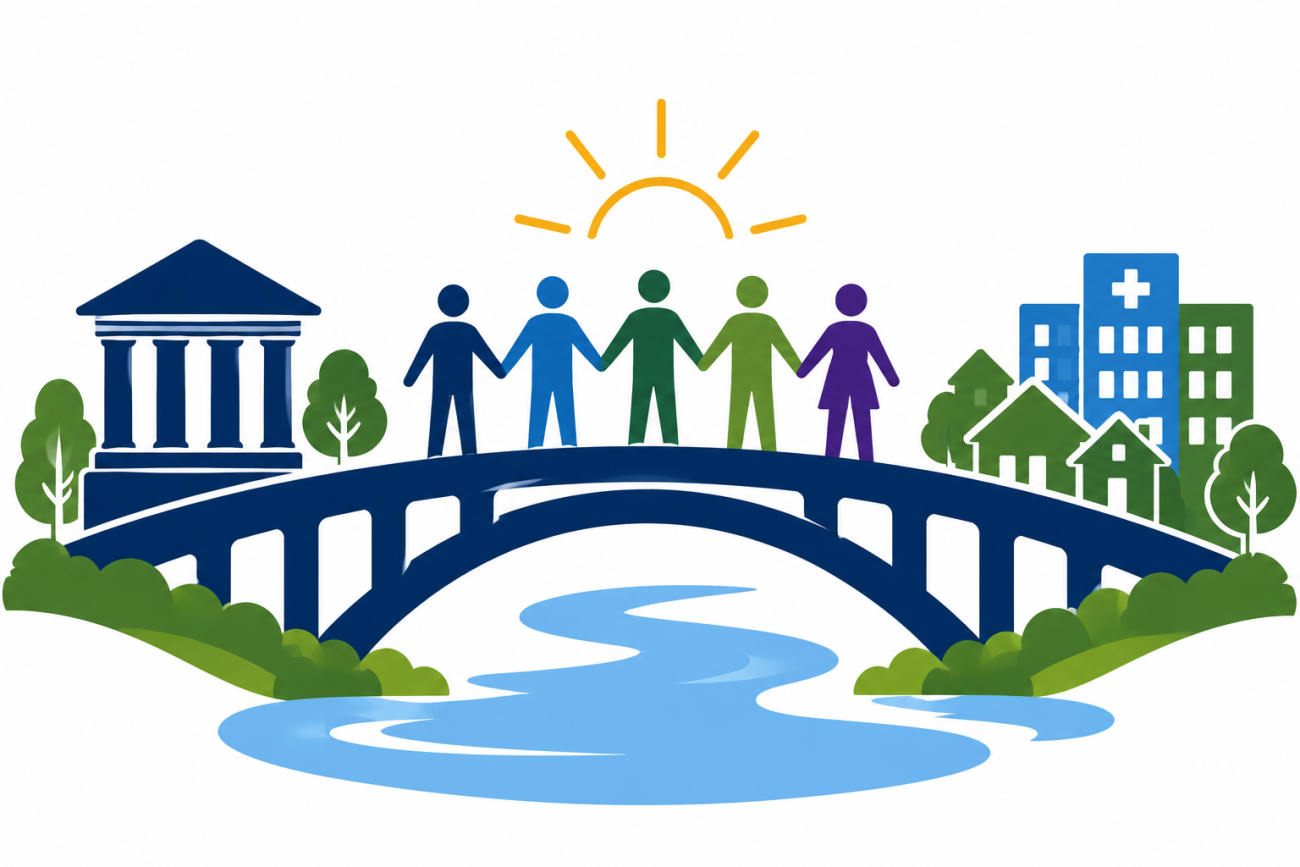
This Challenge seeks meaningful, actionable, innovative, and practical strategies to foster early community engagement and build new academic-community partnerships for future research aligned with the NIDDK mission.
Registration period: 10/1/2026–11/30/2026
Total prizes: up to $1,000,000
Description
Subject of the Challenge: The National Institute of Diabetes and Digestive and Kidney Diseases (NIDDK) supports research that improves understanding, prevention, and treatment of diabetes and other endocrine and metabolic diseases; digestive and liver diseases; nutritional disorders; obesity; and kidney, urologic, and hematologic diseases. Many populations across the United States—especially people living in rural, medically underserved, and low-resource communities—experience a high burden of these conditions but remain underrepresented in research. This gap limits the reach, relevance, and impact of NIDDK-supported science.
Community engagement—connecting people by geography, identity, or shared circumstances to collaboratively address health issues—builds mutual trust and understanding. Early engagement during research planning improves feasibility, sustainability, impact, and health outcomes for all populations. A key barrier is that many traditional NIDDK research grant mechanisms do not support robust community and partner engagement during the earliest stages of research planning, including before grant submission. Yet early engagement is essential to building trust, identifying shared priorities, improving feasibility and sustainability, and ensuring that research addresses real-world needs. Strong partnerships formed at the planning stage can improve implementation, translation, and dissemination, ultimately increasing research impact.
With NIDDK, the National Institute on Minority Health and Health Disparities (NIMHD) is a co-sponsor and co-funder of this Challenge; this partnership demonstrates NIH’s commitment to improve the health for all people and all communities by fostering meaningful community engagement, expanding participation in research, and supporting sustainable partnerships that make research more responsive to the priorities and needs of populations affected by some of the most common, chronic, costly and consequential diseases in the country. To address this need, this Challenge seeks meaningful, actionable, innovative, and practical strategies to foster early community engagement and build new academic-community partnerships for future research aligned with the NIDDK mission. The goal is to incentivize the co-development of research ideas that could lead to future community-engaged studies focused on prevention or treatment of conditions within NIDDK’s mission areas. Phase 1 would be open to all teams that register no later than November 30, 2026. Phase 2 would be limited to winners of Phase 1.
Phase 1 submissions should describe:
- the condition or disease the team seeks to address;
- the proposed partnership(s);
- the role, capacity, and contribution of each partner; and
- the activities the partners would undertake together.
Phase 2 submissions should demonstrate:
- how the implemented partnership plan improved research engagement (based on indicators such as relevance, participation, etc.), and
- evidence of impact.
There is no required number of partners, but teams should propose partnerships that are both meaningful and manageable. Examples of potential partners include patient or caregiver organizations, academic institutions, schools, faith-based organizations, community health centers, social service organizations, professional societies, community groups, and for-profit or nonprofit organizations. Team approaches that could be adapted or scaled across settings or populations are especially encouraged.
NIDDK is particularly interested in partnerships that are mutually beneficial, sustainable, and positioned to expand access to research participation among people affected by diseases and conditions within its mission. Phase 1 is intended to surface the best initial engagement plans. Proposed concepts should be feasible in real-world settings. Submissions should clearly distinguish between elements that already exist and those that are aspirational.
This Challenge aligns with NIDDK’s Strategic Plan Goal #4, advancing stakeholder engagement as true research partners by involving patients, community members, and other partners as true collaborators throughout the research process. It also supports the NIH Director’s Statement on Advancing NIH’s Mission through a Unified Strategy by shifting to solution-oriented approaches in health disparities research.
Partners: The National Institute on Minority Health and Health Disparities (NIMHD) is a co-sponsor of this Challenge.
Dates:
- Challenge Launch: September 1, 2026
- Registration Period: October 1, 2026 – November 30, 2026
- Phase 1 Submission Period: December 8, 2026 – May 2027
- Phase 1 Judging: June 2027
- Phase 1 Winners Announced: June 2027
- Phase 2 Submission Period: June 2027 – May 2028
- Phase 2 Judging: June 2028
- Phase 2 Winners Announced: July 2028
Statutory Authority to Conduct the Challenge.
The National Institute of Diabetes and Digestive and Kidney Diseases is conducting this Challenge under the America Creating Opportunities to Meaningfully Promote Excellence in Technology, Education, and Science (COMPETES) Reauthorization Act of 2010, as amended [15 U.S.C. § 3719].
The goals of this Challenge are consistent with and advance the NIDDK mission by fostering early, equitable partnerships with communities that make research on metabolic, digestive, liver, nutritional, obesity, kidney, urologic, and hematologic conditions more accessible, relevant, feasible, and responsive to real-world needs. By expanding engagement and research participation among rural, medically underserved, low-resource, and other underrepresented populations, the Challenge can strengthen implementation, translation, dissemination, and ultimately health outcomes. Further, this Challenge is directly aligned with the NIDDK Strategic Plan for Research, Scientific Goal #4: Advance stakeholder engagement – true partners in research.
Prizes
Amount of the Prize: NIDDK will award up to fifteen (15) Phase 1 winners at $25,000 each. For Phase 2, it is anticipated that there will be a Grand Prize winner ($300,000), a 1st Runner up ($150,000), a 2nd Runner up ($100,000) and a 3rd Runner up ($75,000), for a total of up to $1,000,000 in prizes. All Phase 2 winning partner teams will be invited (not required) to present their submission to an NIH audience after Phase 2 winners have been announced.
Award Approving Official: The Award Approving Official will be Griffin P. Rodgers, MD, MACP, Director, National Institute of Diabetes and Digestive and Kidney Diseases.
Payment of the Prize: Prizes awarded under this Challenge will be paid by electronic funds transfer and may be subject to federal income taxes. HHS/NIH will comply with the Internal Revenue Service withholding and reporting requirements, where applicable.
Participants who are competing on behalf of an entity in this Challenge are encouraged, but not required, to request and obtain a free Unique Entity ID (UEI), if they have not already done so, via SAM.gov as this will expedite prize payment. Additional information can be found at https://sam.gov/content/entity-registration .
NIH/NIDDK reserves the right, in its sole discretion, to (a) cancel, suspend, or modify the Challenge, or any part of it, for any reason, and/or (b) not award any prizes if no submissions are deemed worthy.
Rules
Eligibility Rules:
To be eligible to win a prize under this Challenge, a Participant (whether a group of individuals/team, or entity) —
- Shall have registered to participate in the Challenge under the rules promulgated by the National Institutes of Health (NIH) as published in this announcement;
- Shall have complied with all the requirements set forth in this announcement;
- In the case of a private entity, shall be incorporated in and maintain a primary place of business in the United States, and in the case of an individual participating in a group, shall be a citizen or permanent resident of the United States. However, non-U.S. citizens and non-permanent residents can participate as a member of a team that otherwise satisfies the eligibility criteria. Non-U.S. citizens and non-permanent residents are not eligible to win a monetary prize (in whole or in part). Their participation as part of a winning team, if applicable, may be recognized when the results are announced.
- Shall not be a federal entity or federal employee acting within the scope of their employment;
- Shall not be an employee of the Department of Health and Human Services (HHS, or any other component of HHS) acting in their personal capacity;
- Who is employed by a federal agency or entity other than HHS (or any component of HHS), should consult with an agency ethics official to determine whether the federal ethics rules will limit or prohibit the acceptance of a prize under this Challenge;
- Shall not be a judge of the Challenge, or any other party involved with the design, production, execution, or distribution of the Challenge or the immediate family of such a party (i.e., spouse, parent, step-parent, child, or step-child).
- Shall be 18 years of age or older at the time of submission.
Participation Rules:
- Participants (whether a group of individuals/team, or entity) may not use federal funds from a grant award or cooperative agreement to develop their Challenge submissions or to fund efforts in support of their Challenge submissions.
- Federal contractors may not use federal funds from a contract to develop their Challenge submissions or to fund efforts in support of their Challenge submissions.
- By participating in this Challenge, each Participant (whether a group of individuals/team, or entity) agrees to assume any and all risks and waive claims against the federal government and its related entities, except in the case of willful misconduct, for any injury, death, damage, or loss of property, revenue, or profits, whether direct, indirect, or consequential, arising from participation in this Challenge, whether the injury, death, damage, or loss arises through negligence or otherwise.
- Based on the subject matter of the Challenge, the type of work that it will possibly require, as well as an analysis of the likelihood of any claims for death, bodily injury, property damage, or loss potentially resulting from Challenge participation, no Participant (whether a group of individuals/team, or entity) participating in the Challenge is required to obtain liability insurance, or demonstrate financial responsibility, or agree to indemnify the federal government against third party claims for damages arising from or related to Challenge activities in order to participate in this Challenge.
- A Participant (whether a group of individuals/team, or entity) shall not be deemed ineligible because the Participant used federal facilities or consulted with federal employees during the Challenge if the facilities and employees are made available to all Participants participating in the Challenge on an equitable basis.
- By participating in this Challenge, each Participant (whether a group of individuals/team, or entity) warrants that they are sole author or owner of, or has the right to use, any copyrightable works that the submission comprises, that the works are wholly original with the Participant (or is an improved version of an existing work that the Participant has sufficient rights to use and improve), and that the submission does not infringe any copyright or any other rights of any third party of which the Participant is aware.
- By participating in this Challenge, each Participant (whether a group of individuals/team, or entity) grants to the NIH an irrevocable, paid-up, royalty-free nonexclusive worldwide license to reproduce, publish, post, link to, share, and display publicly the submission on the web or elsewhere, and a nonexclusive, nontransferable, irrevocable, paid-up license to practice, or have practiced for or on its behalf, the solution throughout the world. Each Participant will retain all other intellectual property rights in their submissions, as applicable. To participate in the Challenge, each Participant must warrant that there are no legal obstacles to providing the above-referenced nonexclusive licenses of the Participant’s rights to the federal government. To receive an award, Participants will not be required to transfer their intellectual property rights to NIH, but Participants must grant to the federal government the nonexclusive licenses recited herein.
- Each Participant (whether a group of individuals/team, or entity) agrees to follow all applicable federal, state, and local laws, regulations, and policies.
- Each Participant (whether a group of individuals/team, or entity) participating in this Challenge must comply with all terms and conditions of these rules, and participation in this Challenge constitutes each such Participant’s full and unconditional agreement to abide by these rules. Winning is contingent upon fulfilling all requirements herein.
- As a condition for winning a cash prize in this Challenge, each Participant (whether a group of individuals/team, or entity) that has been selected as a winner must complete and submit all requested winner verification and payment documents to NIH within 20 business days of formal notification. Failure to return all required verification documents by the date specified in the notification may be a basis for disqualification of a cash prize winning submission.
Judging Criteria
Basis Upon Which a Winner Will be Selected. Only materials in the submission package will be assessed by the judges.
Phase 1:
Submission packages must include the following:
- Concept submission narrative (not to exceed 5 pages),
- Partner organization narratives (not to exceed 5 pages total, websites for each organization are welcomed but not required), and
- letter of support from each partner (not to exceed 1 page per partner organization). Submission packages that do not include all these required elements will not be judged or further considered.
Submission packages will be assessed using the following five criteria. Each criterion will be worth 20 points. The scores for each criterion will be combined to produce an overall score for each submission.
Phase 1 Judging Criteria:
- Clarity/Quality of Submission: How well is the submission organized, clearly written, and communicates the idea effectively?
- Importance & Relevance: To what extent does the submission address a meaningful community need or public health challenge? The submission should clearly explain why the proposed idea matters and who will benefit – within NIDDK’s mission.
- Innovation & Creativity: How well does the submission introduce a novel approach, adapt existing methods in innovative ways, or address a gap in current practice?
- Feasibility & Pragmatism: To what degree is the plan realistic for future development related to objectives, timeline, resources, and potential barriers are appropriately considered?
- Community Engagement Approach: How well does the submission demonstrate authentic and meaningful engagement with community members. Community roles, decision-making, and partnership principles are clearly described.
Phase 2 Judging Criteria:
Phase 1 winners will exclusively be invited to compete in Phase 2. During Phase 2, participants will be expected to further develop and implement their engagement plan in collaboration with the anticipated partners. With this more detailed plan, judging criteria will include selected criteria from Phase 1 (1. Importance & relevance, 2. Feasibility & Pragmatism, and 3. Community Engagement Approach) plus criteria related to 4. Partnership Implementation & Evaluation plans (including processes and indicators of progress, impact and outcomes). Additional details will be shared when participants are awarded the Phase 1 prize and invited to compete in Phase 2.
Evaluation and Judging
All Phase 1 submissions that are responsive and meet the Eligibility Rules and Submission Requirements will be evaluated and scored by a Judging Panel of qualified expert employees of the federal government using the criteria described above. Winners from Phase 1 will be invited to participate in Phase 2, and an optional pre-Phase 2 webinar where more details on Phase 2 requirements will be shared. The Phase 2 submissions will be evaluated and scored by qualified expert employees of the federal government using the criteria described above.
The Judging Panel will recommend winners based on the individual criterion and overall evaluation scores. The recommended winners will be submitted to the Award Approving Official for a final decision. NIH will not make participants’ evaluation or judging results available to participants or the public.
How to Enter
Registration and Submission Process:
The official announcement of the NIDDK Early Research Engagement Challenge can be found on NIH.gov/challenges. Information about Registration and submission requirements can also be found at https://repository.niddk.nih.gov/data-challenge/challenges/233.
Participants must register by November 30, 2026 to participate in the Challenge in advance on the NIDDK Central Repository (CR) Data Challenge Platform at the link above.
During the registration process, participants will be required to identify whether they are registering to compete in this Challenge as one of the following: as a Team (i.e., registering as a group of individuals competing together but not on behalf of an established organization, institution, or corporation), or as an Entity (i.e., registering as a group of individuals competing together on behalf of a legally established organization, institution, or corporation). Participants will need to provide the name, affiliation, and contact information of all individuals competing in this Challenge as part of a Team or on behalf of an Entity. All Participants must certify they have read, understand, and agree to abide by the official eligibility rules, participation rules, and requirements for the Challenge as stated in this announcement.
- For Teams: Each participating Team is required to identify a Team Leader who will register and submit on behalf of the Team members. The Team Leader is responsible for all communications with the Challenge sponsors and, in the event of winning a cash prize, will be paid the prize in full. To be eligible to receive a cash prize, the Team Leader must be a citizen or permanent resident of the United States. In the event that a dispute regarding the identity of the Team Leader who actually submitted the entry cannot be resolved to NIDDK’s satisfaction, the affected submission will be deemed ineligible.
- For Entities: Each participating Entity is required to identify a Point of Contact who will register and submit on behalf of the Entity. The Point of Contact is responsible for all communications with the Challenge sponsors. In the event of winning a cash prize, the prize will be paid directly to the Entity, not to the Point of Contact. To be eligible to receive a cash prize, the Entity must be incorporated in and maintain a primary place of business in the United States. In the event that a dispute regarding the identity of the Point of Contact who actually submitted the entry cannot be resolved to NIDDK’s satisfaction, the affected submission will be deemed ineligible.
Submission Requirements:
Completed submissions for Phase 1 must be received by the 11:59pm Eastern Time of the published deadline via the NIDDK Central Repository Data Challenge Platform: https://repository.niddk.nih.gov/data-challenge/challenges/233
Phase 1 Submission Requirements
The Phase 1 submission must include all of the following:
1. Concept Submission Narrative
Maximum length: 5 pages
The narrative must describe:
- The condition or disease the team plans to address
- The proposed partnership
- The proposed project
- The expected and desired results
The narrative should explain how the team will involve partners early in the research process using new, innovative, or creative methods.
The plan should be clear, practical, and well organized. Engagement activities should directly support the project goals. The submission must include enough detail to evaluate the strength of the approach and its likelihood of success.
The narrative should also explain:
- Why early partner engagement is important
- How partner input will shape future research design, implementation, or sharing of results
- How early engagement may lead to results that are more useful, actionable, or widely applicable
2. Partner Summary Narrative
Maximum length: 5 pages
The narrative must describe each partner organization, including:
- Their role in the project
- Their ability to carry out the proposed work
- Their expected contributions
The narrative should show how the partners’ goals, experience, and expertise work well together. Strong submissions will explain how each partner’s previous work, perspectives, and skills support the shared goals of the project.
The partnership should be organized to avoid duplicate efforts and make the best use of each partner’s contributions.
A website address for each partner organization may be included, but it is not required.
3. Letters of Support
Maximum length: 1 page per partner organization
A letter of support must be provided by the leadership of each partner organization. Each letter must confirm the organization’s:
- Role
- Responsibilities
- Planned activities
- Commitment to early and ongoing engagement
Each letter should also show the partner’s support for the project, including any planned contribution of time, staff, resources, or infrastructure.
Submission packages that do not include all required materials will not be reviewed or considered.
Phase 2 Submission Requirements
Only Phase 1 winners will be invited to participate in Phase 2. Phase 2 submissions should describe how the team further developed its proposed early-engagement partnership plan and demonstrate how the partnership will strengthen the development of a future community-engaged research project aligned with the NIDDK mission.
Submissions should describe:
- Partnership implementation
- Shared decision-making approaches
- Refining shared research interests and goals
- Potential to improve participation, impact, and engagement outcomes
- Evidence of impact
- Sustainability and next steps
- Adaptability or scalability
Submissions should also identify challenges encountered up until Phase 2 submission, describing how the team addressed them, and summarizing lessons that may inform future community partnerships that help inform research. Additional detailed instructions (including page limits and required templates) will be provided to selected Phase 1 winners at the time of invitation to compete in Phase 2.
Additional Information
Supplementary Information:
To learn more about NIDDK, please visit niddk.nih.gov
To learn more about the NIDDK Strategic Plan for Research, please visit niddk.nih.gov/about-niddk/strategic-plans-reports/niddk-strategic-plan-for-research
To learn more about the NIH Director’s Statement on Advancing NIH’s Mission Through a Unified Strategy, please visit nih.gov/about-nih/nih-director/statements/advancing-nihs-mission-through-unified-strategy
For Further Information Contact: [email protected]
This page last reviewed on