The BRAIN Initiative Photo and Video Contest
Brain Research Through Advancing Innovative Neurotechnologies® Initiative
The BRAIN Initiative Photo and Video Contest
The 2026 BRAIN Initiative Conference hosted a photo and video contest showcasing images and videos made possible by today's advances in neurotechnology.
We are pleased to feature the 2026 winning entries. Together, they highlight the intersection of science, technology, and creativity across the BRAIN community.
Winners
Explore the winners of previous year's entries.
2026
-
First Place Video
A Neural Signature of Affective Pain
Intracranial EEG recordings reveal changes in the aperiodic exponent across cortical and subcortical networks tracking affective pain symptoms in a patient with refractory chronic pain. Encoding is distributed across both cortical and subcortical regions but lateralized to the right hemisphere, including the right anterior and posterior insula and right midcingulate cortex.
By Anusha Allawala, Ph.D., University of California, San Francisco
-
Second Place Video
Neural enlightenment: restoring cognition through thalamic DBS
Ten years ago, the first traumatic brain injury (TBI) patient was implanted with deep brain stimulation (DBS) in thalamus to treat executive function impairment. When asked if she was ready for stimulation, she responded with “light me up!” To date, executive function has been successfully restored in five TBI patients using thalamic DBS. This video demonstrates the modeling of thalamic fibers stimulated during effective therapy in these patients.
By Matthew Hook, University of Florida
-
Third Place Video
Multimodal alignments of functional activity, transcriptomics, and projectomics of the same cell
Example TRU-FACT (Total Registration Under Functional Activity, Connectivity, and Transcriptomics) alignments of in vivo neural Ca2+ activity and spatial transcriptomic data, using conventional, mesoscope, GRIN microlens-based, or miniature two-photon microscopy in awake mice, together with either HCR-FISH or MERFISH. For multiscale studies of structure-function relationships, TRU-FACT enables routine and scalable multimodal investigations of the same cells by providing a broadly applicable experimental and computational pipeline for image alignment and cell registration.
By Lun Wang, Ph.D., Stanford University
-
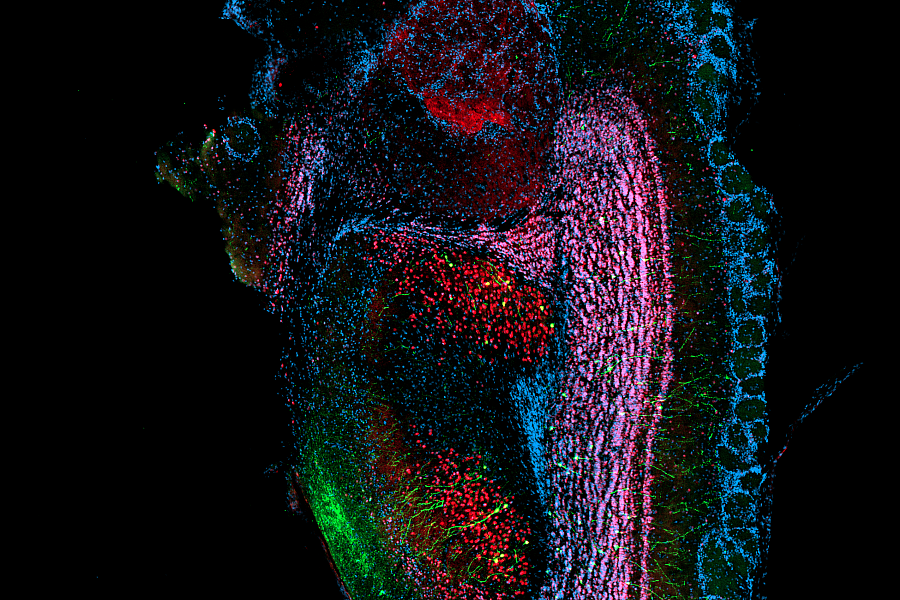
First Place Photo
AAV9-mediated GFP expression in the mouse olfactory bulb
AAV9-GFP was injected into the olfactory bulb of a 7-week-old C57BL/6 mouse to assess transduction efficiency. Brain sections were sectioned at 30 uM. Sections were stained by immunofluorescent-immunohistochemistry (IHC-IF) to visualize transgene expression (GFP, green), neurons (NeuN, red), and nuclei (DAPI, blue). Image acquired at 10x magnification on a Zeiss Axioscan 7 slide scanner.
By Abigail Nimmo, The Ohio State University -
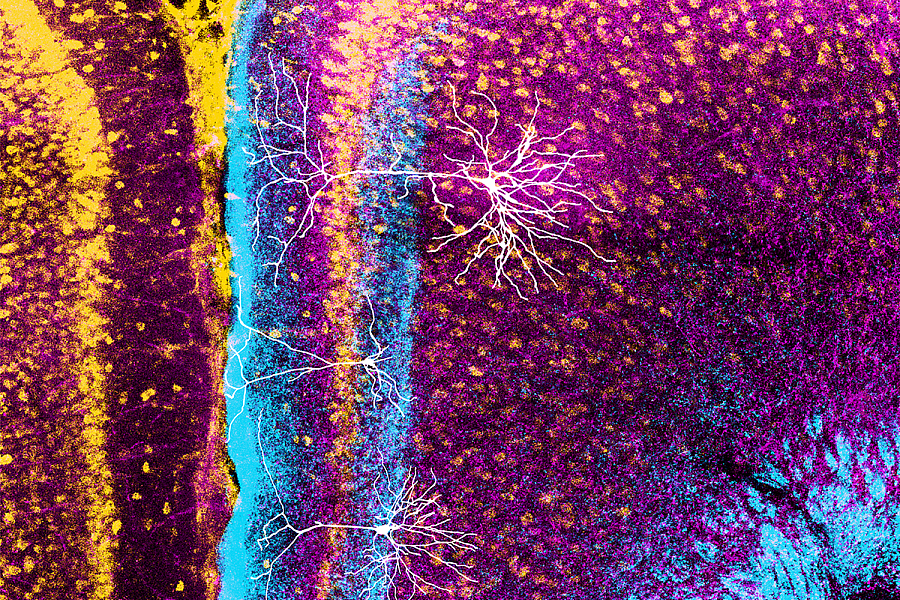
Second Place Photo
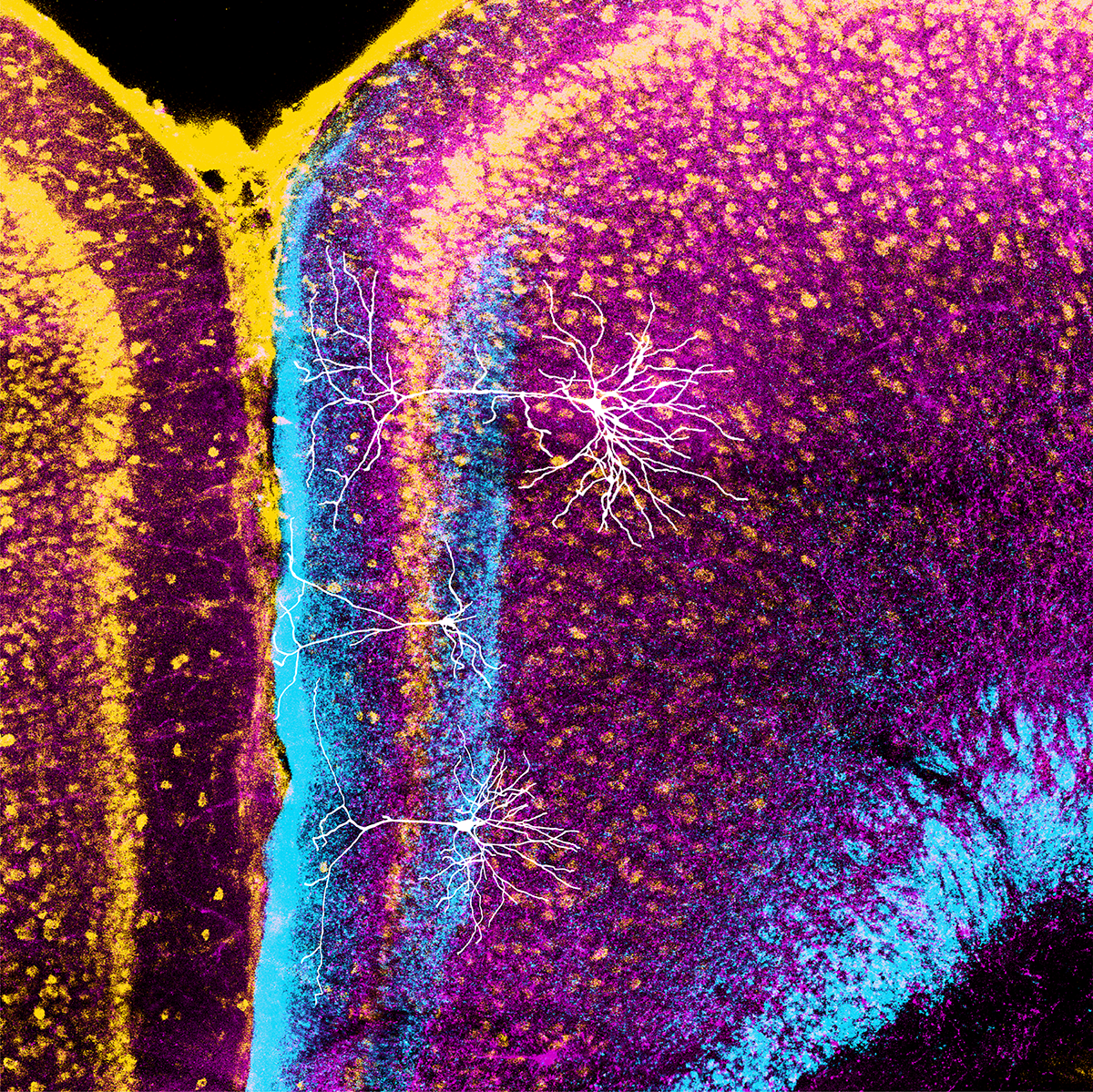
The Little Neuron That Could
The retrosplenial cortex is a brain region important for spatial orientation, fear processing, and imagining oneself in the future. The small neuron shown in the middle is unique to this brain region and can fire at high rates. For this reason, the student who identified this neuron liked to call it "the little neuron that could." This neuron receives inputs from head direction cells in the thalamus (shown in blue), unlike its neighboring, more standard neurons (shown above and below it). Thus, this neuron is uniquely positioned to compute spatial orientation information.
By Omar Ahmed, Ph.D., University of Michigan
-
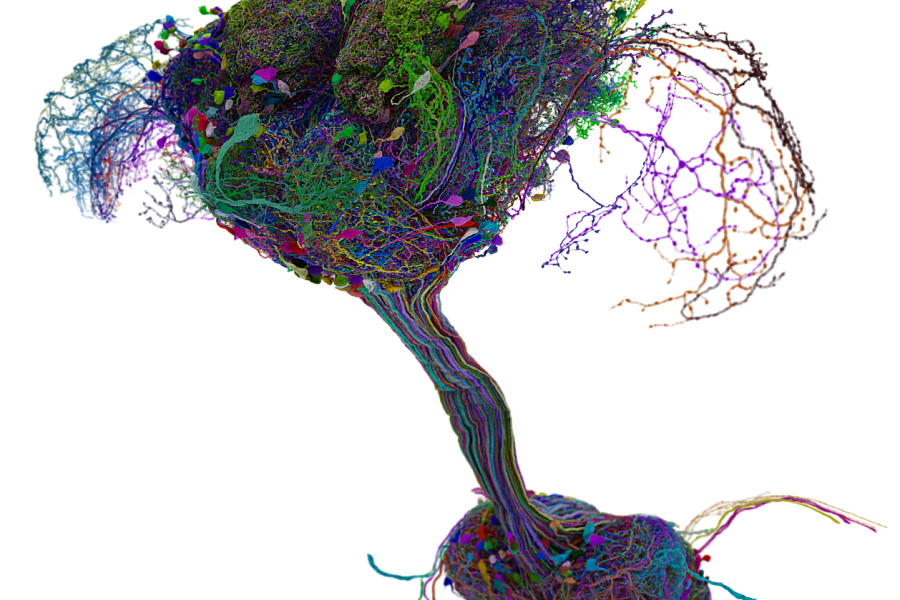
Third Place Photo
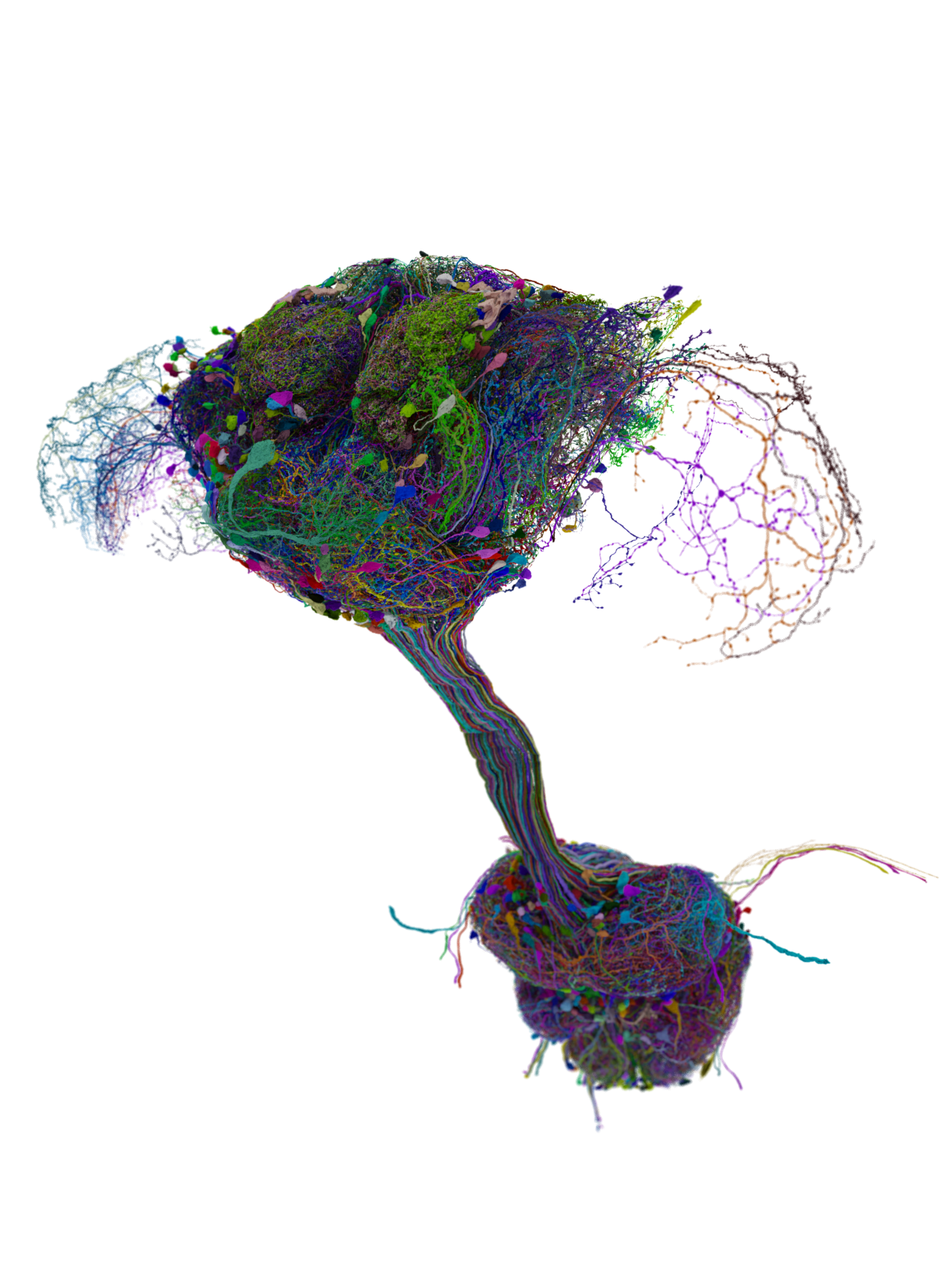
1000 largest neurons in the Drosophila Connectome
This visualization captures the 1,000 largest neurons in the fruit fly central nervous system, offering a comprehensive view by sampling neurons across all functional regions.
By Tyler Sloan, Ph.D., Quorumetrix Studio
2024
-
First place
Exploring the 3D nanoarchitecture of neuronal membranes at dendritic spine by labeling Channelrhodopsin-2
Image of Immunofluorescence-labeled Channelrhodopsin-2 (ChR2) in 50-μm thick tissue-clearing mouse brain slices captured using 4Pi single-molecule localization microscopy. The ChR2-decorated neuromembrane at the dendritic spine is outlined with sub-15-nm 3D resolution pseudocolored by depth position of proteins, revealing nanoscale view in the 3D architecture of the dendritic spine and its cross-sectional details.By Hao-Cheng Gao, Xi Cheng, Alexander Chubykin, and Fang Huang, Purdue University
-
Second place
Spinal motor neurons illuminated by enhancer AAV
Overview of a mouse spinal cord showing infectivity of an enhancer AAV driving SYFP2 expression (green) in spinal motor neurons following intravenous administration. The overview captures consistent expression throughout all levels of cord (cervical, thoracic, lumbar, and sacral) on both right and left hemispheres. The subsequent “fly-through” portion of the video stiches together images of ~2um thick transverse sections of the spinal cord progressing from top to bottom (cervical to sacral). SYFP2 expression matches the expected morphology and abundance of spinal motor neurons in the mouse spinal cord based off previous data, notably the Allen in situ hybridization (ISH) atlas.By Tanya Daigle and Emily Kussick, Allen Institute for Brain Science
-
Third place
Neuronal 'fireworks' when the salamander sniffs
In vivo real-time volumetric calcium imaging of salamander pallial neuron activity in response to odor stimuli with swept confocally-aligned planar excitation (SCAPE) microscopy.By Lu Xu, Wenze Li, Eliza Jaeger, Elizabeth Hillman, and Maria Tosches, Columbia University
-
BRAIN at 10 Video Finalist
Cortical Density
This animation reveals the immense scientific progress that has been made in visualizing the brain. The Golgi method, established around the year 1873, stains ~1-5% of neurons, leading to a view of neurons surrounded by much empty space. Modern methods detail the true complexity and density of brain tissue.By Tyler Sloan, Quorumetrix Studio
2023
-
First Place Photo
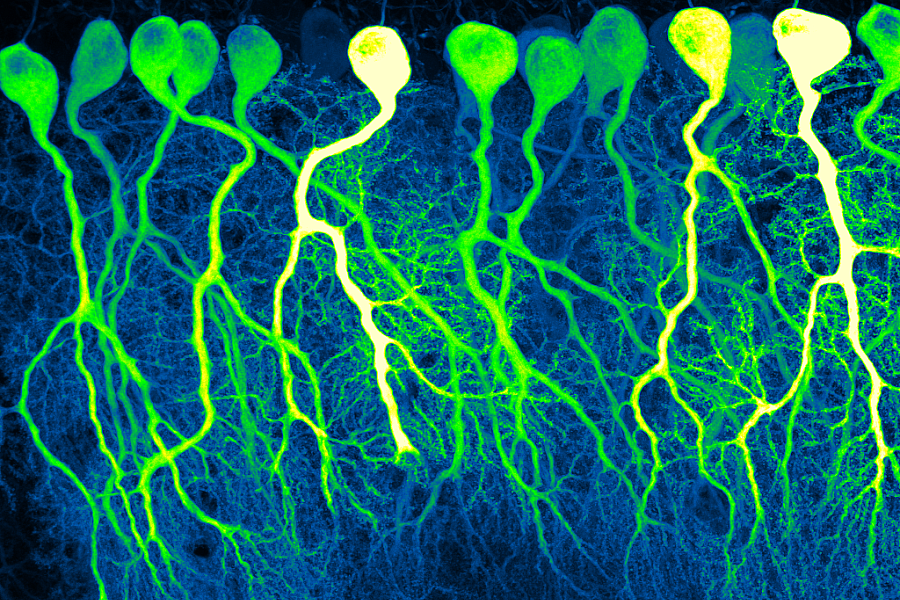
Dark Commute at 4am
In the darkness of a confocal microscope room, bright fluorescent dyes reveal Purkinje cells winding their way through the tissue of the cerebellum. These complex, branching cells play roles in learning and memory. The cells in this photo, taken from sections of mouse cerebellum, resemble pre-dawn commuters on the highways of the brain as they travel towards their eventual targets.
By Silas Busch, University of Chicago
-
Second Place Photo
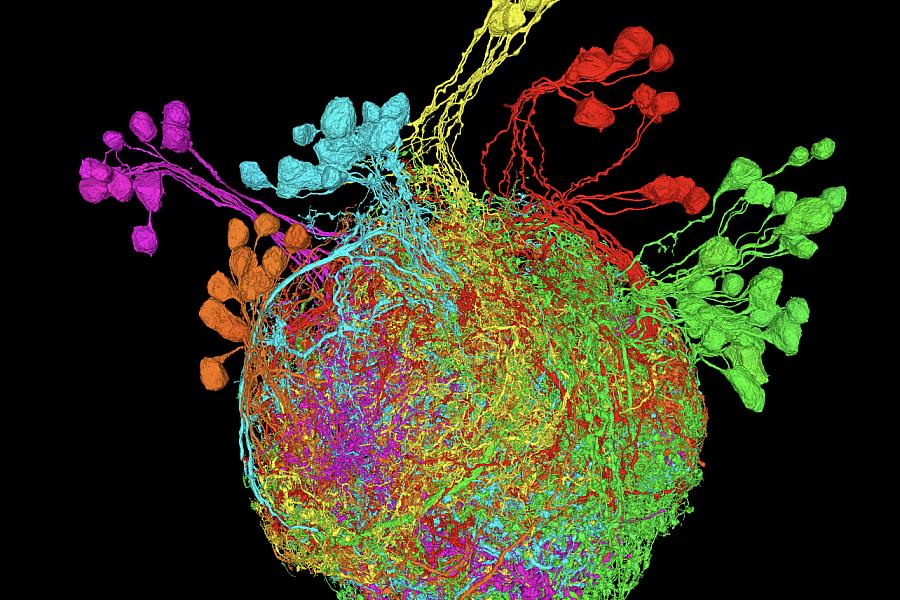
Premotor Neurons Controlling the Fruit Fly Leg
A reconstruction of premotor neurons controlling the fruit fly leg. Using an electron microscopy dataset of ultrathin sections of the Drosophila ventral nerve cord, researchers created a vivid display of the neural connections involved in fly leg movement. The structure of each neuron helps researchers determine their developmental lineages, represented by the different colors.
By Andrew Cook, Jasper Phelps, Anthony Azevedo, Ellen Lesser, Leila Elabbady, Brandon Pratt, Wei-Chung Allen Lee, John Tuthill, University of Washington and Harvard Medical School
-
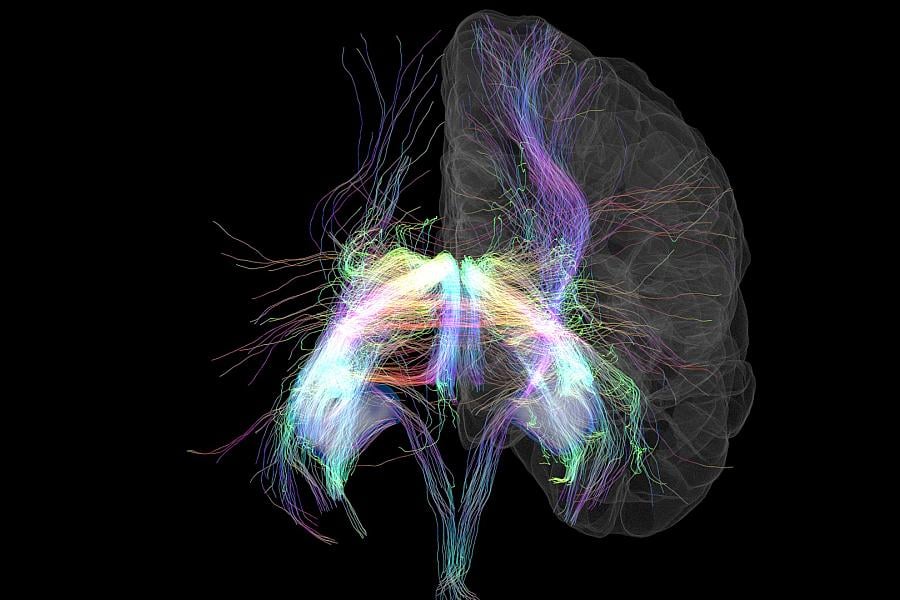
Third Place Photo
Memory Lanes
The hippocampus is the brain’s memory center. By combining two MRI scans, researchers can reveal the vast network of nerve fibers to and from the hippocampus—a wiring diagram for part of the brain. The axon fiber bundles are artificially colored depending on which direction they are heading. For a better sense of just how immensely complex the brain’s wiring is, this image represents less than 1% of the data collected.
By Tyler Ard, USC Stevens Neuroimaging and Informatics Institute


2022
-
First Place Video
Neurons In Action
Functional activity measured in vivo with 2-Photon imaging with matching morphologies from the same neurons measured with electron microscopy.By Andreas Tolias, Jacob Reimer, R.J. Cotton, Xaq Pitkow, Nuno da Costa, Forrest Collman, Clay Reid, and Sebastian Seung, Baylor College of Medicine, Allen Institute, Princeton University, Northwestern University/Shirley Ryan Ability Lab
2021
-
First Place Video
DBS Lead Placement for OCD
360 degree view of deep brain stimulation (DBS) lead placement in one participant that underwent DBS surgery for obsessive compulsive disorder (OCD).By Nicole Provenza, Raissa Mathura, Noam Peled, Evan Dastin-van Rijn, Kelly Bijanki, Sameer Sheth, David Borton, Wayne Goodman, Brown University, Baylor College of Medicine
-
Second Place Video (TIE)
Pyramidal Tract Reconstruction in Vivo
Pyramidal tract of an HCP subject reconstructed in vivo using Radial DSI and ODF-Fingerprinting. Improved reconstruction of fibers crossing at shallow angles ensured by ODF-Fingerprinting allowed to reproduce the reach fanning shape of cortical terminations of the tract. Images were rendered in DSI Studio.By Patryk Filipiak, Timothy Shepherd, Ying-Chia Lin, Dimitris G. Placantonakis, Fernando E. Boada, Steven H. Baete, New York University School of Medicine
-
Second Place Video (TIE)
Non-invasive in vivo Mapping of the Human Amygdala Circuit
Tractography of three critical amygdala pathways: the ventral amygdalofugal pathway, the stria terminalis and then amygdala-prefrontal pathway.By Josue Avecillas-Chasin, Ausaf Bari, Jean-Philippe Langevin, University of California, Los Angeles
This page last reviewed on