Funding Opportunities
Brain Research Through Advancing Innovative Neurotechnologies® Initiative
Funding Opportunities
Image
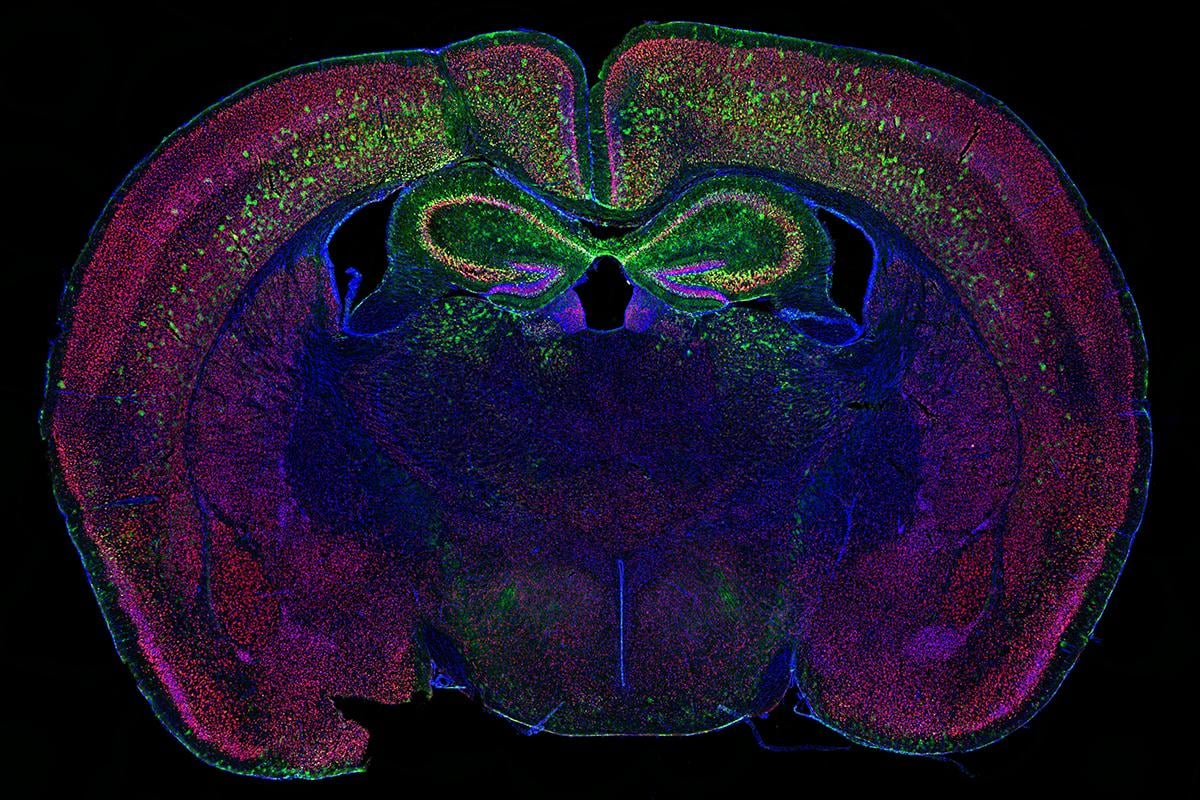
“Thinking About A Greener Future” won first place in the photo category.
Allen Yen, Ph.D. Candidate, Washington University School of Medicine, St. Louis, MO
National Institutes of Health (NIH) BRAIN Initiative notices of funding opportunities (NOFOs), requests for applications (RFAs), program announcements (PAs), and other NIH Guide announcements are listed below.
Learn more about NIH’s grant mechanisms
Learn about the NIH Data Management and Sharing Policy, which all NIH applications must follow.
To see more NIH-funded awards, please visit NIH Grants and Funding.
For more about NIH BRAIN Initiative research and associated funding opportunities, visit the Research Overview.
- Release date: December 9, 2024
- Expiration date: June 16, 2026
- Purpose: A central goal of the BRAIN Initiative is to understand how electrical and chemical signals code information in neural circuits and give rise to sensations, thoughts, emotions and actions. While currently available technologies can provide some understanding, they may not be sufficient to accomplish this goal. For example, non-invasive technologies are low resolution and/or provide indirect measures such as blood flow, which are imprecise; invasive technologies can provide information at the level of single neurons producing the fundamental biophysical signals, but they can only be applied to tens or hundreds of neurons, out of a total number in the human brain estimated at 85 billion. Other BRAIN FOAs seek to develop novel technology (RFA-NS-17-003) or to optimize existing technology ready for in-vivo proof-of-concept testing and collection of preliminary data (RFA-NS-17-004) for recording or manipulating neural activity on a scale that is beyond what is currently possible. This FOA seeks applications for unique and innovative technologies that are in an even earlier stage of development than that sought in other FOAs, including new and untested ideas that are in the initial stages of conceptualization. In addition to experimental approaches, the support provided under this FOA might enable calculations, simulations, computational models, or other mathematical techniques for demonstrating that the signal sources and/or measurement technologies are theoretically capable of meeting the demands of large-scale recording or manipulation of circuit activity in humans or in animal models. The support might also be used for building and testing phantoms, prototypes, in-vitro or other bench-top models in order to validate underlying theoretical assumptions in preparation for future FOAs aimed at testing in animal models.
- Release date: November 21, 2024
- Expiration date: June 18, 2026
- Purpose: The goal of this concept is to increase the impact of the BRAIN Initiative by targeted dissemination and integration of validated BRAIN Initiative tools to investigators at institutions that historically have not been major recipients of NIH support. This will be accomplished by awards to PIs at resource-limited institutions (RLIs) who pair with BRAIN technologists to facilitate training and adoption of BRAIN Initiative technologies in the recipient laboratories. Goals include two-way knowledge transfer between the PI and BRAIN technologist and to increase the participation of PIs at RLIs in BRAIN Initiative relevant research.
- Release date: November 15, 2024
- Expiration date: February 09, 2027
- Purpose: The purpose of this Brain Research through Advancing Innovative Neurotechnologies (BRAIN) Initiative is to encourage applications that will develop and validate novel tools to facilitate the detailed analysis of complex circuits and provide insights into cellular interactions that underlie brain function. The new tools and technologies should inform and/or exploit cell-type and/or circuit-level specificity. Plans for validating the utility of the tool/technology will be an essential feature of a successful application. The development of new genetic and non-genetic tools for delivering genes, proteins and chemicals to cells of interest or approaches that are expected to target specific cell types and/or circuits in the nervous system with greater precision and sensitivity than currently established methods are encouraged. Tools that can be used in a number of species/model organisms rather than those restricted to a single species are highly desired. Applications that provide approaches that break through existing technical barriers to substantially improve current capabilities are highly encouraged.
- Release date: November 05, 2024
- Expiration date: September 29, 2026
- Purpose: The purpose of this announcement is to encourage investigators to pursue translational activities and small clinical studies to advance the development of therapeutic, and diagnostic devices for disorders that affect the nervous or neuromuscular systems. Activities supported in this program include implementation of clinical prototype devices, non-clinical safety and efficacy testing, design verification and validation activities, obtaining an Investigational Device Exemption (IDE) for a Significant Risk (SR) study, as well as a subsequent small clinical study. The clinical study is expected to provide information about the device function or final design that cannot be practically obtained through additional non-clinical assessments (e.g., bench top or animal studies) due to the novelty of the device or its intended use. This FOA is a milestone-driven cooperative agreement program and will involve participation of NIH program staff in negotiating the final project plan before award and monitoring of research progress.
- Release date: November 05, 2024
- Expiration date: September 29, 2026
- Purpose: The purpose of this announcement is to encourage investigators to pursue a small clinical trial to obtain critical information necessary to advance recording and/or stimulating devices to treat central nervous system disorders and better understand the human brain (e.g., Early Feasibility Study). Clinical studies supported may consist of acute or short-term procedures that are deemed Non-Significant Risk (NSR) by an Institutional Review Board (IRB), or Significant Risk (SR) studies that require an Investigational Device Exemption (IDE) from the FDA, such as chronic implants. The clinical trial should provide data to answer key questions about the function or final design of a device. This final device design may require most, if not all, of the non-clinical testing on the path to more advanced clinical trials and market approval. The clinical trial is expected to provide information that cannot be practically obtained through additional non-clinical assessments (e.g., bench top or animal studies) due to the novelty of the device or its intended use. Activities supported by this Funding Opportunity include a small clinical trial to answer key questions about the function or final design of a device. As part of the BRAIN Initiative, NIH has initiated a Public-Private Partnership Program (BRAIN PPP) that includes agreements (Memoranda of Understanding, MOU) with a number of device manufacturers willing to make such devices available, including devices and capabilities not yet market approved but appropriate for clinical research. In general it is expected that the devices' existing safety and utility data will be sufficient to enable new IRB NSR or FDA IDE approval without need for significant additional non-clinical data.
- Release date: October 23, 2024
- Expiration date: June 16, 2027
- Purpose: This NOFO solicits applications for next generation sensor and bioelectronic device development that will synchronize with brain recordings. The sensor and neural recording data will be used to generate new computational models of behavior in human and animal models. There has been a lack of quantitative approaches and models to understand the complexity of human and animal behavior in naturalistic settings. This NOFO focuses on the development of next generation sensors to acquire data and synchronize it with simultaneous brain recordings to build computational models.
- Release date: September 26, 2024
- Expiration date: June 16, 2027
- Purpose: This Notice of Funding Opportunity Announcement (NOFO) from the NIH Brain Research through Advancing Innovative Neurotechnologies (BRAIN) Initiative is intended to support establishment of facilities at minority-serving institutions (MSIs) and Institutional Development Award (IDeA)-eligible institutions for scaled production and distribution of brain cell type-specific access and manipulation reagents. Reagents will be initially developed in pilot resource projects for brain cell type-specific access and manipulation across vertebrate species from the BRAIN Initiative Armamentarium project. Awardees under this NOFO will work with the other Armamentarium awardees to manufacture and distribute the resources for use throughout the neuroscience community. It is envisioned that the awardees will work both with the Armamentarium community as well as with the neuroscience research community to optimize the use of new reagents. The types of reagents to be produced and distributed could include but are not limited to viral vectors, nucleic acid constructs, and nanoparticles designed for selective access to and manipulation of brain cell types. Such reagents will enable neuroscientists to probe circuit function with high precision in experimental animals and ex vivo human tissue and cells. Facilities are needed to contribute to the production and distribution of BRAIN Initiative Armamentarium project reagents broadly to neuroscience users.
- Release date: March 19, 2024
- Expiration date: June 25, 2026
- Purpose: This Notice of Funding Opportunity (NOFO) solicits applications to develop web-accessible data archives to capture, store, and curate data related to BRAIN Initiative activities. The data archives will work with the research community to incorporate tools that allow users to analyze and visualize the data, but the creation of such tools is not part of this NOFO. The data archives will use appropriate standards to describe the data, but the creation of such standards is not part of this NOFO. A goal of this program is to advance research by creating a community resource data archive with appropriate standards and summary information that is broadly available and accessible to the research community for furthering research.
- Release date: March 19, 2024
- Expiration date: January 29, 2027
- Purpose: Awarded activities will facilitate the translation of novel recording and modulation technologies that can be used to treat and/or diagnose central nervous system (CNS) diseases and disorders and to better understand the human CNS, from proof of concept up to the stage of readiness for first in human (FIH) studies. Technologies may incorporate any signal modality (e.g., electrical, optical, magnetic, acoustic) or a combination thereof. Diverse team-based applications that integrate appropriate domains of expertise are encouraged.
- Release date: February 20, 2024
- Expiration date: July 02, 2026
- Purpose: This BRAIN Initiative Notice of Funding Opportunity (NOFO) is to support scaled reagent production and distribution facilities involving technologies to access brain cell types. Facilities for production and distribution of these reagents by a broad and diverse set of neuroscientists will be encouraged. This NOFO is part of the BRAIN Initiative Armamentarium for Brain Cell Access transformative project. Efforts will be supported to produce and distribute gene transfer, gene regulation, and genome engineering reagents for use in both genetically tractable and less tractable systems, including primates and human tissue, which are relevant for future translational efforts. Reagents to be produced and distributed are those designed and validated under other NOFOs from the Armamentarium transformative project.
- Release date: May 28,2026
- Expiration date: December 3, 2027
- Purpose: This funding announcement, issued by the Brain Research through Advancing Innovative Neurotechnologies® (BRAIN) Initiative, seeks transformative, cutting-edge, and innovative research that embraces new technologies, ideas, and approaches to understand brain circuit function and contributions to behavior. It is a component of the BRAIN Initiative Connectivity Across Scales (BRAIN CONNECTS) Program, which aims to lay the scientific foundation for the next generation of neural circuit-based approaches for preventing and treating devastating brain disorders.
This Notice of Funding Opportunity (NOFO) supports Specialized Projects to develop current or emerging technologies to generate comprehensive atlases of brain connectivity, with an emphasis on human, non-human primate (NHP), and mouse. Projects using other species are also permitted, if their use is well justified and the goal is to test and validate approaches that can be generalized across species. Applications may address any aspect(s) of brain connectivity and associated data pipelines, including data collection, reconstruction, analysis, integration, dissemination, and interpretation, to enable faster, more precise, and more cost-effective generation and interpretation of brain-wide wiring diagrams. Funded projects will be integrated into the BRAIN CONNECTS Network consisting of projects funded under this and preceding BRAIN CONNECTS NOFOs, as a coordinated effort aimed at developing the capabilities to generate wiring diagrams that can span entire brains across multiple scales.
This page last reviewed on