Complement Animal Research In Experimentation (Complement-ARIE) Program
The Common Fund
Complement Animal Research In Experimentation (Complement-ARIE) Program
Program Snapshot
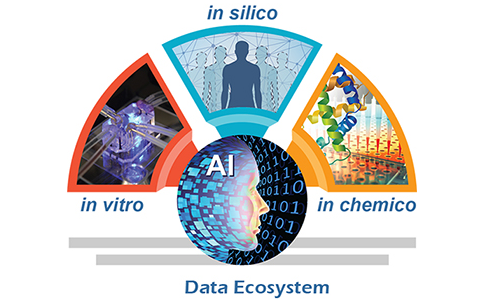
The NIH Common Fund’s Complement Animal Research In Experimentation (Complement-ARIE) program will speed the development, standardization, validation, and use of human-based New Approach Methodologies (NAMs).
NAMs are lab or computer-based research approaches intended to more accurately model human biology, and complement, or in some cases, replace traditional research models. The Complement-ARIE program will build upon ongoing efforts related to NAMs, while identifying opportunities for innovation and coordination.
Complement-ARIE will significantly advance understanding of human health and disease by providing a range of ready and standardized biomedical research models. Developing these models will require expertise in disease research, personalized medicine, and in screening therapeutics for safety and effectiveness.
Complement-ARIE will bring these expertise together through a consortium of researchers participating in the following efforts:
- Technology development projects/centers that will develop NAMs to fill in areas of greatest need. Projects will emphasize biological complexity, high throughput techniques, combining approaches, and data sharing.
- A data & NAM resource coordinating center that will create integrated data structures and a searchable NAMs repository.
- A validation network that will accelerate deployment and regulatory approval of NAMs for biomedical research.
- Community engagement and training that will promote the development of an inclusive, diverse, biomedical research workforce with the skills to build and use new NAMs.
- Strategic engagement with key partners that will advance emerging opportunities in development and use of NAMs in basic, translational, and clinical research.
To learn more about related work being done at NIH, visit: NIH NCATS Tissue Chip for Drug Screening Program
Program Updates
Have a question? Reach out to us at [email protected]
Complement-ARIE has launched new awards that will revolutionize new approach methodologies!
The Complement-ARIE Validation and Qualification Network public private partnership, managed by the Foundation for NIH, has announced the selection of four innovative research platforms for development into pilot projects.
Complement-ARIE launched the $7,000,000 Reduction to Practice Prize on September 30th! Join this exciting challenge to bring your integrated New Approach Methods to validation.
On July 24th, the Foundation for NIH announced that more than 40 government, life science, nonprofit, and regulatory organizations have joined the Validation and Qualification Network (VQN) public private partnership.
The FDA announced April, 10, 2025 that it would be immediately moving forward with a roadmap to reduce animal testing in preclinical safety studies with scientifically validated new approach methodologies (NAMs). This roadmap calls for continued and closer collaboration with the NIH Complement-ARIE Program.
On January 25, 2024, The NIH Council of Councils approved the concept of the NIH Common Fund's Complement Animal Research In Experimentation (Complement-ARIE) Program. Find out more by browsing the presentation slides and program description. Or watch the videocast.
The NIH Director released a statement on catalyzing the development of NAMs.
Sign up for the Complement-ARIE listserv to hear about future announcements.
Validation and Qualification Network (VQN)
The Validation and Qualification Network (VQN) is a component of the Complement-ARIE program that will accelerate regulatory approval and deployment of NAMs for biomedical research. The goal of the VQN is to work with regulatory authorities from other federal agencies, industry partners, and other collaborators to establish and apply validation/qualification frameworks to NAMs. The goal of these frameworks is to prepare newly developed NAMs to seamlessly enter into validation pipelines of regulatory authorities, paving the way for use on a broader scale by researchers in industry and biomedical research.
The goals of the VQN include:
- Accelerate deployment and implementation of NAMs in both research and regulatory contexts.
- Develop standardized reporting and common data elements for preclinical, clinical, and safety performance.
- Perform conformity assessments and develop quality management systems.
By working with collaborators aimed at commercial market use and surveillance, the VQN will support the generation of data packages consistent with current validation and qualification frameworks to streamline submission of new NAMs to regulatory authorities. These data packages will be based on common data elements and standardized reporting, which will accelerate the deployment, regulatory qualification, and use of NAMs in the community.
It is important to note, the VQN will NOT serve as the body that will validate and/or qualify any specific NAMs within regulatory contexts.
U.S. federal agencies operate under statutes and regulations particular to each agency and therefore have different criteria for a NAM to be acceptable and applicable toward each agency's individual regulatory requirements. In some cases, even within an agency (e.g. different centers of FDA) there may be different needs depending on the area of regulation. Even though a NAM may be validated to address a specific endpoint for one (or multiple) context(s) of use under a particular guidance/regulation, it may not be considered acceptable under a different guidance/regulation among various agencies, regulatory jurisdictions, and countries.
Funded Research
| PI Name | Institution Name | Title |
|---|---|---|
| STOLOVITZKY, GUSTAVO | New York University School of Medicine | The NYU-Sage NAMs Data Hub and Coordinating Center: Harmonizing, Analyzing, and Disseminating New-Approach-Methodologies Data |
Complement-ARIE Validation and Qualification Network (VQN)
| PI Name | Institution Name | Title |
|---|---|---|
| ADAM, STACEY | FOUNDATION FOR THE NIH | Validation and Qualification Network (VQN) Public-Private Partnerships for Adoption and Implementation of New Approach Methodologies (NAMs) |
Complement-ARIE Challenge Prize
Related Links
This page last reviewed on