Understanding the exposome
Research in Context June 9, 2026
Understanding the exposome
Tracking how the environment affects health
The world around us influences our health in countless ways. This special Research in Context feature explores how scientists are using new technologies and approaches to measure the exposome—the total set of environmental exposures people encounter throughout life—and their biological response to them.

More than 150 years ago, a physician named John Snow traced a deadly cholera outbreak to a contaminated water pump in London. In the 1700s, doctors linked soot exposure in chimney sweepers to cancer. In the 20th century, researchers showed that lead harms children’s brains.
Scientists have long understood that the environment plays an important role in human health. But measuring the environment’s effects in a complete and systematic way has been much harder.
In comparison, the study of how our genes affect health has moved forward at remarkable speed. The Human Genome Project mapped the full set of human DNA. Large biobanks began collecting genetic data from hundreds of thousands of people. Scientists became able to scan the entire genome at once and connect patterns in DNA to disease risk.
Environmental health research lacked comparable tools. Instead, researchers often studied one exposure at a time. Separate studies of lead, asbestos, air pollution, and smoking saved lives and shaped public policy. But they did not capture how people are exposed in real life, where many factors together influence health.
That gap led to a new idea: the exposome. The exposome includes all the environmental influences a person experiences over a lifetime, starting before birth and continuing through old age. If the genome is the instruction manual we inherit, the exposome helps shape how those instructions are used.
“I like to think of it as all of the forces that act upon us throughout our lives,” says Dr. Gary Miller of Columbia University. Miller founded, with NIH support, the first exposome research coordinating center in the U.S.
Miller says that for most common diseases, such as heart disease, diabetes, cancer, and Alzheimer’s disease, genes explain only part of the risk. The goal of exposomics is to understand how environmental factors drive complex diseases.
New tools are helping scientists do just that by measuring environmental exposures on a large scale.
Seeing the Whole Picture
For decades, environmental health research focused on single exposures. That approach worked when the risk was clear and strong, such as cigarette smoke or asbestos. But real life is more complex. “We don’t live in a single-pollutant world,” Miller says.
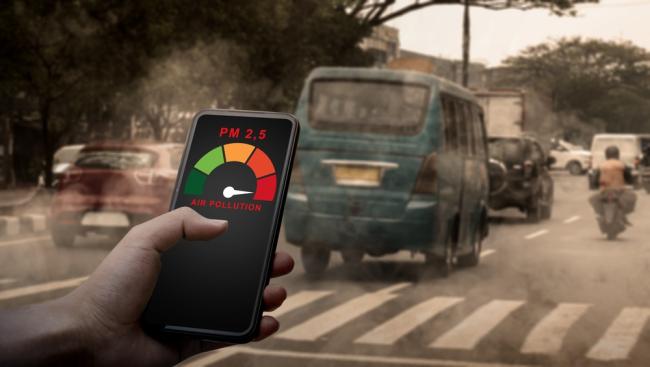
On any given day, a person may breathe traffic pollution, drink water containing trace chemicals, and eat food with pesticide residues. Inside the home, dust can carry flame retardants, chemicals like phthalates added to plastics to make them softer, and metals. Gas stoves can raise indoor pollution levels. Mold can grow in damp buildings.
The exposome also includes lifestyle and social factors such as diet, sleep, physical activity, infections, and chronic stress. It includes noise from highways and airports. It includes neighborhood conditions, such as access to green space, healthy food, or safe housing. Social stress—such as financial strain or anxiety—can also change hormone levels and increase inflammation.
All these exposures may shape how our bodies grow, respond, and age.
Measuring the Exposome

While the exposome concept isn’t new, what is new are the tools to measure it. In the past, many studies relied on questionnaires. Researchers asked people where they lived, what they ate, and whether they smoked. Those tools remain valuable. But they depend on memory and can’t capture unknown exposures.
Today, scientists can measure thousands of chemicals directly from a small blood sample. Using a powerful technique called high-resolution mass spectrometry, molecules can be separated and analyzed with extreme precision. With these new tests, researchers can detect pesticide breakdown products, plastics, per- and polyfluoroalkyl substances (PFAS), nutrients, metabolites (products of the body’s metabolism), and even chemical changes in DNA and proteins. They can also measure how the body responds, including stress hormones and markers of inflammation.
“We can measure thousands of compounds,” Miller says. Just a decade ago, many of these chemicals would have gone undetected.
Scientists have been working to improve how they measure and model the world outside the body. Dr. Rima Habre of the University of Southern California uses satellite imagery to track air pollution, wildfire smoke, extreme heat, and vegetation cover. These tools allow researchers to estimate exposures at the level of neighborhoods or even individual blocks.
“At a high level, these tools provide us many more granular ways to get a lot more precise in how we measure the external environment,” Habre says.
Wearable sensors can add even more detail. Small devices worn on the body can measure the air a person breathes throughout the day. GPS data can show how much time someone spends near busy roads or in parks. This level of detail is important. As Habre notes, if exposure measurements are too broad, “you have a very low chance of seeing anything that matters.”
The Exposome in Practice
Dr. Chirag Patel of Harvard Medical School studies how different exposures work together to affect health. His team recently created an atlas that maps the relationship between exposures and health-related measures.
The researchers used health data from the National Health and Nutrition Examination Survey, which examines thousands of people nationwide each year. They studied more than 600 exposures, including pollution, diet, smoking, infections, and lifestyle habits. They linked these exposures to more than 300 health measures, such as cholesterol, blood sugar, and lung health.
When they assessed exposures one at a time, most explained only a small part of health differences between people.
“We found that many exposures are connected with health measures,” Patel notes. “These connections are undoubtedly present, but small.”
To understand how these modest individual relationships add up, the team developed something called polyexposure score. This score adds up many exposures at once.
When exposures were combined, they explained much more. For example, combined exposures explained a large share of the differences in blood levels of triglycerides, a type of fat linked to heart disease.
In some cases, the polyexposure scores predicted disease risk just as well as polygenic risk scores, which estimate disease risk by adding together the small effects of many genetic variants across the genome.
“The polyexposure score tells us which exposures travel together and track with disease," Patel explains. But it doesn't explain, on its own, what’s causing the disease or condition.
Exposures that cluster aren’t always obvious. Cigarette smoke, for example, contains nicotine, but also metals like cadmium and many cancer-causing chemicals. These compounds enter the body together. A fast-food meal may include high salt and unhealthy fats. But it may also involve packaging chemicals and traffic pollution from the drive to pick it up.
Health is shaped by many small exposures added together over time. This broader view suggests new ways to think about multi-pronged approaches to prevention. If several harmful exposures share a common source, reducing that source could lower risk in multiple ways at once.
Accelerating Exposome Research
Supported by NIH, the Network for Exposomics in the U.S., also known as NEXUS, launched in 2024. The program works across universities, research labs, and international networks. Its goal is to bring exposomics into mainstream biomedical research by moving from small, separate studies to larger, coordinated efforts.
“Because exposures vary across regions and around the world, the future of exposome science depends on global unity,” says Dr. Srikanth Nadadur, who oversees the program for NIH. “By standardizing the tools that measure our environments and combining datasets of exposure, health, and biological variability, we transform scattered insights into collective power.”
The network is organized into several hubs. One hub develops new tools to measure chemical exposures and the body’s responses. Another studies place-based exposures, such as pollution in homes and neighborhoods. A third builds data systems using a type of artificial intelligence called machine learning to analyze large datasets. A fourth connects researchers, policymakers, and communities, so the findings can help address real-world health problems.
“The key part of NEXUS is to communicate the value of these approaches—and to help them do exposome research,” Miller says.
NIH researchers are now examining how environmental exposures interact to affect a variety of conditions from aging to autoimmune diseases like lupus. NIH-supported studies are revealing how exposures affect immune system and metabolism. Studies have linked pesticide exposure to changes in metabolic pathways in primary sclerosing cholangitis, a liver disease. Emerging work also suggests that chronic inflammation—potentially shaped by environmental stressors—may contribute to heart failure.
Other large national programs are also incorporating environmental data. The All of Us Research Program aims to collect and study data from at least one million people nationwide. The program is working to link geospatial and environmental measures with genetic and electronic health record data from participants across the country. By combining these layers of information, researchers hope to better understand how exposures influence risk for conditions such as type 2 diabetes and heart disease.
From Research to Action
Exposomics is not only about measuring risk. It’s also about reducing it. And many environmental influences can be changed. Because many exposures are connected, some interventions can reduce several risks at once. “Interventions to improve environments is easier than editing DNA,” Miller says.
For example, installing a HEPA (high-efficiency particulate air) filter in a bedroom can reduce wildfire smoke, dust, and allergens at the same time. Fixing leaks in a home can reduce mold and lower chemical buildup in dust. Improving ventilation in schools can reduce indoor pollution for many children at once. At a larger scale, policymakers might regulate classes of chemicals rather than banning them one by one.
“Citizen scientists also can play a huge role,” Habre says. This is when citizens team up with scientists to help drive research.
For example, communities across the country are using low-cost air sensors to monitor local pollution. Residents track smoke during wildfires, measure air quality in their neighborhoods, and document concerns about water or odors.
Community data can fill gaps in official monitoring systems. It can also help neighborhoods advocate for cleaner air and safer conditions. In Atlanta, residents who used urban growing spaces raised concerns about soil contamination. Working with researchers, they measured lead levels across community gardens. Their effort documenting contamination from historical slag residue led to direct cleanup actions by local and federal agencies.
Researchers stress that such efforts must protect privacy and communicate results responsibly. But when done thoughtfully, citizen science can strengthen trust and accelerate discovery.
Looking Ahead

As exposomics matures, it has the potential to reshape both medicine and public health.
In the future, doctors may practice precision environmental health. This approach considers a patient’s environmental profile alongside genetic and medical information. A medical record might show long-term air pollution exposure or repeated heat waves. A physician could tailor advice, recommend changes at home, or adjust treatment based on these exposure patterns.
Exposomics may also help explain why treatments work for some people but not others. For example, high levels of certain PFAS have been associated with weight regain after dieting. Combined environmental exposures and dietary factors can change how the body processes medicines. Certain compounds may influence responses to chemotherapy, cardiovascular medications, and other drugs.
The genome revealed our inherited code. The exposome helps explain how the world around us affects that code throughout life. By studying both together, scientists hope to better understand health and disease and develop prevention strategies that protect entire communities.
“We’re exposed to thousands of things every day,” Miller says. “But it’s no longer a mystery. We have ways of measuring that and determining the relative risk of those exposures—it’s a science now.”
Related Links
- Early-life nutrition
- Be a citizen scientist: help researchers solve puzzling problems
- Exposure science
- Indoor air quality
- Smoking and vaping
- Mold
- Environmental influences on Child Health Outcomes (ECHO) Program
- NEXUS (Network for EXposomics in the United States)
References
Stress-Associated Neurobiological Pathway Linking Socioeconomic Disparities to Cardiovascular Disease. Tawakol A, Osborne MT, Wang Y, Hammed B, Tung B, Patrich T, Oberfeld B, Ishai A, Shin LM, Nahrendorf M, Warner ET, Wasfy J, Fayad ZA, Koenen K, Ridker PM, Pitman RK, Armstrong KA. J Am Coll Cardiol. 2019 Jul 2;73(25):3243-3255. doi: 10.1016/j.jacc.2019.04.042. PMID: 31248544.
Can Exposure to Environmental Pollutants Be Associated with Less Effective Chemotherapy in Cancer Patients? Lagunas-Rangel FA, Liu W, Schiöth HB. Int J Environ Res Public Health. 2022 Feb 12;19(4):2064. doi: 10.3390/ijerph19042064. PMID: 35206262.
A precision environmental health approach to prevention of human disease. Baccarelli A, Dolinoy DC, Walker CL. Nat Commun. 2023 Apr 28;14(1):2449. doi: 10.1038/s41467-023-37626-2. PMID: 37117186.
Community-Engaged Assessment of Soil Lead Contamination in Atlanta Urban Growing Spaces. Peters SJW, Warner SM, Saikawa E, Ryan PB, Panuwet P, Barr DB, D'Souza PE, Frank G, Hernandez R, Alvarado T, Hines A, Theal C. Geohealth. 2023 Mar 24;7(3):e2022GH000674. doi: 10.1029/2022GH000674. PMID: 36968153.
Linking Air Pollution Exposure to Blood-Based Metabolic Features in a Community-Based Aging Cohort with and without Dementia. Kalia V, Kulick ER, Vardarajan B, Gu Y, Manly JJ, Elkind MSV, Kaufman JD, Jones DP, Baccarelli AA, Mayeux R, Kioumourtzoglou MA, Miller GW. J Alzheimers Dis. 2023;96(3):1025-1040. doi: 10.3233/JAD-230122. PMID: 37927256.
Environmental chemicals and endogenous metabolites in bile of USA and Norway patients with primary sclerosing cholangitis. Grant CW, Juran BD, Ali AH, Schlicht EM, Bianchi JK, Hu X, Liang Y, Jarrell Z, Liu KH, Go YM, Jones DP, Walker DI, Miller GW, Folseraas T, Karlsen TH, LaRusso NF, Gores GJ, Athreya AP, Lazaridis KN. Exposome. 2023 Jan 5;3(1):osac011. doi: 10.1093/exposome/osac011. PMID: 36687160.
Weight loss relapse associated with exposure to perfluorinated alkylate substances. Grandjean P, Meddis A, Nielsen F, Sjödin A, Hjorth MF, Astrup A, Budtz-Jørgensen E. Obesity. 2023 Jun;31(6):1686-1696. doi: 10.1002/oby.23755. PMID: 37069729.
Decoding the exposome: data science methodologies and implications in exposome-wide association studies (ExWASs). Chung MK, House JS, Akhtari FS, Makris KC, Langston MA, Islam KT, Holmes P, Chadeau-Hyam M, Smirnov AI, Du X, Thessen AE, Cui Y, Zhang K, Manrai AK, Motsinger-Reif A, Patel CJ; Members of the Exposomics Consortium. Exposome. 2024 Jan 17;4(1):osae001. doi: 10.1093/exposome/osae001. PMID: 38344436.
Modification of associations between ambient PM2.5 and vital signs by β-blocker prescription status among individuals with heart failure.Narain M, Breen M, Carll AP, Hazari M, Farraj A, Ward-Caviness CK. Environ Health. 2025 Aug 7;24(1):55. doi: 10.1186/s12940-025-01203-5. PMID: 40775722.
An atlas of exposome-phenome associations in health and disease risk. Patel CJ, Ioannidis JPA, Manrai AK, Nat Med. 2026 Apr;32(4):1501-1510. doi: 10.1038/s41591-026-04266-0. Epub 2026 Mar 18. PMID: 41851348.
Lysophosphatidylcholines are associated with amyloidosis in early stages of Alzheimer's disease. Kalia V, Reyes-Dumeyer D, Dubey S, Udhani H, Nandakumar R, Lee AJ, Lantigua R, Medrano M, Rivera D, Honig LS, Mayeux R, Miller GW, Vardarajan BN. Nat Aging. 2026 Jan;6(1):221-234. doi: 10.1038/s43587-025-01025-7. Epub 2025 Dec 17. PMID: 41407938.