Engineered immune cells target Alzheimer’s disease protein
March 10, 2026
Engineered immune cells target Alzheimer’s disease protein
At a Glance
- Scientists designed a T cell that reduced signs of disease in the brains of a mouse model for Alzheimer’s disease.
- With further development, this type of immunotherapy could one day help treat Alzheimer’s disease and some other brain disorders.
Immunotherapy is a type of treatment that harnesses the immune system to target disease. Cancer immunotherapies help the body recognize and destroy tumor cells. In recent years, scientists have begun to apply immunotherapy to other conditions, such as autoimmune disorders and nervous system diseases such as Alzheimer’s disease.
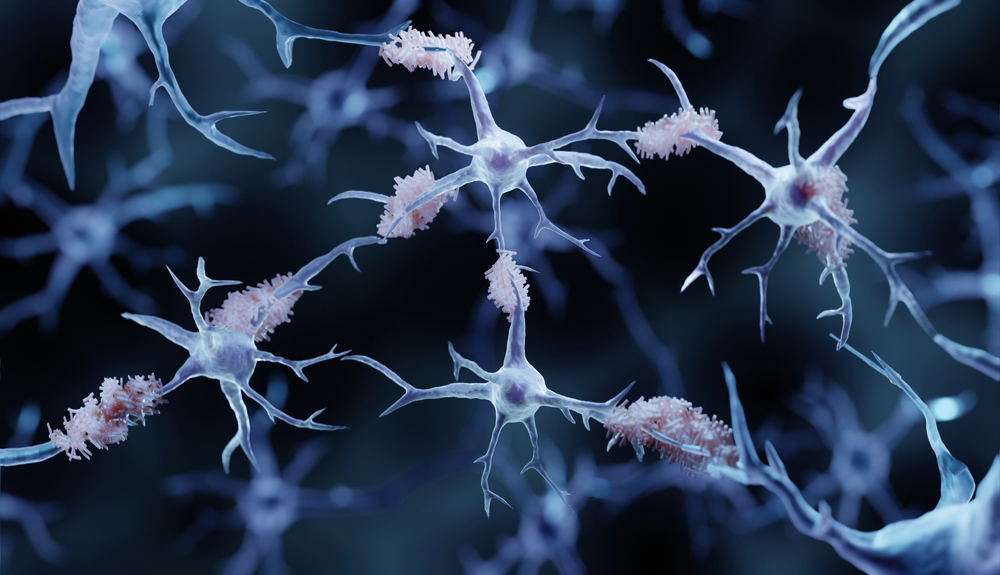
A major feature of Alzheimer's disease is the presence of amyloid beta plaques—abnormal clumps of protein fragments that build up in and around the brain. Immune therapies have been developed to selectively destroy plaques. These therapies have been limited by safety concerns, lack of improvement of cognitive symptoms, and the complexity of applying immune therapies to brain diseases.
For cancer therapy, scientists can engineer immune cells called T cells to bind to and trigger an immune response to tumor cells. The modified cells are called CAR-T cells. A research team led by Dr. Jonathan Kipnis at Washington University School of Medicine adapted this idea to target amyloid plaque. They set out to engineer a type of T cell, called T helper cells, to recognize and lead to the breakdown of the plaques. T helper cells play an important role in recognizing threats and coordinating immune system responses. Results were published on February 9, 2026, in the Proceedings of the National Academy of Sciences (PNAS).
The researchers took the plaque-binding region from an existing treatment for Alzheimer's disease and used it to engineer CAR-T helper cells. They found that the resulting CAR-T cells successfully bound to and responded to amyloid plaque.
The team next injected mice with the CAR-T cells. The treatment reduced plaques in the meninges, the protective layers of tissue surrounding the brain. Meninges also coordinate movement of immune cells from the blood to the brain. There were notable reductions in plaque in an area of the meninges where immune cells are likely to pass into the brain. CAR-T treatment also boosted the number of natural T cells moving into the deeper layers of the meninges and brain tissue.
To help address safety concerns, the researchers used a technique to temporarily alter T cells. They injected three doses of these CAR-T cells over four weeks. This treatment reduced several hallmarks of Alzheimer’s disease in the brain, including amyloid plaques, activation of brain-specific immune cells, and damaged nerve cells.
These results suggest that CAR-T cell therapy could be used to destroy plaques and potentially improve cognitive symptoms.
“We report the first CAR-T cell approach for a neurodegenerative disease,” Kipnis says. “It represents an exciting step towards finding novel therapies for Alzheimer’s disease.”
While this research provides a technological foundation for this approach, much work is still needed before it could be tested in people.
—by Laura Manella, Ph.D.
Related Links
- Lithium levels tied to Alzheimer’s disease and dementia
- Risk and future burden of dementia in the United States
- Atlas of Alzheimer's disease progression
- Accurate blood test for Alzheimer’s disease
- Diagnosing dementia
- Dealing with dementia
- Alzheimer’s and dementia
- How is Alzheimer’s disease treated?
- Immunotherapy to treat cancer
- Alzheimer’s disease research centers
- Participating in Alzheimer’s disease and related dementias research
References
Engineering chimeric antigen receptor CD4 T cells for Alzheimer’s disease. Boskovic P, Shalita R, Gao W, Vernon H, Deng YL, Colonna M, Majzner RG, Amit I, Kipnis J. Proc Natl Acad Sci U S A. 2026 Feb 17;123(7):e2530977123. doi: 10.1073/pnas.2530977123. Epub 2026 Feb 9. PMID: 41662521.
Funding
NIH’s National Institute on Aging (NIA); Cure Alzheimer’s Fund.