Bacteria play key role in kidney stones
March 3, 2026
Bacteria play key role in kidney stones
At a Glance
-
Scientists discovered that bacteria are a key component of kidney stones, including types of stones previously thought to harbor no bacteria.
-
The results could lead to new treatments that prevent or eliminate kidney stones.
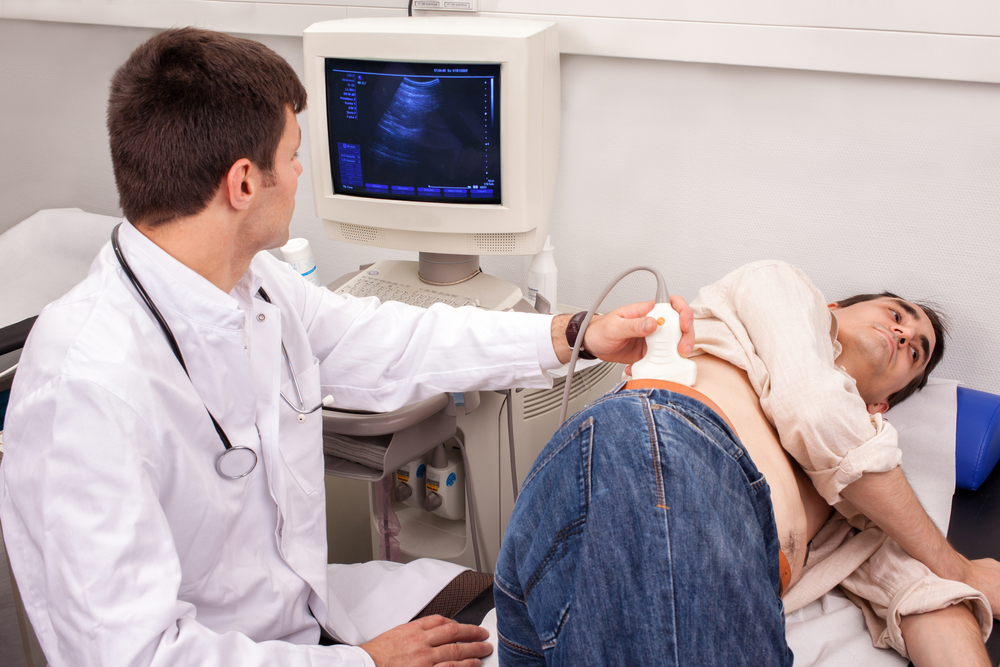
Nearly 1 in 10 people will experience a kidney stone sometime in their life. Kidney stones can be very painful when they exit the body in urine. Sometimes they require surgery to remove.
Kidney stones are made of minerals found in urine. Stones composed of the mineral struvite often contain bacteria. These bacteria are thought to contribute to stone formation. However, struvite stones make up less than 10% of all kidney stones. Most stones are made primarily of calcium and were long thought not to contain bacteria.
An NIH-funded research team, led by Drs. Kymora Scotland and Gerard Wong of UCLA, has found evidence challenging that long-held belief about calcium-based kidney stones. The results were published on January 26, 2026, in PNAS.
Using high-powered microscopes, the researchers found bacteria on the surface and inside both struvite- and calcium-based kidney stones that were removed from patients during surgery. This removal was done in a sterile way to confirm that any bacteria seen were already in the stone and were not accidentally transferred from the skin. The stones removed included calcium-based stones in which traditional clinical testing didn’t detect bacteria.
The bacteria were organized into biofilms, communities of microbes that stick both to each other and to the surface. The cells in a biofilm are typically embedded in various materials produced by the cells, including DNA (called extracellular DNA, or eDNA). But fragments of a calcium-based mineral that formed outside of a living organism did not have bacteria on or inside them. This indicated that the bacteria were associated specifically with kidney stones and not other calcium-based stones.
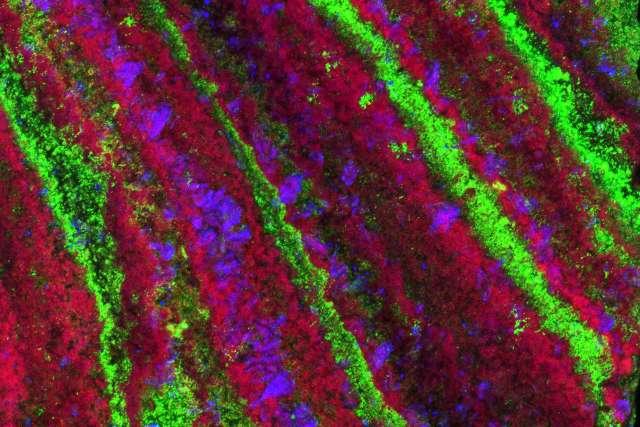
Staining the kidney stones with chemicals that bind to biofilm-related molecules revealed the presence of these molecules on both the surfaces and the insides of struvite and calcium-based stones. The biofilm-like structures seen in the microscope images were particularly rich in DNA and a biofilm component called mannose. Again, the team found that mineral fragments from a non-living source did not have either of these molecules on or inside them.
The researchers also examined kidney stones that were removed from patients who had not tested positive for a urinary tract infection. They did this to prove that the bacteria did not come from a previous infection. Nearly half these stones were still found to harbor bacteria, including many calcium-based stones.
The results suggest that bacterial biofilms are a key component of kidney stones. The researchers propose that the eDNA and other molecules released in slow-growing biofilms may provide sites where minerals can clump to form kidney stones. Learning more about the link between bacteria and kidney stones could lead to new treatments that prevent or eliminate them.
“This breakthrough challenges the long-held assumption that these stones develop solely through chemical and physical processes. Instead, it shows that bacteria can reside inside stones and may actively contribute to their formation,” Scotland says. “By uncovering this novel mechanism, the study opens the door to new therapeutic strategies that target the microbial environment of kidney stones.”
—by Brandon Levy
Related Links
- Technique reveals organization of tongue bacteria
- Nanoparticle robots sweep away biofilms
- Getting clarity on kidney stones
- Pebbles in your plumbing
- Kidney stones (NIDDK)
- Your kidneys & how they work (NIDDK)
References
Intercalated bacterial biofilms are intrinsic internal components of calcium-based kidney stones. Schmidt WC, Mousavi A, Li J, Yang R, Gonzalez Marin G, Schreiber HL 4th, Hammann RES, Obernuefemann CLP, Bergeron K, Klim A, Wong D, Du K, Hultgren SJ, Chen Q, Celestian A, Wong GCL, Scotland KB. Proc Natl Acad Sci U S A. 2026 Feb 3;123(5):e2517066123. doi: 10.1073/pnas.2517066123. Epub 2026 Jan 26. PMID: 41587311.
Funding
NIH’s National Institute of Allergy and Infectious Diseases (NIAID) and National Institute of Diabetes and Digestive and Kidney Diseases (NIDDK); National Science Foundation; Air Force Office of Scientific Research; Chan Zuckerberg Biohub Chicago; Ruth L. Kirschstein National Research Service Award; CNSI Voucher Award.