Lung tumor signals may tamp down food intake
July 30, 2026
Lung tumor signals may tamp down food intake
At a Glance
- Researchers found that a high-fat diet in mice amplifies nerve signals between certain lung cancers and the brain, leading to reduced appetite and weight loss.
- If confirmed in further studies, the results could inform strategies to improve nutrition and survival in certain patients with cancer.
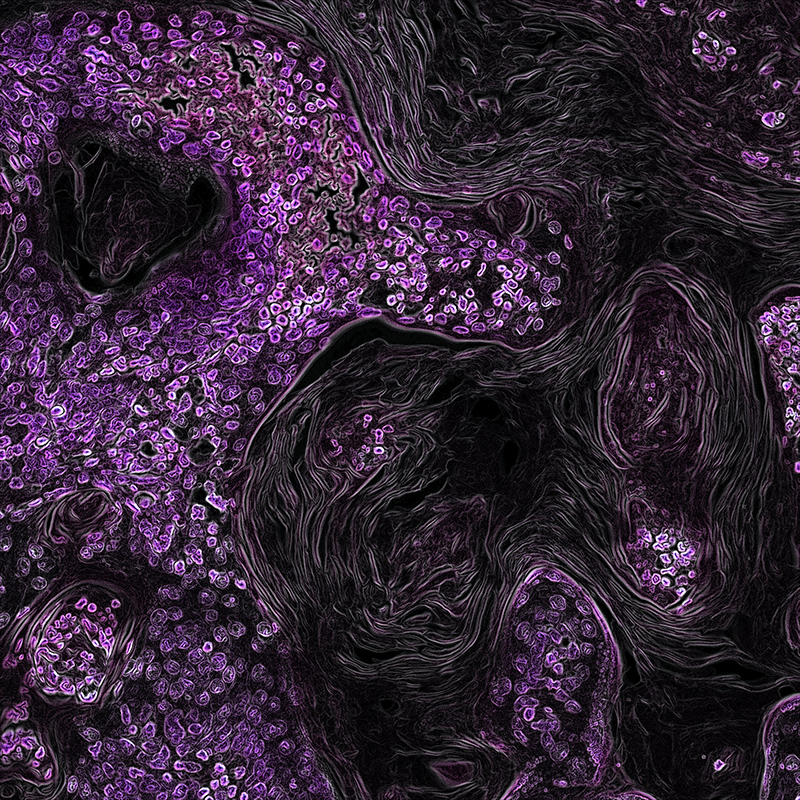
People with infections, chronic diseases, or cancer can develop a wasting syndrome called cachexia. Cachexia involves loss of appetite and muscle and fat wasting, leading to weakness and fatigue. It often needs to be treated with medications and other approaches.
Cachexia is common among people with cancer, particularly in advanced cancers and certain cancer types, such as lung cancer. It can lower quality of life, make cancer treatment harder, and increase the risk of death. Scientists don’t fully understand what causes cancer cachexia. Chemicals and hormones that circulate in the blood, like those involved in inflammation and metabolism, may play a role.
A research team led in part by Dr. Thales Papagiannakopoulos at NYU Grossman School of Medicine used mouse models to more closely study how tumors promote cachexia. The results were reported in Science on July 2, 2026.
The researchers tested models of three common genetic subtypes of a lung cancer that often leads to cachexia in people. The tumors grew at similar rates in all three mouse models. One of the mouse models—with a common cancer-causing mutation in the Lkb1 gene—showed cachexia symptoms. These mice ate, drank, and moved less. They were also the only mice that did not gain weight on a high-fat diet. Instead, the diet made their cachexia symptoms worse. The high-fat diet also raised activity in brain areas that reduce appetite.
The team found that, in response to a high-fat diet, mice with the Lkb1 mutation had higher levels of certain signaling molecules in their lungs. One of these molecules was prostaglandin E2, or PGE2. PGE2 is involved in lung inflammation. The researchers also found higher PGE2 levels in people with lung cancer cachexia.
Further experiments showed that reducing PGE2 could reduce cachexia symptoms in mice. This was done using anti-inflammatory drugs or by supplementing the diet with omega-3 fatty acids.
The researchers next showed that sensory fibers of the vagus nerve can promote cachexia. The vagus nerve links organs throughout the body, including the lungs, to the brain. After the researchers eliminated vagal nerve fibers in the lungs, mice with the Lkb1 mutation returned to more normal feeding behavior while on a high-fat diet.
These results show that some tumors may trigger local nerve signals to change eating behavior and cause cachexia.
“These lung cancer tumors are essentially controlling human behavior by tapping into the nervous system and hijacking local lung sensory neurons,” Papagiannakopoulos says.
More research is needed to identify the specific nerve cells and brain circuits involved in cachexia. The knowledge from this work could help researchers better understand the molecular mechanisms underlying cachexia. However, more studies are needed to determine whether the same mechanisms operate in people and can be targeted for treatment.
—by Laura Manella, Ph.D.
Related Links
- Factors linked to lung cancer in never-smokers
- Mapping how cancers form and spread
- Genomic origins of lung cancer in never smokers
- When cancer spreads
- Cancer cachexia
- Lung cancer
References
A dietary switch promotes sensory neuron-dependent cancer-associated cachexia. Cross M, Kotschi S, Wu W, Luciano-Mateo F, Kwon YY, Dantas E, Niazi T, Chen S, Rashidfarrokhi A, Pillai R, Sanford J, Kim J, Hsiang J, Gamallo-Lana B, Mar AC, Hao Y, Rajalingam S, Huang A, Shan J, Issa HA, Gomez M, Wang AR, Zhao X, Janowitz T, White E, Liu Y, Wong KK, Segal LN, Hui S, Goncalves MD, Froemke RC, Papagiannakopoulos T. Science. 2026 Jul 2;393(6806):90-97. doi: 10.1126/science.adz4196. Epub 2026 Jul 2. PMID: 42391376.
Funding
NIH’s National Cancer Institute (NCI), Office of the Director (OD), National Institute of Mental Health (NIMH), National Institute on Drug Abuse (NIDA), Eunice Kennedy Shriver National Institute of Child Health and Human Development (NICHD), and National Institute of Neurological Disorders and Stroke (NINDS); American Cancer Society; Pfizer Medical Education Group, German Research Foundation.