Bacteria share proteins to survive antibiotics
July 30, 2026
Bacteria share proteins to survive antibiotics
At a Glance
- Researchers found that some bacteria share proteins that help others survive antibiotics.
- The study suggests a novel approach that may help treat persistent bacterial infections.
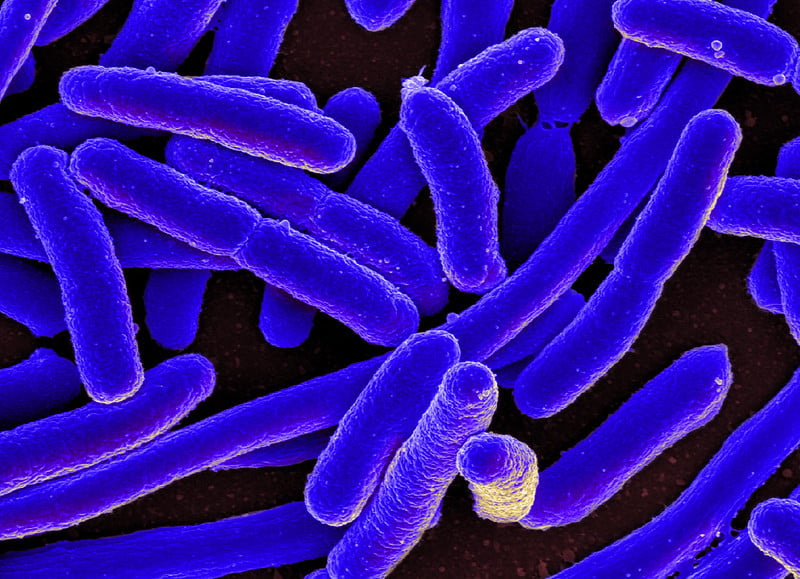
Bacteria pass down genes to their descendants just like humans do. But unlike people, bacteria can also share their genes with others nearby. This allows them to survive antibiotic treatments. These antibiotic-resistant bacteria cause infections that are hard to treat.
Scientists have suspected that bacteria may also help each other survive antibiotics by sharing proteins. But so far, scientists haven’t proven whether bacteria can share proteins.
A team of NIH-funded researchers, led by Dr. Christophe Herman at Baylor College of Medicine, created a way to figure out whether bacteria can share proteins. They then examined whether this process helps bacteria survive antibiotics. The research was published in Science on June 25, 2026.
The researchers began by creating two genetically altered types of bacteria. The “donors” made a particular protein that “recipient” bacteria needed to break down a certain type of sugar. This enabled the scientists to detect when proteins were being transferred between bacteria.
The scientists discovered that donor bacteria were sending proteins to recipient bacteria using tiny sacs called vesicles. Bacteria normally send out vesicles in response to stressors such as antibiotics. But this is the first time scientists showed that recipient bacteria could receive proteins.
The team showed that exposing bacteria to antibiotics turned some bacteria into protein donors and others into recipients. In the donor bacteria, antibiotics activated a system that helps bacteria survive membrane stress. This spurred them to package proteins into vesicles and release them out to their surroundings like bubbles.
In recipient bacteria, antibiotics suppressed that stress response. The recipient bacteria were in a dormant state, making them insensitive to antibiotics. Being in this less active state promoted the uptake of the protein-filled vesicles from donor bacteria.
Antibiotics killed fewer recipient bacteria when they were exposed to vesicles released by donor bacteria. Bacteria that took in those vesicles were much more likely to survive than those that were unable to snatch up the vesicles. In further experiments, the researchers identified genes and molecules involved in this protein transfer.
The findings show that antibiotics can cause bacteria to split into two groups. Donor cells release vesicles with proteins that help other bacteria survive stress. Recipient cells become dormant and take in these incoming vesicles.
“This teamwork allows members of a bacterial population to persist in the face of a potentially deadly antibiotic attack,” Herman says.
Disrupting this process could lead to approaches that make antibiotics more effective.
—by Brandon Levy
Related Links
- Diabetes boosts antibiotic resistance in mice
- Designing a new antibiotic to combat drug resistance
- Searching for new antibiotics in the human body
- Stamping out superbugs
- Antimicrobial (drug) resistance
- Antimicrobial resistance (CDC)
References
Antibiotics stimulate protein transfer to persister cells. Wen AX, Bos J, Panda D, Hagstrom KM, Singh S, Mageswaran SK, Wang X, Hu B, Welch KT, Cooke MB, Halliday JA, Deus Ramirez L, Martinez AE, Chang YW, Weitz DA, Herman C. Science. 2026 Jun 25;392(6805):eadx3972. doi: 10.1126/science.adx3972. Epub 2026 Jun 25. PMID: 42348700.
Funding
NIH’s National Institute of Allergy and Infectious Diseases (NIAID), National Cancer Institute (NCI), National Center for Research Resources (NCRR), and National Institute of General Medical Sciences (NIGMS). NIH Director’s Pioneer Award.