Progress toward a blood test for early pancreatic cancer
February 24, 2026
Progress toward a blood test for early pancreatic cancer
At a Glance
- Researchers identified markers in blood that could be used to identify people with pancreatic cancer at earlier stages when it is more treatable.
- A blood test that could detect pancreatic cancer before it has spread to other parts of the body could help improve survival.

Pancreatic ductal adenocarcinoma, or PDAC, accounts for the vast majority of pancreatic cancers. It is one of the leading causes of cancer death in the United States because the survival rate is very low. Only about 1 in 10 patients with pancreatic cancer survive longer than five years after diagnosis. Part of why it’s so deadly is that it’s usually diagnosed too late for treatment to be effective. But while early detection is important, there are no current screening tests to tell if someone has early-stage pancreatic cancer.
In earlier work, a research team led by Dr. Kenneth Zaret of the University of Pennsylvania explored whether two blood proteins—carbohydrate antigen 19-9 (CA19-9) and thrombospondin 2 (THBS2)—could be used to identify people with early-stage pancreatic cancer. High levels of CA19-9 in the blood can be a sign of pancreatic cancer, although it may also be high in some people with illnesses like pancreatitis. THBS2 is found in pancreatic tumors. Unfortunately, levels of these proteins in blood had limitations for finding early-stage pancreatic cancer.
To develop a more effective blood test, the researchers examined blood samples from 672 patients. These included people with confirmed pancreatic cancer, healthy people, and those with noncancer pancreatic conditions like pancreatitis. The study was published on February 17, 2026, in Clinical Cancer Research.
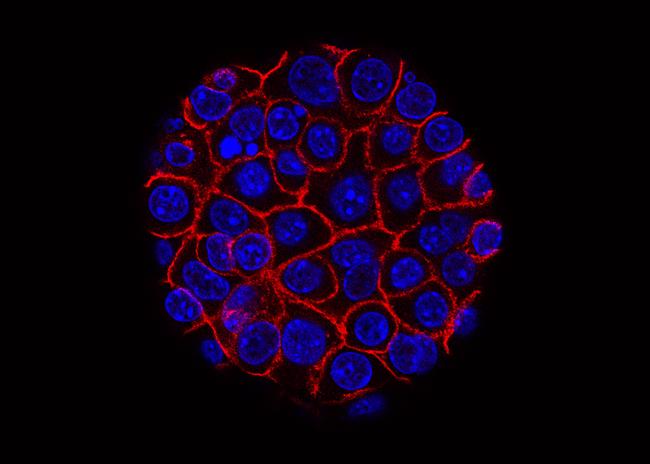
The researchers found two new markers in blood that were higher in people with early-stage pancreatic cancer than in healthy patients: aminopeptidase N (ANPEP) and polymeric immunoglobin receptor (PIGR). The team then developed a test that looked for ANPEP and PIGR, along with CA19-9 and THBS2.
The combined test successfully distinguished pancreatic cancer cases from noncancer cases 91.9% of the time for all stages combined. For early-stage cancers (stage I/II), the new test accurately found 87.5% of cases.
Importantly, the test differentiated people with cancer from healthy people as well as those with other pancreatic conditions, such as pancreatitis.
More studies will be needed to confirm the findings in larger populations. If they are confirmed, the test could be used to screen for early-stage pancreatic cancer in people who are at higher risk of the disease based on family history, genetics, or a personal history of pancreatic cysts or pancreatitis. It also could help doctors determine which patients would benefit from follow-up imaging.
“Pancreatic cancer usually doesn’t present with symptoms until it’s too late for surgery, when the cancer has already metastasized to other parts of the body,” Zaret says. “Our goal was to look for biomarkers in the blood that appear in early-stage PDAC patients, to catch the disease early.”
Related Links
- Blood test detects several cancer types
- Screening people at high risk for pancreatic cancer may help them live longer
- Dual-biomarker blood test shows promise for pancreatic cancer early detection
- Pancreatic cancer
References
Improving a plasma biomarker panel for early detection of pancreatic ductal adenocarcinoma with aminopeptidase N (ANPEP) and polymeric immunoglobulin receptor (PIGR). Krusen BM, Gimotty PA, Donahue G, Till JE, Yin M, Carlson EE, Bamlet WR, Carpenter EL, Majumder S, Oberg AL, Zaret KS. Clin Cancer Res. Feb 17;32(4):756-769. doi: 10.1158/1078-0432.CCR-25-3297. PMID: 41593855.
Funding
NIH’s National Cancer Institute (NCI), National Center for Advancing Translational Sciences (NCATS), National Institute of Diabetes and Digestive and Kidney Diseases (NIDDK), and Office of the Director (OD); Lustgarten Foundation; Wistar Institute, Penn Pancreatic Cancer Research Center; A Love for Life.