Antiviral drug did not improve Long COVID symptoms
September 29, 2026
Antiviral drug did not improve Long COVID symptoms
At a Glance
- A clinical trial for Long COVID found that treating patients with a common antiviral drug for up to 25 days did not improve symptoms.
- The findings suggest that other approaches to manage symptoms and treat Long COVID are needed.
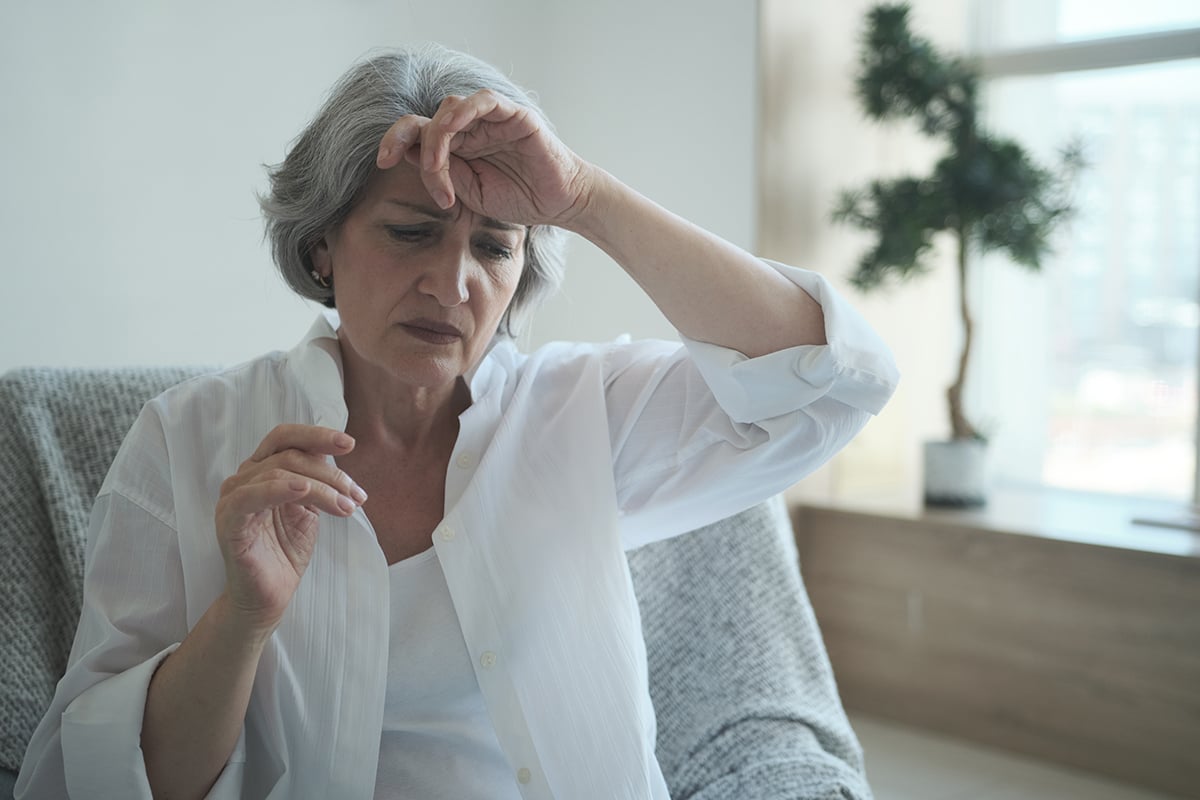
Long COVID is an ongoing health condition that may occur after being infected with the SARS-CoV-2 virus. The condition, defined as symptoms lasting at least two to three months after the acute SARS-CoV-2 infection, can have a major impact on a person’s quality of life. Symptoms include problems thinking clearly, fatigue or low energy levels, dizziness, racing heart, shortness of breath, and problems sleeping.
The SARS-CoV-2 virus can still be detected in the bodies of some people with Long COVID. But researchers don’t know whether antiviral therapies approved to treat mild-to-moderate COVID-19 would benefit people with Long COVID.
An NIH-funded research team led by Drs. Lindsey Baden of Mass General Brigham and Kanecia Zimmerman of Duke Medical Center wanted to test whether a drug used for treating acute COVID-19 could improve Long COVID symptoms. The researchers also wanted to develop measures to assess and characterize Long COVID symptoms.
The team designed a clinical trial including 959 adults with Long COVID symptoms at 69 sites across the U.S. Participants were separated into three groups based on their main reported symptoms. One group had trouble thinking clearly, another had trouble regulating blood pressure or heart rate, and the third was unable to tolerate exercise. The team collected data from July 2023 to March 2025.
The research team tested the drug Paxlovid, which combines the antivirals nirmatrelvir and ritonavir. The treatment prevents the SARS-CoV-2 virus from multiplying. People with COVID-19 symptoms usually take this medication for five days.
Within each symptom group, participants were assigned at random to one of three treatment groups. One took the combined antiviral treatment for 25 days. A second took the combined treatment for 15 days, plus 10 days of ritonavir and a placebo pill in place of nirmatrelvir. The third took ritonavir and a placebo pill for 25 days.
The study included in-clinic visits, lab tests, and remote assessments. Participants rated their symptoms for six months to measure the drug treatment’s effectiveness. Results were published in Lancet Infectious Diseases on August 31, 2026.
The symptoms of patients in all three treatment groups improved at the same rate. Taking the antiviral drugs for up to 25 days didn’t improve any of the three groups’ Long COVID symptoms compared with placebo. This is consistent with previous smaller studies that found no benefit from treating Long COVID with the antivirals for 15 days. The participants tolerated the longer treatment well with hardly any serious side effects.
The findings also provide insight into how best to study Long COVID and potential treatments. “We learned how to better characterize and measure the symptoms our patients with Long COVID are suffering from,” Baden says.
The team plans to release more results from this study. They’re analyzing blood samples from patients to learn about possible virus persistence and treatment response.
This study is part of a large NIH initiative called Researching COVID to Enhance Recovery (RECOVER). The goal of RECOVER clinical trials is to understand, treat, and prevent Long COVID symptoms. NIH RECOVER clinical trials and its complement, RECOVER Treating Long COVID, will continue exploring various treatments for Long COVID symptoms.
—by Christine Lehmann
Related Links
- Immune system may attack nervous system in some Long COVID patients
- Immune and hormonal features of Long COVID
- Cold virus may set the stage for Long COVID
- Toward a deeper understanding of Long COVID
- Long COVID symptoms linked to inflammation
- RECOVER COVID Initiative
- Long COVID basics (CDC)
References
Nirmatrelvir-ritonavir targeting viral persistence in post-COVID-19 condition (Long COVID) in the USA (RECOVER-VITAL): a randomised, double-blind, placebo-controlled, phase 2 trial. Baden LR, Shah NS, Liu STH, Cohen J, Moy J, Kumar A, McComsey GA, Chen P, Floris-Moore M, Singer NG, Fernandez I, Slandzicki AJ, Wiley Z, Kadl A, Kaminsky DA, Hsu H, Walker TA, Hope AA, Ostrosky-Zeichner L, Goldman JD, Peluso MJ, Patterson TF, Parthasarathy S, Mullington JM, Bolin P Jr, Jolley SE, Krishnan JA, Castro M, Hodder SL, Pemu P, Chu HY, Risbano MG, Jerath MR, Mylonakis E, Hurt RT, Alicic R, Azad NS, Sala MA, Harkins MS, Parsonnet J, Stafford N, Robinson P, Hussain S, Qiao X, Hawk ST, Lillestol M, Erdmann N, Gebo KA, Sudhindra P, Sassine J, Marshall GD, Chatterjee T, Morse CG, Kedar E, Stringer WW, Frontera JA, Jordan M, Blaskewicz C, Santana JL, Foot RA, Wongtrakool C, McCarthy MW, Mehari A, Amon A, Cohen AK, Jain N, Maughan C, Lindsay D, Olson R, Broderick S, Rowe P, O'Brien SM, Walt DR, Levy BD, Jason LA, Low PA, Shibao CA, Make B, Bateman L, Redline S, Knopman D, Hernandez AF, Nolen TL, Reist C, Berdan L, Whitley R, Zimmerman KO; RECOVER-VITAL Clinical Trial Group. Lancet Infect Dis. 2026 Aug 31:S1473-3099(26)00406-8. doi: 10.1016/S1473-3099(26)00406-8. Epub ahead of print. PMID: 42673984.
Funding
NIH’s Researching COVID to Enhance Recovery (RECOVER) Initiative and National Heart, Lung, and Blood Institute (NHLBI).