Bacterial infection may alter developing gut
September 29, 2026
Bacterial infection may alter developing gut
At a Glance
- C. difficile bacteria caused lasting changes to cells in the intestines of newborn mice.
- The findings suggest that early-life C. difficile infections may alter gut stem cells and immunity into adulthood.
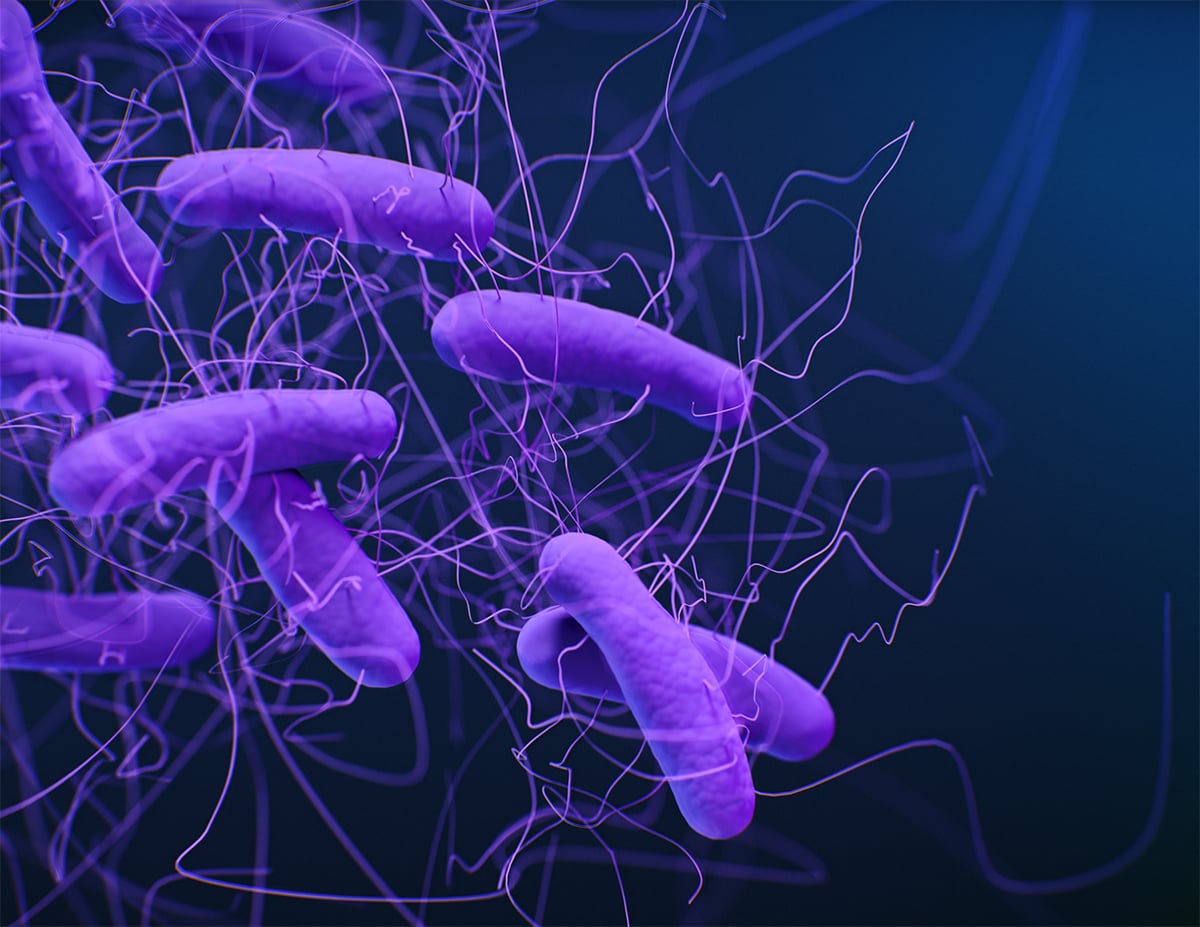
We all have bacteria and other microbes living in our intestines that don’t cause problems. But harmful bacteria can disrupt this community. When that happens early in life, it may change how cells in the gut behave.
A type of bacteria called Clostridioides difficile often invades infants’ digestive systems. C. difficile causes serious gastrointestinal symptoms in adults, but not in infants. Still, it remains unclear whether C. difficile infection in infants might have consequences later in life.
An NIH-funded research team led by Dr. Joseph P. Zackular of the University of Pennsylvania and Children’s Hospital of Philadelphia set out to answer this question. They looked at how C. difficile affects cells in the intestines of newborn mice and in lab-grown models called organoids. The study was published on September 3, 2026, in Science.
As in human infants, C. difficile did not cause symptoms in newborn mice. But it did cause inflammation and kill some cells that line the intestines. It also activated genes in those cells that are involved in responding to harmful microbes and repairing damage.
Certain gut cell types, including cells that sense infections and cells that make protective mucus, increased. But C. difficile infection caused a lasting drop in the numbers of certain immune cells in the gut. The intestines of adult mice had more mucus-producing cells if the mice had C. difficile infections as newborns.
When the intestines are damaged, stem cells in the intestines produce new cells. Mice with C. difficile infections had more stem cells involved in this repair process. Stool from a human infant with a C. difficile infection showed similar signs of a repair response in the intestines.
The scientists took stem cells from the intestines of newborn mice with and without C. difficile infections and used them to grow intestine-like structures called organoids. These intestinal organoids behave similarly to intestines inside the body. Stem cells from mice were better at growing into intestinal organoids if the mice had C. difficile as newborns. Those organoids were also better at regenerating after damage.
The toxins C. difficile produces caused these changes in stem cells’ behavior. Vaccinating female mice against C. difficile before they gave birth didn’t stop C. difficile from infecting their newborns. But it did decrease levels of C. difficile toxins in the newborns. As a result, C. difficile did not change the behavior of stem cells in newborn mice with vaccinated mothers.
The study’s results suggest that C. difficile infections early in life cause changes in gut cells that may last into adulthood. However, further studies are needed to figure out whether those changes affect human health.
“We show that even without overt disease, exposure to this toxin-producing bacteria leaves a lasting biological imprint on the developing gut and immune system,” Zackular says.
—by Brandon Levy
Related Links
- Gut microbes may affect motivation to exercise
- COVID-19 disrupts gut microbiome
- Supplement targets gut microbes to boost growth in malnourished children
- Your body’s disease defenses
- Your body’s bugs
- Microbiome
- C. diff (Clostridioides difficile) (CDC)
References
Early-life colonization with Clostridioides difficile remodels the developing gut. Semon A, Manzer HS, Keenan O, Zhou TH, Tiffany C, She Q, Knight M, Weiss AS, Donohoe K, Morrow BT, Glover RC, Kovalik ME, Tanes C, Bittinger K, Zemel BS, Wu GD, Silverman MA, Gerber JS, Cano Rodríguez R, Lacy DB, Karakasheva TA, Alameh MG, Weissman D, Schultz-Cherry SL, Rosch JW, Planet PJ, Moustafa AM, Furth EE, Abt MC, Kelsen JR, Conrad MA, Hamilton KE, Zackular JP. Science. 2026 Sep 3;393(6815):1045-1052. doi: 10.1126/science.ady2886. Epub 2026 Sep 3. PMID: 42691172.
Funding
NIH’s National Institute of General Medical Sciences (NIGMS), National Institute of Allergy and Infectious Diseases (NIAID), National Institute of Diabetes and Digestive and Kidney Diseases (NIDDK), National Cancer Institute (NCI), Office of the Director (OD), and National Center for Advancing Translational Sciences (NCATS); Center for Microbial Medicine at the Children’s Hospital of Philadelphia; H-MARC Core for the Center for Molecular Studies in Digestive and Liver Diseases; Penn Center for Nutritional Science and Medicine; PennCHOP Microbiome Program; Howard Hughes Medical Institute; Burroughs Wellcome Fund; CHOP SPAR Fellowship; CHOP Bridge to Faculty Program; Chappell Culpeper Family Foundation Fellowship; Penn Center for Molecular Studies in Digestive and Liver Diseases; Penn Vet IIZD Core pilot grant opportunity 2022; American Beverage Foundation for a Healthy America.