Brown fat may benefit cardiovascular, psychiatric health
November 5, 2026
Brown fat may benefit cardiovascular, psychiatric health
At a Glance
- Researchers found brown fat activity was linked to lower odds of cardiometabolic and psychiatric diseases.
- A blood pressure medication boosted brown fat activity in mice, which suggests existing drugs could be repurposed to activate brown fat.
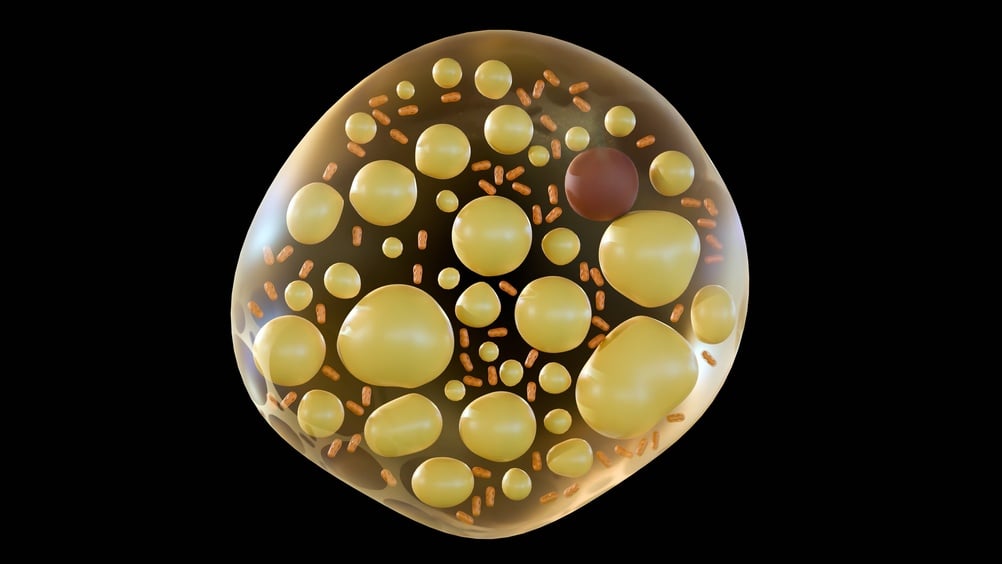
Brown fat burns energy to produce heat. This is different from white fat, which stores energy in the body. Brown fat reserves are found deep in the neck, thorax, armpits, and along the spine. The amount of brown fat in humans varies by factors such as age, sex, and body-mass index.
Previous research in animal models has shown that brown fat activation can protect against obesity and metabolic diseases like type 2 diabetes. But less is known about the human health benefits of brown fat activity.
A NIH-funded research team led by Dr. Paul Cohen at Rockefeller University set out to learn more by examining over 100,000 patient records. They analyzed a subset of nearly 9,000 patients with brown fat and more than 17,000 patients without brown fat who served as a reference group. The results were published in Nature on October 14, 2026.
The researchers confirmed their previous finding of a link between brown fat and lower cardiovascular and metabolic disease risk. After analyzing a broad range of health conditions, they found brown fat was linked with lower odds of having psychiatric diseases such as anxiety and depression. It was also linked with healthier blood sugar, lipid profiles, and inflammation markers.
Next, the team used machine learning to find quantitative links between brown fat activity and cardiometabolic health. Higher total brown fat activity was linked to lower odds of type 2 diabetes, atrial fibrillation, coronary heart disease, and congestive heart failure. Higher activity in individual brown fat reserves, particularly those around the collar bone and armpits, was also linked to lower odds of type 2 diabetes and cardiovascular disease.
The researchers also found that the use of different medications was linked with the presence of brown fat. Among these were a class of blood pressure-lowering drugs called angiotensin receptor blockers. One such drug called losartan increased the activity of cultured brown fat cells and increased heat production in mice. The drug did this through a mechanism separate from how the drug works to lower blood pressure.
These findings suggest that human brown fat activity is linked with a range of health benefits. They also show how machine learning and large datasets can identify clinically relevant associations.
“We only looked for a few diagnostic codes before, mainly focusing on cardiovascular disease since that’s what this tissue has historically been associated with,” Cohen says. “The scope of this new analysis is far more expansive. We doubled our number of patients and did an unbiased analysis across all diagnoses, which allowed us to unearth many new insights.”
These results could also inform future studies examining how other medications may affect brown fat activity.
—by Christine Lehmann
Related Links
- Uncovering the origins of brown fat
- Brown fat associated with less heart and metabolic disease
- Drug activates brown fat, improves glucose metabolism in healthy women
- A new way cells generate heat
- Obesity disrupts mitochondria, reduces fat-burning
- How brown fat improves metabolism
References
Artificial intelligence-enabled clinical phenotyping of human brown fat. Gómez-Banoy N, Barrero JA, Pinheiro de Carvalho LR, Jiang CS, Lama TD, Karandikar N, Koenen M, Lam T, Plucińska K, Morozova K, Chahwan S, Barraza G, Ucpinar BA, Liu JE, Sharma R, Lafontaine D, Schöder H, Cohen P. Nature. 2026 Oct 14. doi: 10.1038/s41586-026-11162-7. Online ahead of print. PMID: 42875491
Funding
NIH’s National Institute of Diabetes and Digestive and Kidney Diseases (NIDDK), NIH’s National Center for Advancing Translational Sciences (NCATS), and NIH’s National Institute of General Medical Sciences (NIGMS).