Scientists develop atlas of basal ganglia
November 24, 2026
Scientists develop atlas of basal ganglia
At a Glance
- Hundreds of researchers across dozens of labs assembled an atlas of cell types within a central region of the brain called the basal ganglia.
- The publicly available atlas is meant to serve as a reference for researchers studying the root causes of brain diseases.
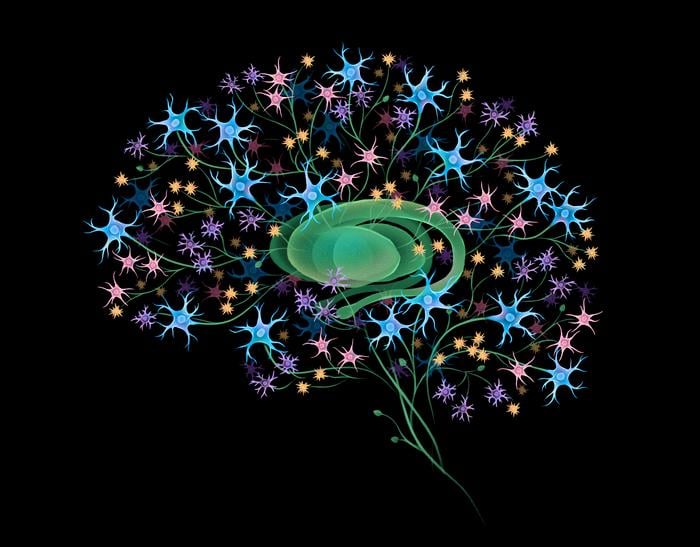
In recent years, scientists supported by the NIH Brain Research through Advancing Innovative Neurotechnologies® (BRAIN) Initiative have mapped parts of the brain in exquisite detail. These efforts have revealed how brain cell types are organized and connected. Unifying these maps to allow comparisons across species and data types will help paint a more complete picture of the brain and how it works. To do so, researchers need a standard system for classifying brain cells by type and location.
To achieve this goal, NIH established the BRAIN Initiative® Cell Atlas Network (BICAN). This network of research centers across the U.S. uses shared standards to produce detailed atlases of human, monkey, and mouse brains. Comparing these to other brain maps helps researchers pinpoint which cells control a given function or contribute to disease.
As an early step, BICAN produced an atlas of the basal ganglia, a group of brain structures that control movement, motivation, and decision-making. Dysfunction in the basal ganglia is linked to conditions like Parkinson’s and Huntington’s diseases and substance use disorders. The BICAN atlas covers the basal ganglia of humans throughout the lifespan, as well as two types of monkeys: macaques and marmosets. A collection of papers describing the atlas was published in the Cell family of journals on November 12, 2026.
To create the atlas, the researchers measured gene activity in more than 25 million brain cells from humans and monkeys. They combined these data with existing information about cell shapes and their functions within the brain. This allowed them to create a unified system for classifying cell types and comparing them across brain regions and species.
One research team used the atlas to map the locations of various brain cell types within the basal ganglia. The organization of these cells was often similar among humans and monkeys. However, human and macaque brains had more of a rare cell type that expresses genes associated with schizophrenia. And some cell types were found in regions not previously known to contain them. Another team mapped the locations of support cells called astrocytes. Yet another team mapped how cell types mature as the brain develops. Other teams used the atlas to identify gene activity changes in specific cell types that are linked to disorders such as autism.
The consortium members also developed publicly available software tools for analyzing the data. They established a platform that allows members of the scientific community to upload their own data to the atlas and identify the cell types they are working on in their labs. BICAN is disseminating these resources through various outreach efforts.
Consortium researchers have been collecting data from several other brain regions and hope to extend the atlas to include these areas as well. In the meantime, they hope the basal ganglia atlas will help scientists better understand the root causes of many diseases.
"These multi-species atlases have unlocked important new findings about how the brain develops and functions at the single-cell level,” says Dr. Amy Bany Adams, acting director of NIH’s National Institute of Neurological Disorders and Stroke. “We expect these valuable publicly available resources will continue to catalyze discoveries among the scientific community that enhance our understanding of neurological and psychiatric disorders.”
—by Brian Doctrow, Ph.D.
Related Links
- Scientists create detailed map of odor receptors
- Understanding how visual information is processed in the brain
- Atlas of Alzheimer's disease progression
- Complete wiring map of an adult fruit fly brain
- Unseen details of human brain structure revealed
- Scientists build largest maps to date of cells in human brain
- Complete wiring map of the insect brain
- Mapping the mammalian motor cortex
- The Brain Research through Advancing Innovative Neurotechnologies® (BRAIN) Initiative
References
Toward an integrated framework for a human and mammalian brain cell atlas. BRAIN Initiative Cell Atlas Network (BICAN). Cell. 2026 Nov 12;189(23):7289-7308.e6. doi: 10.1016/j.cell.2026.10.031. PMID: 43020018.
BRAIN Initiative Cell Atlas Network Basal Ganglia Atlas. Cell. 2026 Nov 12
Funding
NIH’s National Institute of Mental Health (NIMH) and National Institute of Neurological Disorders and Stroke (NINDS); Netherlands Organization for Scientific Research; Japan Society for the Promotion of Science; Japan Agency for Medical Research and Development.