Chemical in plastics linked to smaller babies
November 24, 2026
Chemical in plastics linked to smaller babies
At a Glance
- Pregnant women were more likely to have smaller babies when they were exposed to more of a chemical added to plastics called DINCH.
- Smaller babies have a higher risk for certain health problems, so women’s DINCH exposure could have long-term effects on their babies’ health.
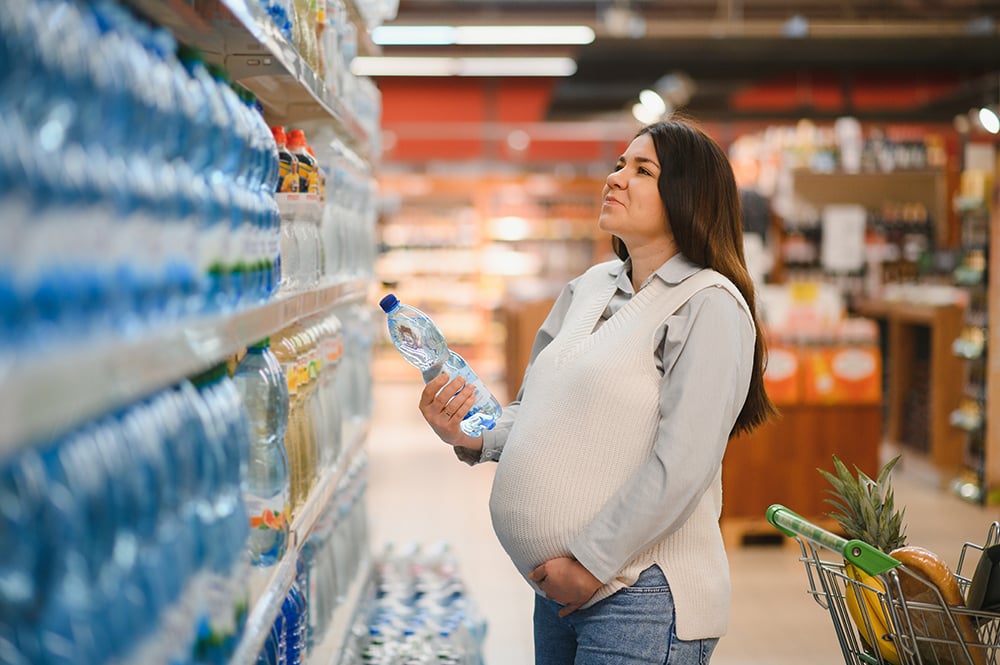
Studies suggest that some chemicals in common plastic products may increase risks to our health. For example, pregnant women exposed to certain chemicals may be more likely to give birth preterm or have smaller babies. Babies born preterm or with a low birth weight have a higher risk of health problems throughout their lives.
Many companies have been working to replace chemicals linked to health concerns in their products. One chemical being used as a replacement in plastic food packaging is called diisononyl cyclohexane-1,2-dicarboxylate (DINCH). There is some evidence that exposure to DINCH may raise the risk of preterm birth and low birth weight, but few studies have looked at its effects in a large group of people from a broad range of backgrounds.
A team of NIH-funded researchers led by Dr. Leonardo Trasande of the New York University Grossman School of Medicine looked at whether DINCH exposure during pregnancy is related to premature birth or baby size at birth. The study was published in Environment International on October 4, 2026.
The team looked at data from over 5,500 mother-child pairs from the NIH-funded Environmental influences on Child Health Outcomes (ECHO) program, the largest longitudinal child health study in the United States. Since 2016, ECHO researchers in 30 states, Washington, D.C., and Puerto Rico have collected data about how environmental exposures affect children’s health. They studied levels of DINCH metabolites—chemical signs of DINCH exposure—in urine and compared these with birth outcomes.
About half to two-thirds of the women in the study had DINCH metabolites in their urine while pregnant. Hispanic women had higher levels than women from other ethnic or racial groups. Older women and women with more education also had higher levels.
Women exposed to more DINCH while pregnant tended to have smaller babies. Having 10 times higher levels of certain DINCH metabolites was linked to a decrease of nearly an ounce in a baby’s birth weight and roughly a tenth of an inch in birth length. Exposure to DINCH during the third trimester of pregnancy had a stronger link to a baby’s size at birth than exposure at other times. Female babies of mothers with higher DINCH exposures were more likely to weigh less, while male babies were more likely to be shorter.
The researchers did not find a connection between DINCH exposure and preterm birth.
The results suggest that women exposed to more DINCH while pregnant may be more likely to give birth to smaller babies. While suggestive, these findings can’t prove whether DINCH caused these size differences. More research is needed to explore the link.
As the ECHO study continues, researchers will be able to look at whether DINCH exposure increases children’s risks for health problems later in life.
“Even small differences in birth size can matter because fetal growth problems can raise the risk for heart disease, learning difficulties, obesity, and other issues that can echo into adolescence and adulthood,” Trasande says.
—by Brandon Levy
Related Links
- Understanding the exposome
- Plastic particles in bottled water
- Nanoplastics may help set the stage for Parkinson's risk
- Creating a healthier home
- The persistence of plastics
- Probing personal care products
- Endocrine disruptors
- Environmental influences on Child Health Outcomes (ECHO) program
- Phthalates in food packaging and food contact applications (FDA)
References
Prenatal exposure to di(isononyl) cyclohexane-1,2-dicarboxylate and adverse birth outcomes in the USA: a prospective analysis of births in a large American birth cohort. Trasande L, Nelson ME, Alshawabkeh A, Barrett ES, Buckley JP, Dabelea D, Dunlop AL, Herbstman JB, Meeker JD, Naidu M, Newschaffer C, Padula AM, Romano ME, Ruden DM, Sathyanarayana S, Schantz SL, Starling AP, Etzel TM; ECHO Cohort Consortium. Environ Int. 2026 Oct 4;217:110548. doi: 10.1016/j.envint.2026.110548. Epub ahead of print. PMID: 42901092.
Funding
NIH’s Office of the Director (OD) and National Institute of Environmental Health Sciences (NIEHS).