High metal exposures after wildfires may affect lung function
October 27, 2026
High metal exposures after wildfires may affect lung function
At a Glance
- After the Maui wildfires, researchers found a link between exposure to higher levels of metal mixtures and worse lung function.
- This finding suggests the importance of longer-term contaminant testing and health monitoring to assess exposures following wildfires.
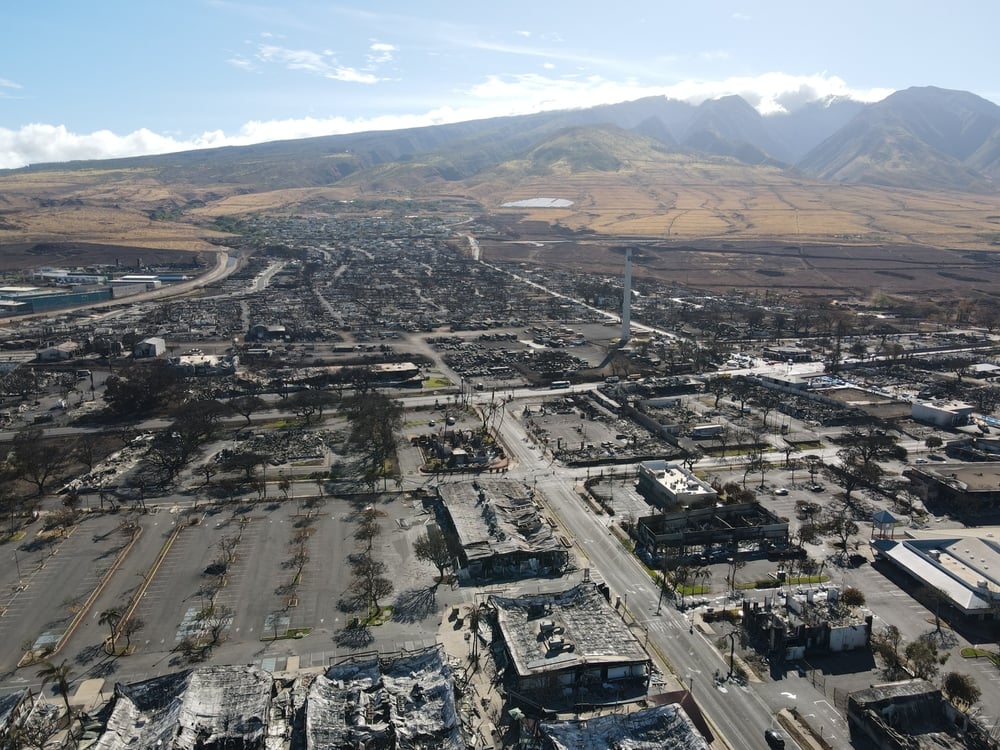
Some wildfires, like the 2023 one on the Hawaiian island of Maui, burn through both wildlands and urban areas. This burning of built infrastructure, including homes, cars, and electronics, can release potentially toxic metals into the environment.
Previous research has shown that exposure to metals such as arsenic and lead can cause health problems. Examples include widespread inflammation, reduced lung function, and heart and lung disease. Yet few studies have looked at whether there could be a link between exposure to metal mixtures and lung function after wildfires.
An NIH-funded research team led by Drs. Ruben Juarez and Alika Maunakea at The University of Hawaii at Manoa decided to take a closer look. The researchers focused on Maui residents who lived through the 2023 wildfire. About 1,400 adult residents participated in the study six to 18 months after the disaster. The team tested participants’ lung function with standard breathing tests and tested their urine for metals. The results were published in the Proceedings of the National Academy of Sciences on September 28, 2026.
Researchers analyzed 24 of the urinary metals they found and compared them with national chemical exposures data. Study participants had much higher levels of certain metals compared with national averages. Antimony, which is used to make batteries and flame retardants, was nearly 40 times higher. Manganese was nearly four times higher, and barium and arsenic were more than twice as high. The participants with the highest metal concentrations lived in the regions of Maui most affected by the wildfire.
The team also found that participants with higher metal mixture levels were more likely to have poor lung function. The metals arsenic, cadmium, and copper contributed to this effect the most. The elevated metal burden also lasted up to 18 months after the disaster.
The findings suggest that wildfires at the wildland-urban interface can contribute to prolonged metal exposures that can harm lung function. Longer-term health monitoring and environmental sampling that goes beyond air quality may be necessary to fully capture the health effects of these wildfires.
“The biggest message is that exposure may not end when the smoke clears,” Juarez says. “What we are likely seeing is a complex combination of exposures—some that may have been present for years and others that may have been generated or remobilized by the wildfire. When a disaster burns through a community, it can fundamentally change how contaminants move through the environment.”
Juarez adds that the next step will be to untangle the sources of these exposures. The researchers want to learn which exposures persist, where they come from, and what they mean for long-term health.
—by Christine Lehmann
Related Links
- Effects of early exposure to toxic metals
- Poor air quality across Northeastern public transit systems
- Watch out for wildfire smoke: staying safe with a fire nearby
- Weather extremes and your health
- Exposure Science
- Chemical mixtures
- Safety guidelines: wildfires and wildfire smoke (CDC)
- Wildland fire smoke: health effects and the wildland urban interface (EPA)
References
Climate-amplified wildland–urban interface disasters create persistent internal metal mixtures associated with pulmonary impairment. Maunakea AK, Le B, de la Hoz RE, Lee AG, Zhang Z, Kamaka M, Lowery M, Umeda L, Yamamoto B, Schilling K, Juarez R. Proc Natl Acad Sci U S A. 2026 Oct 6;123(40):e2613208123. doi: 10.1073/pnas.2613208123. Epub 2026 Sep 28. PMID: 42804639.
Funding
NIH’s National Institute on Minority Health and Health Disparities (NIMHD) and National Heart, Lung, and Blood Institute (NHLBI); National Institute for Occupational Safety and Health (NIOSH); the State of Hawaiʻi; the Hawaiʻi Community Foundation’s Maui Strong Fund; and Kaiser Permanente.